Part of SKAD HR Group — HR for every stage of business  ·  HRTailor.com  ·  HRTailor.AI

Author: Abhijit Divekar

  • The Hidden Costs of Waiting on Visas: How Smart Employers Use Global Payroll to Keep Their Teams Moving
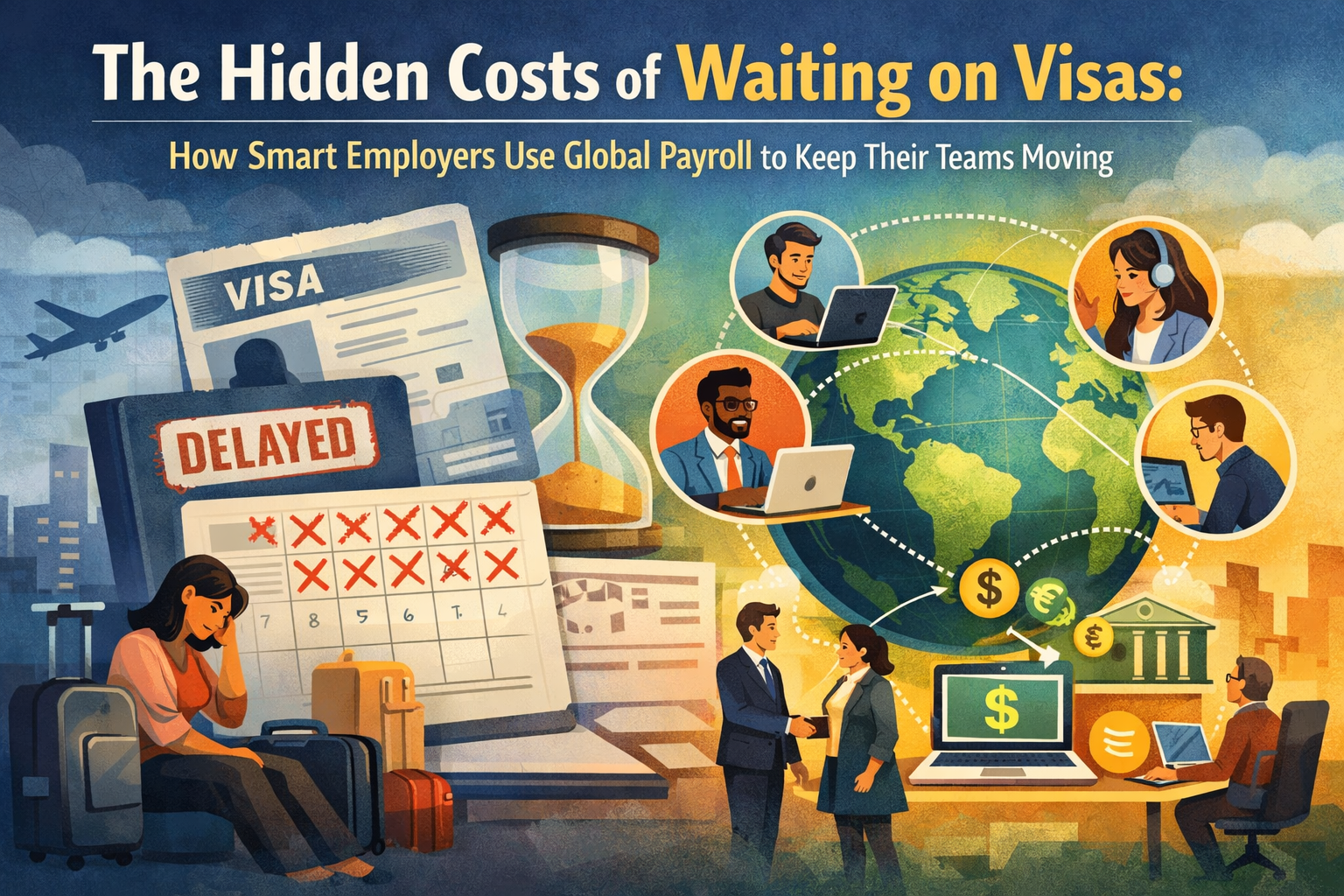
    The Hidden Costs of Waiting on Visas: How Smart Employers Use Global Payroll to Keep Their Teams Moving

    The Hidden Costs of Waiting on Visas: How Smart Employers Use Global Payroll to Keep Their Teams Moving

    Global payroll management

    Introduction: The Costs of Visa Delays and What Employers Can Do

    Every year, thousands of skilled workers wait to start their roles in the US due to delays in H1-B visa processing. For employers, it’s not just a matter of waiting for paperwork it’s a full-scale disruption of business operations. Employees are unable to contribute to critical projects, and business momentum comes to a halt.

    But what if you didn’t have to wait? What if, instead of pushing important projects to the side or trying to operate with a reduced team, you could keep your business moving forward? The solution is simple: global payroll management through Employer of Record (EOR) services.

    In this blog, we’ll explore the hidden costs that come with waiting for visas and how shifting your employees to global payroll management can save your company from the disruptions that delays inevitably bring. Instead of waiting for things to get better, make a move that keeps your business running.

    The Real Cost of Waiting for H1-B Visas

    Business Impact: Delay After Delay

    H1-B visa delays are a growing problem for US businesses, especially those relying on foreign talent to fill high-skill roles. When workers cannot join on time, projects are delayed, and deadlines slip. What was once a well-oiled machine quickly turns into a broken system where critical tasks fall behind.

    The financial impact is undeniable. Companies that depend on a specific timeline for project delivery risk losing clients, and their reputation can take a hit. In some cases, the longer it takes for employees to join, the more expensive it gets. You’re paying salaries without receiving the full benefit of the work. This creates a cycle of financial inefficiency that can leave your company scrambling to make up for lost productivity.

    Employee Frustration and Disengagement

    It’s not just the business that suffers. Your employees, who are waiting for their visas to be processed, can easily become frustrated with the prolonged uncertainty. They’ve already committed to the company, and now they’re stuck, unable to begin contributing in a meaningful way. This dissatisfaction can lead to disengagement, and in the worst-case scenario, employees might start looking for opportunities elsewhere.

    While you’re waiting for visa approvals, other companies in the market are taking advantage of the situation. They’re hiring talent, launching projects, and moving ahead. If your employees grow increasingly disillusioned with waiting, you risk losing out on top talent—putting your entire operation at a competitive disadvantage.

    The Financial Burden of Visa Delays

    Direct Financial Impact

    The direct costs of waiting for visa approvals extend beyond lost productivity. When employees can’t start working as planned, you still have to pay them. This creates a financial drain that can impact cash flow. For smaller companies or those with tight budgets, paying salaries to employees who are unable to contribute is unsustainable in the long run.

    On top of that, your administrative team may need to spend hours handling paperwork and managing the uncertainty that comes with visa applications. This diverts valuable time and resources that could be better spent on driving business growth or improving employee engagement.

    The Domino Effect on Other Teams

    The ripple effect of these delays extends to other parts of your business as well. When critical team members are not available, other employees are forced to take on additional work, leading to burnout and potential drops in the quality of their output. This is often a slippery slope—what starts as one or two employees missing out can quickly snowball into widespread operational inefficiencies.

    What Is Global Payroll Management?

    Instead of waiting for visa approval to move forward, companies can shift payroll by implementing global payroll management solutions. Employer of Record (EOR) services are a highly effective way to manage global talent and keep operations smooth. With an EOR, your company can employ workers in other countries (like India) without having to set up a formal local entity.

    How Global Payroll Management Solves Visa Delay Issues

    With global payroll management, you can shift employees to a compliant payroll system in a country like India while still working remotely or locally, depending on your needs. This enables employees to start working right away, contributing to the projects that are in urgent need of their skills. EOR services handle all of the administrative tasks involved with hiring and paying employees in another country, ensuring everything remains legal and compliant.

    With EOR, there are no delays in employee onboarding, no complications with visas, and no waiting around for paperwork. Employees can begin working as soon as their roles are confirmed, regardless of visa status.

    The Benefits of Using EOR Services for Global Payroll

    Business Continuity and Efficiency

    The primary benefit of global payroll management is business continuity. When you shift payroll to a global EOR solution, your company can maintain its operations smoothly, even during visa delays. Employees can begin working on projects immediately, ensuring that timelines are adhered to, and deadlines are met.

    For companies that rely on skilled foreign talent, EOR provides a bridge between the time a worker is hired and when they are finally able to join the team physically in the US. This keeps projects moving without the disruptions caused by visa delays.

    Cost Efficiency: Pay for What You Get

    By shifting payroll to India or another global location, you can manage costs more efficiently. You’re not paying for employees to be on a waiting list; you’re paying them to do the work you hired them for. Instead of wasting resources on unproductive waiting periods, you can allocate those funds towards actual business growth.

    Additionally, the cost of setting up a local entity in a foreign country can be significant. Through EOR services, you can bypass the need for costly legal infrastructure and focus your resources on growing your business instead.

    Employee Retention and Engagement

    For employees, being able to start working and contributing to projects, even while waiting for a visa to the US, shows that their employer values them. They are less likely to become disengaged or leave for other opportunities. EOR services allow your team to stay on track, fulfill their roles, and get compensated without waiting indefinitely.

    When employees feel supported by their employers, their job satisfaction increases. This, in turn, boosts productivity and keeps your company competitive. Shifting payroll to a global solution ensures that employees don’t feel like they’re stuck in an endless waiting game.

    The Risks of Continuing to Wait for Visa Approvals

    • Increased Costs Over Time

      The longer you wait for H1-B visas, the more expensive it gets. From legal fees to maintaining payroll for employees who can’t start, the financial drain adds up. Moreover, visa delays mean missed opportunities and the potential to fall behind in the competitive marketplace.

    • Losing Talent to Competitors

      The more your employees wait, the more likely it is that your competitors will swoop in and offer them alternative opportunities. If your employees feel like they’re being left behind, they might start considering other options—ones that will give them the chance to work sooner rather than later.

    • Operational Setbacks

      The longer key employees remain unable to contribute, the longer your team must make do with fewer resources. Whether it’s through overburdening other employees or using temporary staff that doesn’t fit seamlessly into the role, operational setbacks will inevitably arise.

    A Thought to Close With

    When visa delays disrupt your workforce, the last thing you want is to lose momentum. Instead of waiting and risking unnecessary costs, smart employers shift payroll to global payroll management solutions. By using Employer of Record (EOR) services, businesses can avoid project delays, manage costs more effectively, and keep employees engaged—all without the stress of visa paperwork.

    At Team Management Services, we understand the challenges of managing a global workforce, and we’re here to help. Our EOR services allow you to focus on what matters most: growing your business and keeping your team productive. Get in touch today to learn how we can help your company stay ahead of the game.

    FAQs

    Global payroll allows employees to stay productive under a compliant local structure instead of waiting for visa approvals to resume work.

    No. While cost efficiency matters, the bigger advantage is continuity, compliance clarity, and reduced dependency on unpredictable visa timelines.

    In many cases, no. If work authorization is tied to visa approval, employees may be required to pause work unless an alternative compliant employment structure is in place.

    For many companies, it starts as a response to visa delays but becomes a long-term workforce strategy due to stability, compliance, and scalability.

  • How U.S. Companies Retain Talent When H-1B or H-4 Visas Become Uncertain

    How U.S. Companies Retain Talent When H-1B or H-4 Visas Become Uncertain

    How U.S. Companies Retain Talent When H-1B or H-4 Visas Become Uncertain

    retain H1B employees

    Introduction:

    Visa uncertainty has become one of the most difficult workforce challenges for U.S. companies employing global talent. While policy updates and processing delays make headlines, the real impact is felt quietly—inside teams, projects, and delivery timelines.


    For employers, the question is no longer whether visa uncertainty will happen. Instead, it has become how to respond without losing valuable employees.


    Today, forward-thinking companies are moving away from reactive decisions and toward structured workforce strategies that protect productivity, control costs, and retain critical talent—even when visas remain unresolved.

    Visa Uncertainty Is Now a Workforce Reality

    H-1B and H-4 visa uncertainty affects more than just immigration status. It disrupts planning, delays decision-making, and creates risk across operations.

    Employees may be asked to stop work temporarily. Others may need to leave the U.S. altogether. In many cases, timelines remain unclear for months.

    As a result, employers face tough choices:

    • Pause projects and absorb delays
    • Place employees on paid leave
    • Replace talent and restart hiring
    • Or find a compliant way to keep work moving

    Increasingly, companies are choosing the last option.

    Why Losing Talent During Visa Delays Is So Costly

    Replacing an experienced employee is rarely simple. Beyond recruitment costs, there is onboarding time, lost institutional knowledge, and reduced team efficiency.

    When visa uncertainty forces sudden exits, businesses often lose:

    • Client continuity
    • Project momentum
    • Domain expertise

    Even short disruptions can have long-term effects. That is why many employers are actively looking for ways to retain H1B employees instead of restarting the hiring cycle.

    The Limits of “Wait and See” Approaches

    In the past, employers often waited for visa outcomes before making changes. While this approach worked when delays were short, it is no longer practical.

    Today, waiting creates:

    • Ongoing payroll expenses without output
    • Uncertain delivery schedules
    • Employee disengagement and anxiety

    Over time, this uncertainty affects not just individuals but entire teams. Because of this, companies are moving away from passive responses toward structured alternatives.

    Remote Work Alone Is Not a Long-Term Solution

    Allowing employees to work remotely from India while staying on U.S. payroll may seem like a simple fix. However, this approach introduces compliance and tax risks that many companies overlook.

    Working across borders without proper employment structures can lead to:

    • Local labor law exposure
    • Payroll non-compliance
    • Permanent establishment risks

    What begins as a temporary workaround can quickly become a compliance issue. As a result, employers are now seeking more formal employment models.

    How Employers Are Rethinking Talent Retention

    Instead of tying employment continuity solely to visa status, companies are separating where work happens from how employment is structured. This shift allows organizations to retain key talent even when physical presence in the U.S. is not possible. One increasingly common approach is transitioning affected employees to India payroll through an Employer of Record (EOR).

    Employer of Record: A Structured Retention Strategy

    An Employer of Record legally employs the worker in India while the employee continues working for the U.S. company operationally.

    From an employer’s perspective, this means:

    • No need to establish an Indian entity
    • No exposure to Indian payroll or labor compliance
    • Continued reporting, project ownership, and delivery

    This model allows businesses to maintain productivity while staying compliant across jurisdictions.

    Retaining Talent Without Visa Dependency

    Visa uncertainty often places emotional pressure on employees. Many fear that leaving the U.S. automatically means losing their job.

    Employers who offer structured alternatives communicate stability and long-term intent. This strengthens trust and improves retention outcomes. By providing compliant employment options, companies demonstrate that talent value is not tied to visa outcomes alone. For many organizations, this has become a key strategy to retain H1B employees during uncertain periods.

    Managing Costs While Protecting Output

    Cost management plays a major role in employer decision-making.

    Maintaining U.S. payroll during extended visa delays often results in high costs with limited productivity. In contrast, India payroll under an EOR model aligns costs more closely with actual work delivery.

    This does not mean compromising quality. Instead, it allows companies to:

    • Avoid paid bench time
    • Continue active project execution
    • Maintain budget predictability

    For finance and HR leaders alike, this balance is increasingly important.

    Keeping Projects and Clients on Track

    Client commitments do not pause for visa delays. When key employees are suddenly unavailable, project risks rise.

    By transitioning employees to compliant employment structures, companies can:

    • Maintain delivery timelines
    • Avoid reassigning work mid-project
    • Preserve client confidence

    This continuity is often the deciding factor for leadership teams evaluating EOR solutions.

    Supporting Employees Through Visa Uncertainty in a Global Workforce

    Beyond productivity, visa uncertainty carries a significant human impact. Employees facing H-1B or H-4 challenges often experience stress and anxiety about their careers, and employers that offer clear, structured paths forward help reduce uncertainty while building trust and loyalty. Providing compliant alternatives—such as the Team Managemnet Services EOR solution—ensures employees feel supported rather than sidelined, which over time strengthens internal morale and employer brand.


    At the same time, this approach reflects a broader shift in how companies design teams. As global workforce models evolve beyond fixed locations, visa uncertainty has accelerated the move toward flexible, compliant employment structures. Solutions like EOR are no longer viewed as short-term fixes but as integral components of long-term, cross-border workforce planning.

    When Should Employers Consider This Strategy?

    Employers typically explore EOR when:

    • Visa timelines become unpredictable
    • Employees must return to India
    • No local Indian entity exists
    • Projects cannot afford disruption

    In these situations, structured employment transitions provide clarity and continuity.

    A Smarter Way Forward

    Visa systems may remain unpredictable. However, talent retention does not have to be. Companies that adapt their employment strategy protect productivity, control costs, and retain skilled professionals—even when visas are uncertain.


    Rather than viewing visa delays as a stopgap, leading employers are using this moment to rethink how they build resilient global teams and retain H1B employees without unnecessary risk.

    FAQs

    No. Employment structure changes do not negatively affect future visa applications, as immigration decisions are separate from payroll arrangements.

    Yes. Once visa approvals are secured, companies can reassess relocation or employment structure based on business needs.

    No. EOR can support a wide range of roles including operations, finance, analytics, and client support.

    Most employers implement secure access controls, updated contracts, and internal policies alongside EOR arrangements.

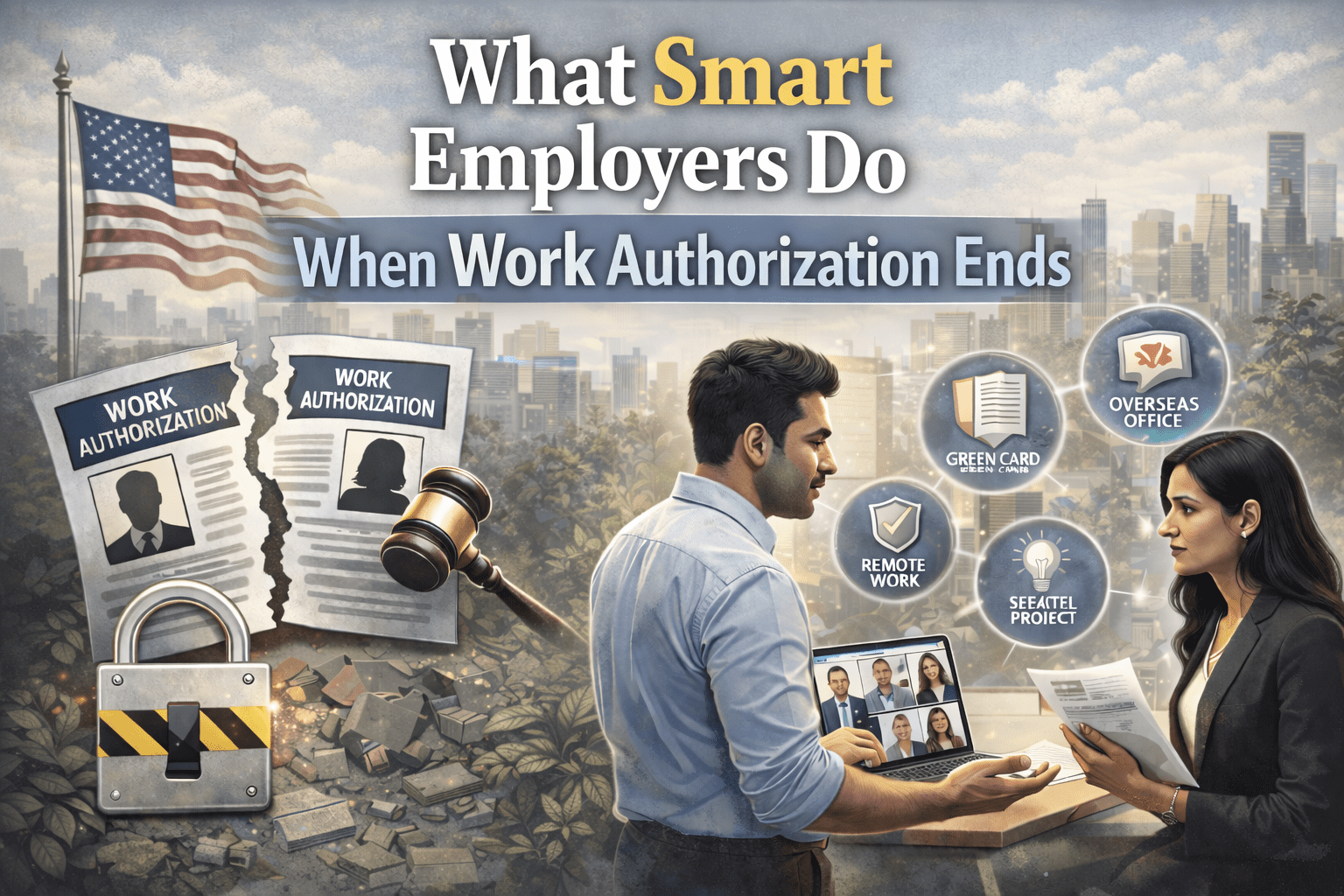
  • What Smart Employers Do When Work Authorization Ends

    What Smart Employers Do When Work Authorization Ends

    What Smart Employers Do When Work Authorization Ends

    employee work authorization expired

    Introduction:

    Work authorization issues rarely come with advance notice. One day, teams are running smoothly. The next, an employer is informed that an employee can no longer legally continue working due to visa or authorization expiry.

    When an employee work authorization expired, the impact goes far beyond compliance. Projects stall, costs rise, and difficult decisions must be made quickly.


    Smart employers understand that this moment is not just a legal issue—it is a leadership test.

    Why This Situation Is Becoming More Common

    Global hiring has increased significantly over the last decade. At the same time, visa processing timelines have become less predictable.

    As a result, more companies are facing situations where:

    • Employees must stop work immediately
    • Travel restrictions force sudden relocations
    • Approvals remain uncertain for extended periods

    When an employee visa expired, employers are often left navigating unclear options under pressure.

    The Immediate Risks Employers Face

    Once work authorization ends, employers must act fast. Continuing work without authorization exposes the company to serious legal and financial risks.

    However, stopping work entirely creates another set of challenges:

    • Missed deadlines
    • Client dissatisfaction
    • Internal disruption
    • Rising bench costs

    A work authorization expired employee situation forces leadership to balance compliance with business continuity.

    Why Waiting or Replacing Talent Is No Longer a Practical Solution

    Earlier, companies often placed employees on temporary leave while waiting for approvals. Today, that approach is costly and unsustainable. Paid leave without productivity strains budgets, while prolonged uncertainty damages morale and increases attrition risk. For employers, waiting without a structured plan frequently leads to rushed decisions later—usually at a much higher cost.


    When authorization ends, replacing the employee may appear to be the safest route, but this option carries significant hidden expenses. Recruitment costs, onboarding time, and the loss of institutional knowledge can easily outweigh short-term compliance relief. In highly skilled roles, replacements may take months to reach full productivity, which is why many employers now explore alternatives before letting go of trained talent.

    How Smart Employers Reframe the Problem

    Instead of viewing authorization expiry as an endpoint, experienced employers see it as a transition point.

    They separate:

    • Employment structure from
    • Work contribution

    This mindset allows companies to retain talent while staying compliant—even when physical presence or visa status changes.

    Employer of Record: A Practical Compliance Solution

    One increasingly adopted solution is transitioning affected employees to an Employer of Record (EOR) model in India.

    Under this structure:

    • The EOR becomes the legal employer in India
    • Payroll, taxes, and labor compliance are managed locally
    • The employee continues working operationally for the U.S. company

    This approach allows employers to retain output without violating local or international regulations.

    Managing Costs When Authorization Ends

    Cost control becomes critical the moment authorization expires.

    Keeping employees on U.S. payroll without work authorization is not viable. At the same time, terminating skilled employees can increase long-term costs.

    India payroll under an EOR model often provides:

    • Predictable employment costs
    • Continued productivity
    • Reduced bench expenses

    When an H1B work authorization expired, this balance between compliance and cost becomes especially important.

    Protecting Client Commitments and Delivery Timelines

    Client expectations do not pause for immigration issues. Sudden employee exits can put contracts, timelines, and service quality at risk.

    By planning structured employment transitions, employers can:

    • Maintain delivery continuity
    • Avoid reassigning projects midstream
    • Preserve client trust

    This continuity is often the key driver behind employer decisions.

    Why Employee-Centric, Flexible Workforce Models Are Becoming the Standard

    From the employee’s perspective, authorization expiry often feels like career instability. Employers who communicate clearly and offer structured alternatives reduce anxiety, strengthen loyalty, and demonstrate long-term commitment—not just short-term compliance. Providing legal, compliant employment options, such as the TMS Employer of Record (EOR) solution, reinforces this trust and highlights the importance of the human element, which many companies initially underestimate.


    At the same time, global workforce planning has evolved. Employers no longer rely on a single country or visa category to build resilient teams  Authorization uncertainty has accelerated the shift toward flexible, compliant employment models that adapt to changing conditions. Rather than reacting case by case, forward-thinking employers now design policies in advance—often leveraging solutions like TMS EOR—to stay prepared, compliant, and competitive.

    When Should Employers Act?

    Employers typically explore structured alternatives when:

    • Authorization expiry is confirmed or imminent
    • Approvals lack clear timelines
    • Projects cannot afford disruption
    • No local entity exists in the employee’s country

    Acting early reduces risk and avoids last-minute decisions.

    A Smarter Way Forward

    Visa and authorization systems may remain unpredictable, but workforce continuity does not have to suffer because of it. When an employee’s work authorization expires, employers who act decisively—while remaining fully compliant—can protect productivity, control costs, and retain valuable institutional knowledge. Clear planning and timely action prevent disruption, reduce uncertainty for employees, and avoid the expensive consequences of rushed decisions.


    Ultimately, the choices made at this stage often shape long-term workforce resilience. Organizations that plan ahead, adopt flexible employment models, and prioritize both compliance and people are far better positioned to navigate ongoing regulatory uncertainty with confidence.

    FAQs

    Yes. Employers can reassess payroll and location once authorization is restored, depending on business needs.

    No. EOR can support both short-term transitions and long-term workforce strategies.

    Immediate action is recommended to avoid compliance risks and operational disruption.

    No. It also applies when approvals are delayed or when authorization validity is uncertain.

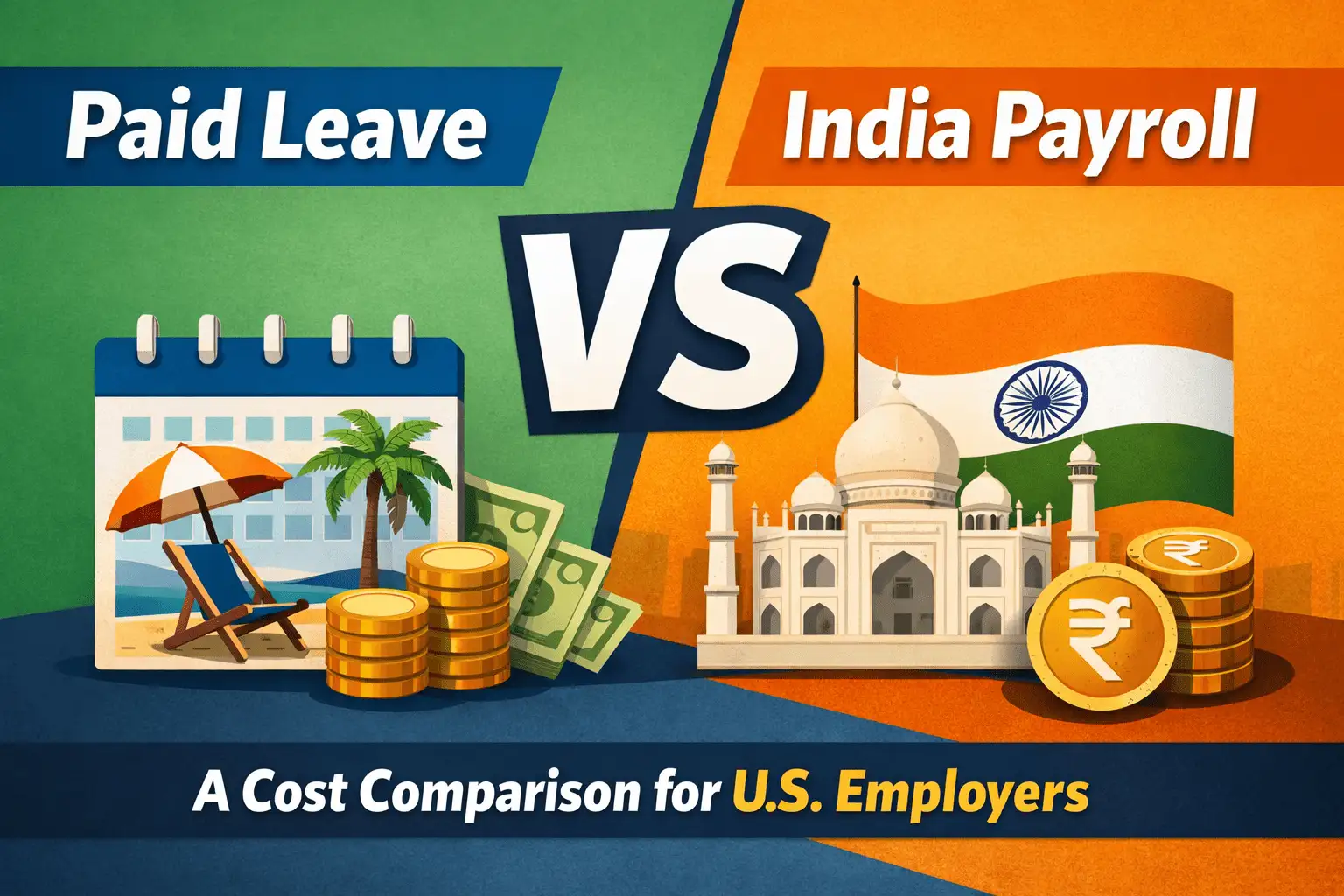
  • Paid Leave vs India Payroll: A Cost Comparison for U.S. Employers

    Paid Leave vs India Payroll: A Cost Comparison for U.S. Employers

    Paid Leave vs India Payroll: A Cost Comparison for U.S. Employers

    India payroll

    Introduction: The Cost of Paid Leave for Indian Employees Stuck in H1-B Visa Delays

    As many U.S. companies know all too well, H1-B visa delays are becoming a significant challenge, especially for businesses that rely on foreign talent. The majority of these delays affect Indian employees who are stuck in the lengthy visa approval process. While employers are left waiting for their employees to get clearance, the financial burden of paid leave can quickly pile up.

    Paid leave is a great employee benefit, but when employees cannot work due to visa delays, U.S. employers are still responsible for paying their salaries without receiving any contribution to productivity. This creates a hidden cost that many companies are struggling to manage.

    But what if there were an alternative? Instead of continuing to bear the cost of paid leave, U.S. employers can shift payroll to India, offering a cost-effective solution while still keeping employees engaged. Let’s take a look at the cost comparison between paying Indian employees for unproductive leave versus shifting payroll to India payroll solutions.

    The Growing Financial Burden of Paid Leave for H1-B Employees

    Paying for Time When Employees Can’t Contribute

    For U.S. employers with Indian employees waiting on H1-B visas, the situation is more complicated than typical paid leave. These employees aren’t taking vacation or sick days—they are in limbo, unable to work while still being paid. The cost of this paid leave goes beyond salary; it includes the financial strain of paying for unproductive time.

    For example:
    An Indian employee stuck waiting for their H1-B visa approval earns $60,000 per year.
    If the employee takes 10 days of paid leave, the cost to the company is approximately $2,307—for every 10 days of leave, without any output.

    With multiple employees in the same situation, the cost can quickly multiply. If the visa delay lasts for months, the costs could become unsustainable, especially for smaller businesses.

    Employee Morale and Engagement

    Paying employees during delays may hurt morale. Though employees are paid, their frustration grows as they cannot contribute to projects. This frustration can lead to disengagement. Disengaged employees are less likely to stay committed to the company, especially if delays drag on.

    The Solution: Shifting Payroll to India via EOR Services

    How India Payroll Solutions Work

    Instead of continuing to bear the high costs of paid leave while waiting for H1-B visa approvals, U.S. employers can shift payroll to India. By utilizing Employer of Record (EOR) services, companies can ensure their employees are still employed, engaged, and paid, but at a significantly lower cost.

    Employer of Record (EOR) allows you to legally employ Indian employees in India, bypassing the need for expensive U.S.-based payroll while ensuring compliance with both U.S. and Indian labor laws. The employee can continue working remotely from India, maintaining their productivity without waiting for a visa approval.

    This solution is a win-win for both the employer and the employee:

    • The employee remains engaged, getting paid on time and contributing to business goals without feeling the frustration of being in limbo.
    • The employer saves on the high costs of paying for extended paid leave, avoiding unnecessary drain on resources.

    Cost Comparison: Paid Leave vs India Payroll for H1-B Visa Delays

    Let’s dive deeper into the numbers and see how shifting payroll to India via EOR can be more cost-effective than continuing to pay for paid leave.

    1. Paid Leave Scenario
      • Employee Salary: $60,000 per year
      • 10 Days of Paid Leave: $2,307
      • This is for one employee, but if multiple employees are stuck in the visa process, the total cost for paid leave can become overwhelming.
    2. India Payroll Scenario (via EOR)
      • The same role, filled by an employee in India, might cost between $18,000 and $25,000 annually, depending on the experience level.
      • The cost of labor in India is 50-70% lower than U.S.-based salaries, resulting in significant cost savings for the company.
      • Additionally, by moving payroll to India, you avoid paying for unproductive leave and instead pay for actual work done, reducing wasted financial resources.

    The Other Benefits of India Payroll Solutions

    • Access to a Global Talent Pool
      India has one of the largest pools of skilled professionals, especially in technology, customer service, and marketing. Shifting payroll to India helps U.S. employers save on costs and tap into a highly skilled workforce.

    • Flexibility and Scalability
      India payroll solutions offer flexibility. Employers can scale their teams up or down easily, whether hiring one employee or an entire team. The EOR handles hiring, compliance, and payroll management, allowing companies to focus on strategic goals.

    • Reduced Compliance Risk
      Employing workers in another country comes with compliance risks related to labor laws and taxes. EOR services manage compliance, ensuring that employees are paid according to Indian laws while U.S. tax regulations are met.

    The Risks of Not Exploring India Payroll Solutions

    • Financial Strain Over Time
      If companies continue to pay for paid leave, they risk accumulating large costs. These costs grow when multiple employees are stuck in the visa process. Not exploring India payroll solutions means overlooking an opportunity to reduce overhead and streamline operations.

    • Employee Disengagement
      If delays continue, employees may feel disconnected. The longer they are not working, the more likely they are to seek other opportunities. Shifting payroll to India lets employees remain engaged and productive while waiting for their visas.

    Conclusion: A Cost-Effective Solution for U.S. Employers

    When H1-B visa delays affect your team, the financial burden of paid leave can feel overwhelming. Shifting payroll to India via EOR services is a cost-effective solution that keeps your employees engaged and productive without the added expense of paying for unproductive leave.


    At Team Management Services, we provide Employer of Record Services to help U.S. employers navigate the complexities of visa delays. Let us help you streamline your workforce management, save on costs, and continue to grow your business. By working with TMS, you can rest assured that your employees will remain connected to your company’s mission, and you’ll reduce unnecessary expenses associated with visa delays. To learn more, check out our blog on India Expansion EOR Services for U.S. Companies.

    FAQs

    Usually no. If the employee is physically working from India, continuing U.S. payroll can create tax and compliance exposure for both the employer and the employee. 

    There’s no hard rule, but extended paid leave quickly becomes expensive and unsustainable, especially if delays stretch beyond a few months.

    It can be done for a single employee. Companies often start with one role before scaling the model across teams.

    With the right payroll or EOR partner, transitions can typically be completed within a few weeks, much faster than visa timelines.

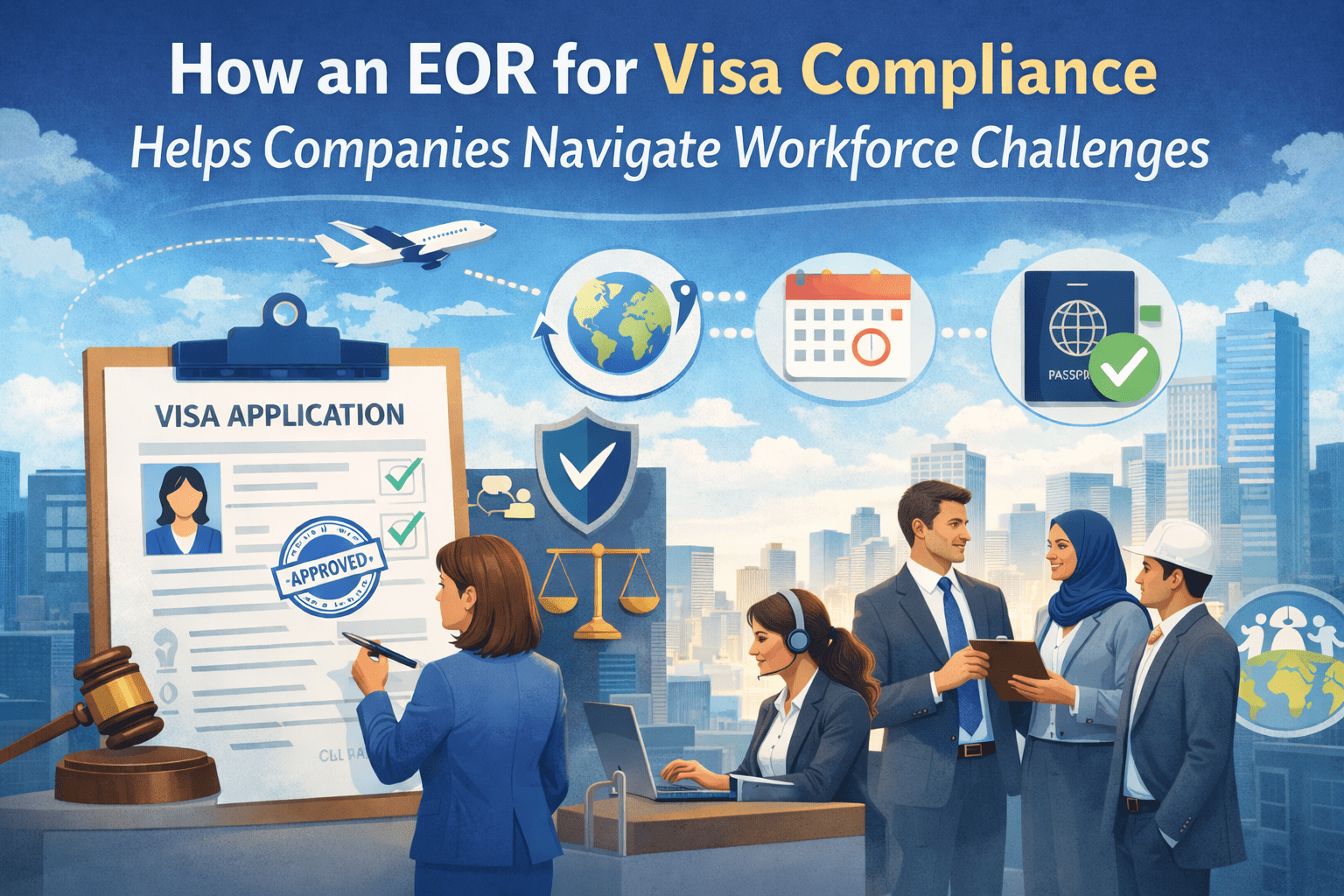
  • How an EOR for Visa Compliance Helps Companies Navigate Workforce Challenges

    How an EOR for Visa Compliance Helps Companies Navigate Workforce Challenges

    How an EOR for Visa Compliance Helps Companies Navigate Workforce Challenges

    EOR for visa compliance

    Introduction:

    Global talent fuels innovation and growth. However, visa delays and work authorization uncertainty continue to create real challenges for employers. When key employees face prolonged processing timelines, U.S. companies risk stalled projects, disrupted workflows, and increased legal exposure.


    An EOR for visa compliance offers a structured and compliant way to manage these situations. By ensuring employees remain legally employed while continuing their work, businesses can protect productivity without compromising regulatory obligations.

    The Real Impact of Visa Uncertainty on Employers

    Visa-related challenges rarely arrive with advance warning. Sudden delays, expirations, or policy changes can disrupt payroll operations, workforce planning, and delivery timelines.


    Beyond operational issues, there is also a human impact. Employees may experience stress, uncertainty, or disengagement. From an employer’s perspective, this creates risks around knowledge retention, team stability, and client commitments. For this reason, proactive planning for visa compliance for employers has become essential rather than optional.

    Why Temporary Solutions Often Fall Short

    When visas are delayed, many companies attempt short-term fixes. Employees may be placed on unpaid leave, temporarily shifted to contractor arrangements, or reassigned without clear structure.


    While these measures may seem practical at first, they often introduce new risks. Productivity tends to decline, morale is affected, and compliance exposure increases. More importantly, employees may begin to question their long-term future with the organization.


    As a result, temporary workarounds rarely provide the stability businesses actually need.

    Understanding the Employer of Record Model

    An Employer of Record (EOR) legally employs workers on behalf of a company in another jurisdiction. While the employer continues to manage daily responsibilities and performance, the EOR takes care of employment compliance.

    Typically, EOR responsibilities include:

    • Payroll and statutory benefits

    • Employment contracts and local labor law compliance

    • Tax filings and regulatory reporting

    • Support for employee relocation during visa transitions

    With this model in place, workforce continuity is preserved, and legal risks are reduced. Employees can continue contributing even when work authorization timelines are uncertain.

    For companies navigating these challenges, solutions such as Team Mangement Services EOR Solution provide structured support by managing payroll, compliance, and local employment obligations—allowing employers to retain talent without administrative complexity.

    How an EOR Supports Visa-Related Transitions

    When work authorization becomes uncertain, employers must respond quickly and carefully. An EOR for visa compliance enables companies to manage these transitions without disrupting operations. Employees can remain legally employed while continuing to work remotely or from a compliant jurisdiction. This approach helps protect business knowledge, maintain team cohesion, and reduce compliance risks.


    In addition, structured support for employee relocation due to visa issues helps HR teams manage transitions smoothly, while employees experience less disruption during an already stressful period.

    Global Locations as Strategic EOR Hubs

    Many U.S. companies leverage EOR services in global markets such as India. These regions offer a strong talent pool, well-defined labor laws, and structured payroll systems.


    With providers like Team Management Services (TMS) employers gain access to local compliance expertise and operational support. This makes it possible to retain experienced employees, maintain collaboration across time zones, and scale international teams without setting up local entities.

    Cost and Operational Advantages for Employers

    Visa delays often lead to unexpected expenses. Recruitment costs, onboarding efforts, and lost productivity can quickly add up.

    By implementing an EOR for visa compliance, companies can avoid repeated hiring cycles and reduce legal and administrative costs. Keeping employees on payroll preserves continuity and ensures projects move forward without interruption. Over time, this model proves far more cost-effective than reactive staffing decisions.

    Supporting Long-Term Workforce Planning

    Visa-related disruptions are rarely isolated events. Renewals, extensions, and regulatory changes can affect multiple employees over time.

    An EOR model allows companies to adopt flexible workforce strategies. Businesses can respond quickly to regulatory shifts, maintain global workforce compliance, and plan ahead with confidence. This proactive approach supports growth while minimizing risk exposure.

    Employee Experience Still Matters

    Compliance alone is not enough. Employee confidence plays a major role in retention and performance.

    Visa uncertainty can cause anxiety and disengagement. When employers provide a clear, legal path forward, trust is strengthened. Employees feel supported, remain productive, and are more likely to stay with the organization long-term—especially during periods of relocation or remote work.

    When an EOR Makes the Most Sense

    An EOR approach is particularly valuable when:

    • Visa timelines are unpredictable

    • Employees must temporarily relocate due to work authorization issues

    • Permanent residency or work permit processes are delayed

    • Business operations must continue without disruption

    In these scenarios, an EOR for visa compliance becomes more than a backup plan. It becomes a strategic workforce solution.

    Final Thoughts

    Visa delays do not need to disrupt business operations or lead to difficult employment decisions. With the right workforce structure and a compliant global employment framework, companies can maintain momentum, retain critical talent, and continue meeting client and operational commitments without interruption.


    An EOR model offers the clarity, control, and continuity organizations need during periods of immigration uncertainty. By enabling compliant employment, payroll, and workforce management across borders, the EOR approach allows employers to support skilled professionals, reduce risk, and adapt quickly to changing circumstances. This flexibility empowers businesses to navigate workforce challenges with confidence while building a resilient, globally distributed team for the long term.

    FAQs

    Yes. An EOR can legally onboard employees in another jurisdiction while visa approvals are pending, ensuring operations continue without delay.

    No. Employees continue to receive agreed compensation and benefits, with the EOR managing local statutory requirements.

    The EOR manages payroll records, tax filings, and labor law adherence, reducing administrative burden and audit complexity.

    Yes. Once work authorization is approved, employees can transition back to direct employment without disruption.

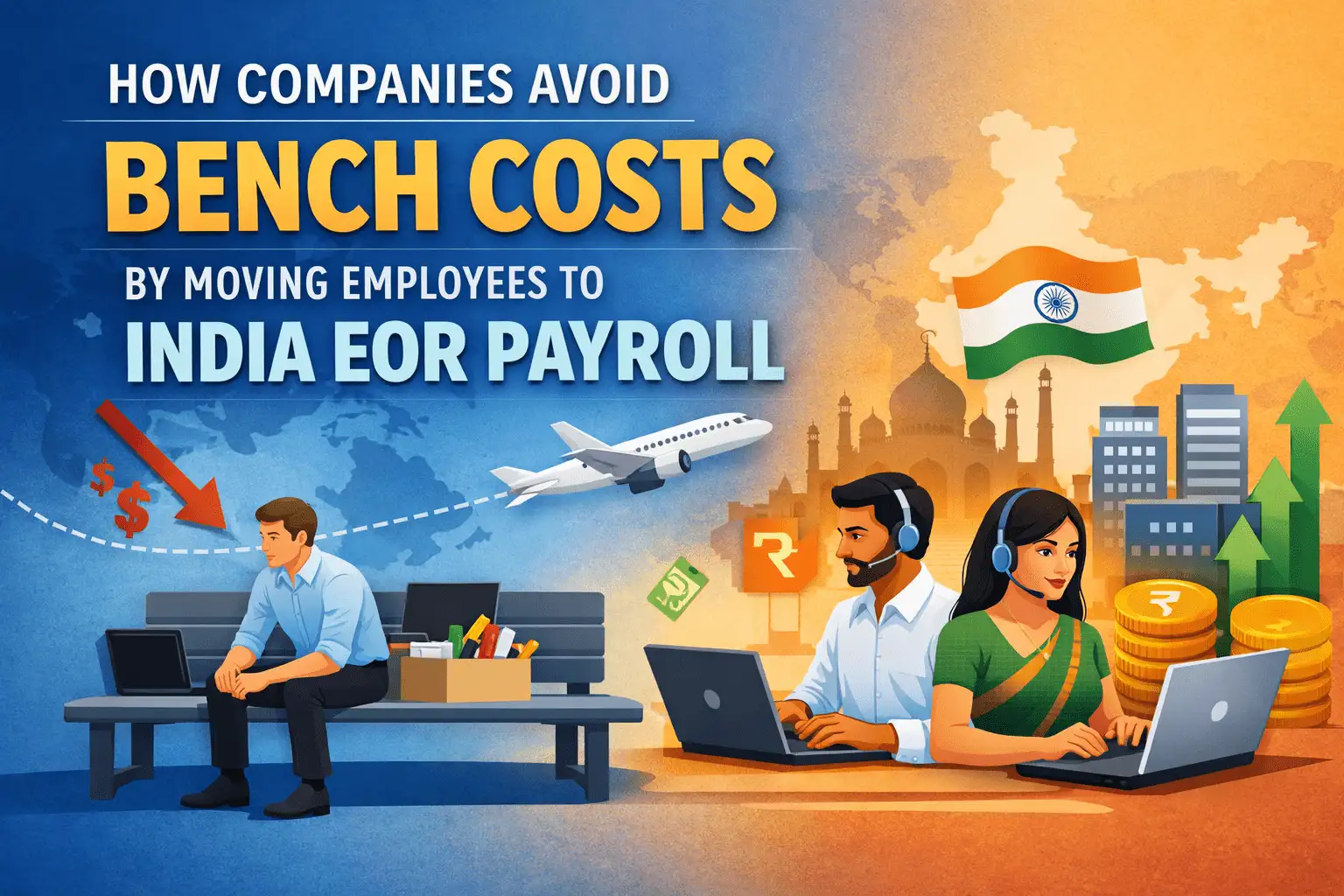
  • How Companies Avoid Bench Costs by Moving Employees to India EOR Payroll

    How Companies Avoid Bench Costs by Moving Employees to India EOR Payroll

    How Companies Avoid Bench Costs by Moving Employees to India EOR Payroll

    India EOR payroll

    Introduction: The Cost of Bench Time for U.S. Employers

    In today’s competitive business environment, bench costs are a hidden expense for many U.S. employers, especially those dependent on global talent. When employees are stuck in the visa process—whether it’s for H1-B or other work-related visas—they often end up on the “bench.” This means they’re being paid without contributing to the company’s productivity, which leads to escalating costs without any return on investment.

    The problem becomes even more challenging when companies hire Indian employees who are caught in visa delays. While waiting for their visa approvals, employers are still required to pay them, but they cannot use their skills for company projects. This situation can create a significant financial strain.

    However, there’s a solution that can help U.S. employers reduce these costs and keep their employees engaged—India EOR payroll.

    What Are Bench Costs and Why Should Employers Care?

    Understanding Bench Costs

    In simple terms, bench costs occur when employees are on the payroll but are not actively contributing to the organization’s output. Whether due to visa delays or being between assignments, bench time results in:

    • Salaries Paid Without Output: Employees on the bench continue to earn their full salary without providing the expected value or completing work.
    • Project Delays: The inability to deploy workers as planned can delay key projects, leading to unmet deadlines and frustrated clients.
    • Employee Morale Issues: Being stuck without a role or tasks for long periods can result in disengagement and frustration, lowering overall job satisfaction.

    For companies relying on foreign talent, especially Indian employees who often face visa delays, these bench costs can stretch into months, further complicating the situation.

    How India EOR Payroll Helps Reduce Bench Costs

    India EOR Payroll: The Ultimate Solution

    India EOR payroll offers a cost-effective solution to manage employees stuck in visa delays. By utilizing Employer of Record (EOR) services, U.S. employers can shift payroll to India, continue paying employees in compliance with local laws, and keep them engaged without the financial burden of bench time.

    Here’s how it works:

    • Legal Employment in India: Through India EOR payroll, U.S. companies can legally employ workers in India, even while they are waiting for their visa approval in the U.S. The EOR provider assumes the legal responsibility of being the employer, handling payroll, taxes, benefits, and compliance with Indian labor laws.
    • Reduced Payroll Costs: The labor cost in India is typically 50-70% lower than in the U.S. For example, a software engineer in India could earn around $20,000-$30,000 per year, compared to the $60,000 or more they would earn in the U.S. Shifting payroll to India reduces the financial strain caused by bench costs.
    • Continued Productivity: Employees can continue to work remotely from India, contributing to projects, internal work, or tasks that align with the company’s goals. This way, companies don’t lose valuable time or resources while waiting for visa approval.

    Breaking Down the Costs: Paid Leave vs India EOR Payroll

    Let’s compare the costs of paid leave versus shifting to India EOR payroll.

    1. Paid Leave for Visa-Delayed Employees:
      • An employee earning $60,000 annually who is on paid leave for 3 months costs the company $15,000. In addition to salaries, there are also administrative costs, benefits, and potential project delays to consider.
    2. India EOR Payroll Solution:
      • By shifting payroll to India EOR payroll, the company can pay a similar employee in India between $20,000-$30,000 annually.
      • This results in substantial savings while maintaining employee engagement and productivity.
      • Employees continue to contribute, and the company avoids the risk of losing talent or facing employee dissatisfaction.

    In this scenario, shifting payroll to India through EOR services allows companies to reduce labor costs while still keeping their workforce engaged and compliant.

    The Additional Benefits of India EOR Payroll

    Access to a Highly Skilled Workforce

    India is home to one of the world’s largest and most educated talent pools. Whether your company needs software developers, IT professionals, or customer support agents, India EOR payroll opens the door to highly skilled professionals who can contribute to your business at a fraction of U.S. labor costs.

    By utilizing India EOR payroll, U.S. employers can:

    • Expand their team quickly by hiring professionals who are available and ready to contribute remotely.
    • Scale up operations without the need for extensive legal and tax compliance management, as the EOR takes care of these aspects.

    Compliance with Local Labor Laws

    Employing workers in India without a local entity can create compliance headaches for U.S. employers. However, India EOR payroll services handle all aspects of legal compliance, ensuring that the employment terms, taxes, and benefits adhere to Indian labor regulations. This removes the burden of managing compliance across borders and mitigates the risk of legal issues.

    The Risks of Not Exploring India EOR Payroll Solutions

    Financial Strain Over Time

    Continuing to rely on paid leave for employees stuck in the visa process can create a growing financial burden. The longer the delay, the higher the costs, and the greater the chance that productivity will be impacted. For companies with several employees stuck in visa delays, the long-term cost of bench time can result in significant losses.

    Talent Loss and Employee Disengagement

    When employees are stuck in visa delays without contributing to the company’s work, disengagement is inevitable. Employees may lose motivation and start seeking opportunities elsewhere, leading to increased turnover and the loss of valuable talent. By shifting payroll to India EOR payroll, employees remain employed, motivated, and productive, which reduces the risk of turnover.

    Conclusion: A Smarter, Cost-Effective Solution for U.S. Employers

    Visa delays for Indian employees can create a significant bench cost for U.S. employers. However, by shifting payroll to India EOR payroll, you can drastically reduce those costs, maintain employee engagement, and ensure business continuity.


    At Team Management Services (TMS), we provide expert Employer of Record (EOR) services that allow U.S. companies to seamlessly shift payroll to India, avoiding bench costs and ensuring compliance with local labor laws. Our India EOR payroll solutions help you keep employees engaged and productive during visa delays, saving on payroll costs and reducing administrative overhead.


    For more information on how India EOR payroll can benefit your company, check out our blog on  Entity Setup in India: The Quick, Compliant Alternative to U.S. Visa Dependence

    FAQs

    EOR services manage compliance with both Indian and U.S. labor laws, reducing legal risks for companies.

    Roles in IT, customer service, marketing, software development, and finance can be moved to India payroll via EOR.

    The employee transitions back to U.S. payroll once their visa is approved.

    It typically takes a few weeks to set up India payroll via EOR, depending on the company’s needs.

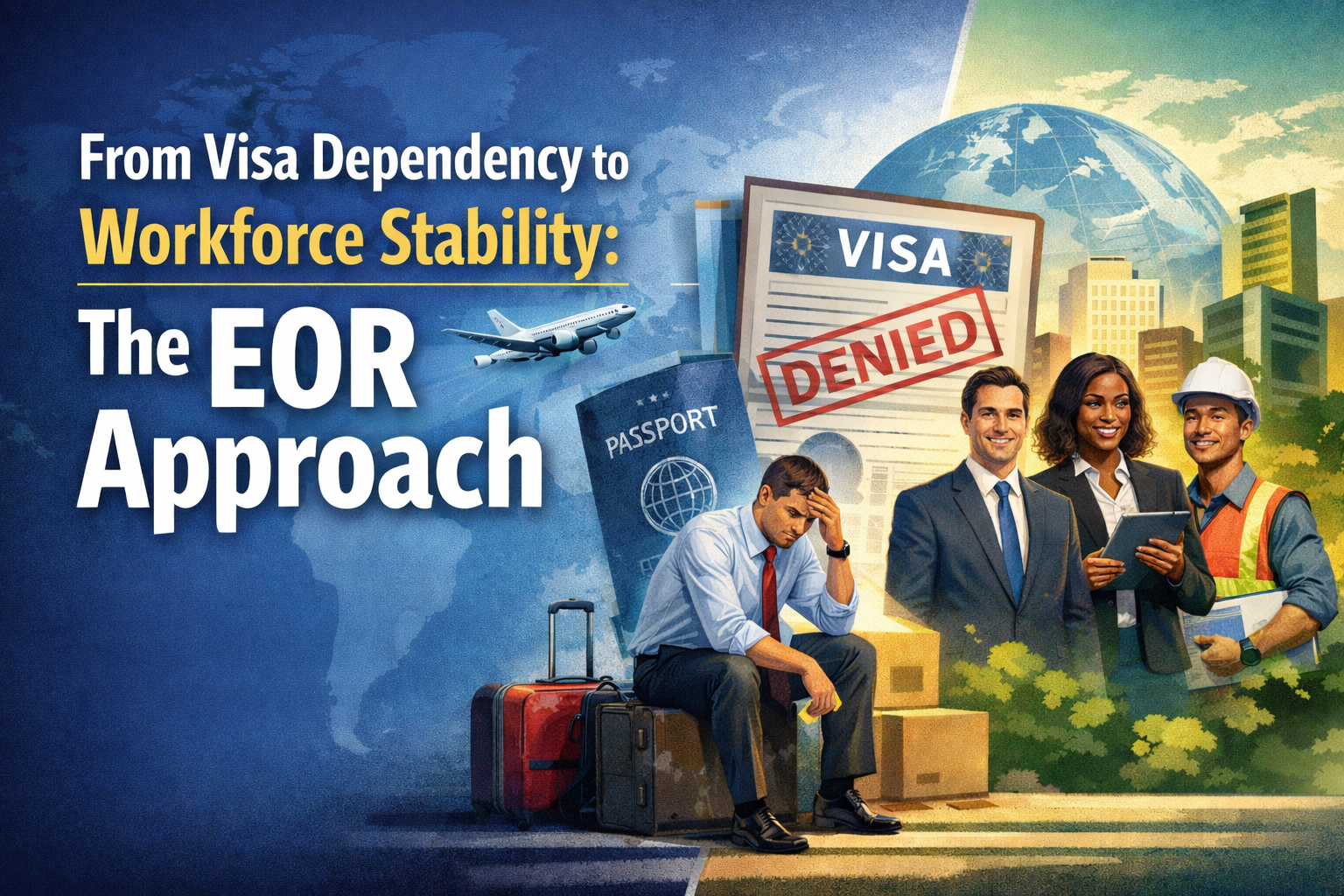
  • From Visa Dependency to Workforce Stability: How an EOR Helps Companies

    From Visa Dependency to Workforce Stability: How an EOR Helps Companies

    From Visa Dependency to Workforce Stability: How an EOR Helps Companies

    EOR for workforce stability

    Introduction:

    Global talent has become critical for business success. Yet, visa dependency continues to create uncertainty that affects project timelines, employee morale, and regulatory compliance. Work authorization delays, policy changes, and cross-border relocation challenges are now common hurdles for organizations relying on international talent.


    An EOR for workforce stability offers companies a structured and legal way to manage these challenges while keeping teams engaged and productive. By combining compliance, continuity, and flexibility, this model enables businesses to protect operations without unnecessary risk.

    The Hidden Costs of Visa Dependency

    When employees face delays in visa approvals or work authorization, the impact extends well beyond HR administration. Employers often experience:

    • Project delays and missed deadlines

    • Increased pressure on remaining team members

    • Higher compliance and legal exposure

    • Risk of losing high-performing talent

    Over time, these challenges can significantly affect delivery commitments, client relationships, and operational costs. This is why workforce stability has become a priority for globally operating companies.

    Why Traditional Approaches Often Fall Short

    To manage visa disruptions, many organizations rely on short-term measures such as unpaid leave, contractor conversions, or rushed relocations.

    While these approaches may address immediate issues, they often:

    • Reduce employee morale and engagement

    • Increase administrative and legal complexity

    • Disrupt cross-border workforce coordination

    More importantly, they do not offer long-term certainty. A structured solution like an EOR is designed to address compliance and continuity together.

    Understanding the Employer of Record Model

    An Employer of Record (EOR) is a legal entity that employs staff on behalf of a company in another jurisdiction. While the company retains operational control, the EOR manages employment compliance.

    Key EOR responsibilities include:

    • Payroll and statutory benefits

    • Employment contracts and local labor law adherence

    • Tax filings and regulatory reporting

    • Support for employee relocation due to visa challenges

    With this structure, companies can maintain productivity even when visa approvals are delayed. For employers seeking a reliable partner, Team Management Services EOR Solution supports this model by managing local payroll, statutory compliance, and employment obligations—allowing businesses to retain talent without operational disruption.

    How an EOR Supports Workforce Stability

    An EOR for workforce stability delivers tangible benefits for companies navigating visa uncertainty:

    • Employment Continuity: Employees remain legally employed and productive while authorization processes are pending.
    • Legal Compliance: Local labor laws are followed, reducing the risk of penalties or regulatory issues.
    • Knowledge Retention: Critical expertise and institutional knowledge stay within the organization.
    • Smooth Transitions: Employees can relocate temporarily or work remotely in compliance with local regulations, ensuring continuity during visa delays.

    Why Companies Choose Global EOR Locations

    Countries such as India, the Philippines, and Canada are commonly used for EOR arrangements due to:

    • Strong talent pools and skilled professionals

    • Well-defined labor laws and compliance frameworks

    • Time zone overlap that supports collaboration

    • Structured payroll and statutory systems

    With organizations like Team Management Services (TMS) offering on-ground expertise, companies gain confidence that employment practices remain compliant while teams continue to operate efficiently.

    Operational and Cost Advantages

    Visa delays often bring hidden costs. Recruiting replacements, onboarding new hires, and managing lost productivity can quickly escalate expenses.

    An EOR for workforce stability helps companies:

    • Avoid rehiring and retraining costs

    • Reduce legal and compliance overhead

    • Maintain consistent delivery timelines

    • Support efficient cross-border workforce management

    Over time, this approach proves more cost-effective than repeated temporary fixes.

    Employee Experience and Retention

    Visa uncertainty can be stressful for employees. Without clarity, engagement may drop and attrition risk increases.

    A structured EOR approach demonstrates commitment and support. Employees feel valued, experience smoother transitions, and remain focused on their work. As a result, retention improves and workforce morale remains strong.

    Strategic Use of EOR

    An EOR for workforce stability is especially valuable when:

    • Visa processing timelines are unpredictable

    • Employees require temporary relocation due to authorization issues

    • Global expansion demands flexible workforce models

    • Projects must continue without interruption

    In these situations, an EOR becomes a strategic tool rather than a contingency plan.

    Conclusion

    Visa dependency does not have to disrupt productivity or workforce continuity. With the right structure in place, companies can manage visa uncertainty without losing talent or momentum.


    An EOR for workforce stability allows employers to remain compliant, retain skilled employees, and keep projects on track during transitions. In a business environment where visa timelines continue to shift, this approach offers clarity, control, and long-term workforce confidence.

    FAQs

    Yes. Employees can legally work from a compliant jurisdiction while visa approvals are pending.

    No. Compensation structures remain unchanged, with the EOR managing local payroll and statutory benefits.

    The EOR handles employment contracts, tax filings, and labor law requirements across jurisdictions.

    Yes. Once authorization is approved, employees can transition back seamlessly without operational disruption.

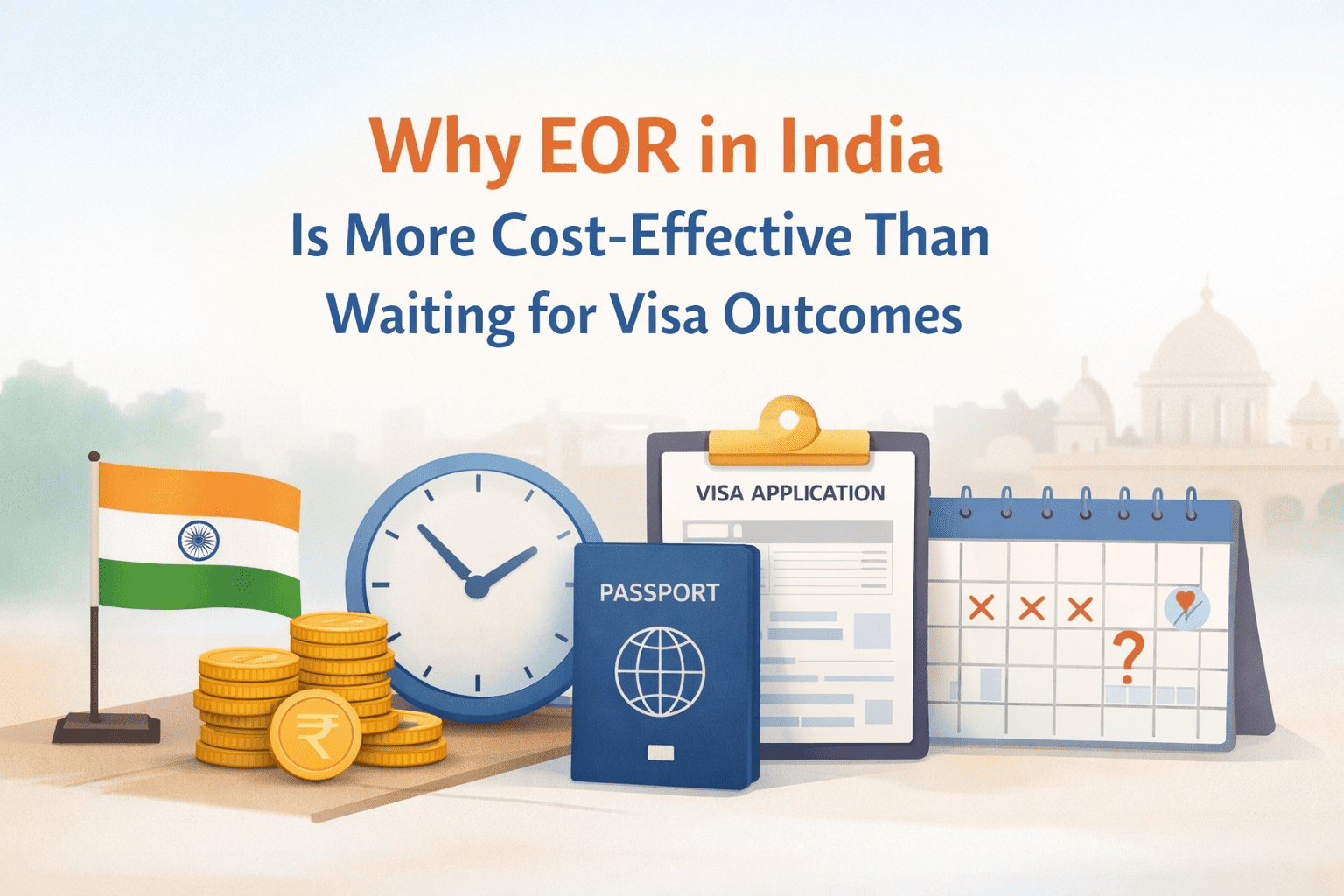
  • Why EOR in India Is More Cost-Effective Than Waiting for Visa Outcomes

    Why EOR in India Is More Cost-Effective Than Waiting for Visa Outcomes

    Why EOR in India Is More Cost-Effective Than Waiting for Visa Outcomes

    EOR in India

    Introduction: Navigating the Complicated Landscape of Visa Delays

    Visa delays have always been a challenge for U.S. employers, but with more global talent being sourced, especially from India, the impact of these delays is becoming more evident. As businesses rely on foreign talent to fill specialized roles, delays in visa approvals not only affect project timelines but also lead to unproductive bench time, employee dissatisfaction, and a decrease in workforce engagement. One key aspect that often goes unaddressed in visa delay scenarios is the impact on overall business operations. Beyond bench costs, issues like employee resignations, the challenges of remote work, especially in roles with data sensitivity, and the frustration employees face while waiting for visa outcomes can significantly disrupt a company’s growth.


    The question is, how can U.S. employers avoid these cascading problems and maintain a steady workforce, even as visa approvals are delayed? The answer: EOR in India. In this blog, we’ll explore how EOR in India not only helps mitigate bench costs but also provides a comprehensive solution to issues like remote work constraints, employee engagement, and the risks of losing talent during the visa process.

    The Compounding Challenges of Visa Delays for U.S. Employers

    1. Financial Burden Beyond Bench Costs

    Bench costs hurt immediately. Salaries continue without output. That alone strains budgets. But the real damage runs deeper.

    • Salary Without Results: Companies pay employees who cannot contribute. ROI drops fast.
    • Opportunity Loss: Project timelines slip. Client commitments suffer. Revenue takes a hit.
    • Administrative Overload: HR teams manage payroll, benefits, and compliance for inactive employees. That adds cost without value.

    2. Employee Resignations and Disengagement

    As visa delays stretch on, employees may feel frustrated and disconnected from their role. The uncertainty of waiting for visa approvals can lead to feelings of exclusion, especially when they cannot contribute to projects. This is particularly problematic when employees are on long-term paid leave and feel like their professional growth is stagnating.

    The longer employees remain in this state, the higher the risk that they’ll begin to seek other opportunities. Talented individuals might resign or accept offers from companies that provide more immediate employment and career progression.

    3. Remote Work Challenges in Sensitive Roles

    While remote work is a common solution to keep employees engaged during visa delays, it’s not always feasible, especially in roles that involve data sensitivity. Companies in sectors such as finance, healthcare, and technology face strict data security regulations that may prevent employees from working remotely from locations outside the U.S. or specific regions.

    In such cases, remote work becomes a logistical and compliance nightmare, as sensitive data cannot be easily accessed or managed securely. Waiting for a visa to enable employees to work in-person might seem like the only option, but it often leads to an extended period of unproductive downtime.

    How EOR in India Addresses These Challenges

    1. Shift Payroll to India Instead of Paying Bench Costs
    EOR in India lets companies move payroll legally and efficiently. Employees remain employed under Indian labor laws.

    They continue working while awaiting visa approval. No downtime. No bench loss.

    Key advantages include:

    • Lower Costs: Indian salaries cost 50–70% less than U.S. equivalents.

    • Active Productivity: Employees contribute to projects or internal work.

    • Higher Retention: Engaged employees rarely resign out of frustration.

    This approach turns dead time into productive time.

    2. Compliance-Friendly Remote Work for Sensitive Roles

    EOR in India supports compliance when remote work raises concerns.

    A strong EOR partner helps companies:

    • Follow Indian labor laws correctly

    • Align work with data protection standards

    • Limit access to sensitive systems

    Companies can also reassign employees to non-sensitive tasks. That keeps them productive without violating regulations.

    How Does EOR in India Compare to Waiting for Visa Outcomes?

    Cost Comparison

    Visa Delay with Paid Leave:

    • Annual Salary: $60,000

    • Three Months Paid Leave: $15,000

    • Zero output during that period

    EOR in India:

    • Annual Cost: $18,000–$25,000

    • Continuous productivity

    • Full legal compliance

    Instead of burning $15,000, companies pay less and get real work done.

    That’s not a small improvement. That’s a structural advantage.

    Additional Benefits of EOR in India

    • Talent Flexibility and Scalability
      With EOR in India, U.S. companies can scale their workforce more efficiently. Whether it’s one employee or a full team, the process is quick and seamless, without the complexities of setting up a local entity. You can onboard employees in days, not months.
    • Reduced Legal and Compliance Risk
      EOR providers handle all legal and compliance requirements in India, ensuring your employees are paid correctly and all local labor laws are followed. This reduces the risk of legal challenges related to cross-border employment and ensures smooth operations.

    The Risks of Not Adopting EOR in India

    1. Rising Costs and Employee Disengagement
    If U.S. companies don’t explore EOR in India, they continue to face rising bench costs while their employees remain disengaged. Employees stuck in visa limbo are more likely to seek opportunities elsewhere if their productive skills are not being utilized.

    2. Delayed Business Growth
    Waiting for employees to be able to work in the U.S. causes delays in business operations, reducing growth potential. By shifting payroll to India, businesses can continue to operate efficiently, meeting deadlines and supporting clients.

    Conclusion: The Smart Solution for U.S. Employers

    Waiting for visa approvals is costly, and the financial strain only increases over time. By shifting to EOR in India, U.S. employers can save on payroll expenses, keep employees engaged, and ensure continued productivity. With the added flexibility to manage global talent, EOR in India helps businesses grow without the delays and risks associated with waiting for visa outcomes.


    At Team Management Services (TMS), we specialize in offering EOR in India solutions that allow U.S. employers to manage their workforce efficiently and cost-effectively during visa delays. With TMS EOR services, you can avoid bench costs, maintain employee engagement, and continue productive work even while waiting for visa approvals.

    Our team takes care of all payroll, compliance, and legal considerations in India, enabling you to focus on what truly matters—growing your business.


    Learn more about how we can help your company stay productive and compliant with India EOR payroll by visiting our blog on A Complete Guide to Hiring Employees in India Through EOR

    FAQs

    Usually yes—visa delays, legal fees, and idle roles cost more than EOR fees.

    Yes, if the EOR is compliant with Indian labor, tax, and payroll laws.

    EOR hiring takes days; visas can take months or fail altogether.

    Only when the role must be physically based in another country.

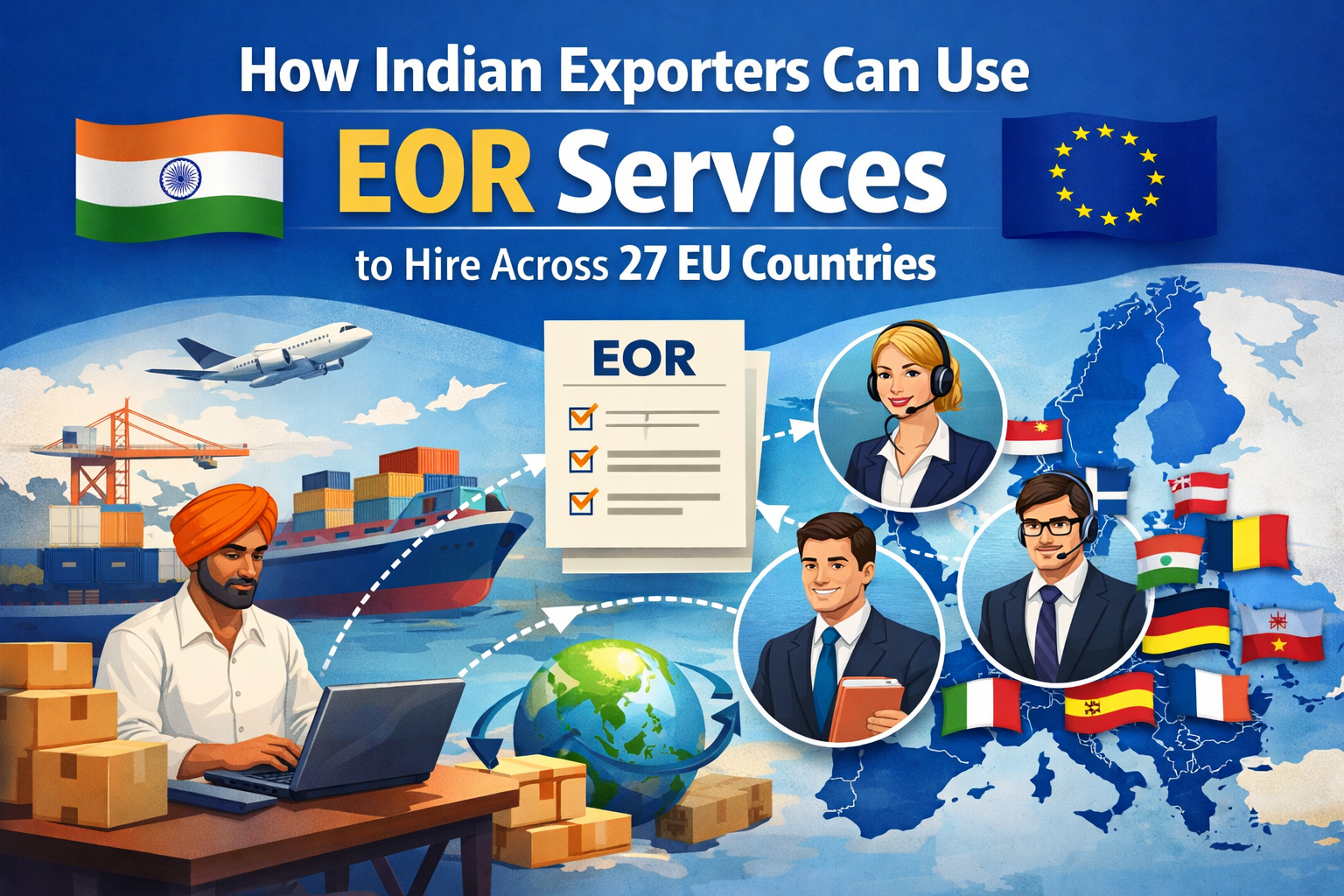
  • How Indian Exporters Can Use EOR Services to Hire Across 27 EU Countries

    How Indian Exporters Can Use EOR Services to Hire Across 27 EU Countries

    How Indian Exporters Can Use EOR Services to Hire Across 27 EU Countries

    India-eu trade deal

    Introduction

    Sometimes in business, the biggest leaps forward don’t happen when everything is easy. They happen when someone takes a bold step forward and embraces a possibility many others haven’t fully explored yet. If you are an Indian exporter reading this, that bold step might be the moment when you stop thinking only about products and start thinking about people.


    Right now, a major shift is happening globally. The India-EU Trade Deal, widely described as the mother of all deals, marks a turning point in how Indian businesses can engage with Europe. This landmark agreement unlocks unprecedented access between India’s expansive market and the European Union’s 27 member countries. It promises reduced tariffs, smoother market access, and broader opportunities for trade in goods and services across one of the world’s largest economic blocs—covering over one-quarter of global GDP and billions of consumers. But trade agreements alone don’t create success. Execution does. That’s where Employer of Record (EOR) solutions come in—and where Indian exporters can truly tap into the full potential of the EU market.

    Understanding the India–EU Opportunity

    Let’s be clear—this new India-EU Trade Deal is historic. It eliminates duties on a high percentage of exchanged goods, giving Indian products such as textiles, seafood, leather, chemicals, and gems a far more competitive position across Europe. At the same time, European goods and services gain smoother access to the Indian market under this agreement.


    For exporters, this shift opens the door to much more than increased sales. It creates the opportunity to build deeper, long-lasting relationships with customers across Europe. These are not one-off transactions. They are partnerships that grow over time. And to nurture those partnerships, local presence becomes essential someone on the ground who understands the market, speaks the language, and can respond quickly to customer needs.


    This naturally leads to hiring people in those markets. However, hiring across 27 European Union countries is anything but simple. Each country operates under its own legal framework, with distinct employment laws, payroll rules, social security contributions, labor standards, and compliance obligations. When your focus is on scaling exports and meeting demand, navigating this complexity can quickly become overwhelming.

    What an Employer of Record (EOR) Actually Does

    Imagine the freedom of selling your products into Europe without having to immediately jump through all the legal and administrative hoops that multinational corporations deal with. Employer of Record services act like your legal bridge into foreign markets.

    An EOR:

    • Legally employs workers in the target country on your behalf

    • Manages payroll, tax filings, and statutory contributions

    • Handles benefits, compliance, employment contracts, and HR administration

    • Ensures local labor laws are respected without you needing a legal entity there

    For Indian exporters, this means you can build an on-ground team whether it’s sales professionals, technical support, operations leads, or customer service staff across the EU quickly and legally, without setting up separate companies in each jurisdiction.

    Why EOR Matters for Indian Exporters Entering Europe

    Most Indian exporters are used to managing production, quality, logistics, and customer relationships. However, hiring abroad in a region with 27 sovereign legal systems is a different beast entirely.

    European employment laws are stringent, and compliance is not a nice-to-have. You must adhere to:

    • Local contract norms

    • Payroll and tax legislation

    • Social security requirements

    • Worker benefits and protections

    One mistake in payroll or employment compliance can cost you time, money, reputation, or even legal trouble. With EOR, this worry disappears. The EOR becomes the official employer of your EU workers, ensuring full compliance while you retain full control of your business operations.

    This means:

    • Faster market entry: No need to set up legal entities in each country.

    • Lower costs: You avoid expensive setup and long legal processes.

    • Full compliance: Local HR, tax, and employment laws are handled by experts.

    • Scalable growth: Add team members in one city or across several countries with ease.

    With the EU market now easier to reach thanks to the trade deal, EOR services make sure you can operate there just as easily.

    Real Challenges Exporters Face — And How EOR Solves Them

    Let’s consider what many Indian exporters experience when trying to go global:

    • Customs and logistics are easier to manage than hiring. You can move goods, but getting people into the equation people who can build relationships, support clients, and represent your brand is much harder.

    • Setting up branches or subsidiaries in each EU country is costly and slow. Even a small country like Belgium or the Netherlands requires local registration, bank accounts, legal compliance, and tax registrations before you can hire.

    • Employment laws vary widely across Europe. One country might require certain benefits, another might impose higher tax rates or stricter contract rules.

    Now imagine you could skip all that. With an EOR, you can hire immediately in Germany, France, Italy, Spain, or any of the EU countries, without company registration or compliance headaches. That’s not just convenient it’s strategic. It means you can compete as a trusted local partner, not just an exporter with products on a shelf.

    How EOR Accelerates Growth in the EU Market

    Think of EOR as your operational accelerator. It clears away administrative friction so you can focus on building your business in Europe.

    Here’s what that looks like in practical terms:

    • Hire a local sales lead in France within weeks rather than months of setup.

    • Set up customer support teams in Spain and Italy without navigating local employment law yourself.

    • Deploy product specialists in Germany or Scandinavia who understand customer needs firsthand.

    • Retain full control of your strategy and customer relationship while leaving HR complexity in expert hands.

    With this kind of flexibility, your export strategy doesn’t remain limited to trade flows alone. It evolves into a global growth engine. And don’t forget: the Europe deal also promises improved services access and mobility frameworks that can make movement for professionals smoother. This means that your employees might benefit from better mobility rules as well.

    Why the Timing Is So Important

    History has a rhythm, and economic opportunities don’t wait forever. The India-EU Trade Deal has unlocked a rare moment in time, but Indian exporters must act decisively to take full advantage of it. Reduced tariffs and easier market access will only translate into real orders and long-term clients if expectations around service quality, compliance, and responsiveness are consistently met.


    Hiring local talent is often the defining difference between simply exporting into a market and truly becoming part of it. This is where Employer of Record solutions shine. They allow businesses to build skilled, compliant teams across the European Union quickly, without the cost and complexity of setting up legal entities. The opportunity today is not just to sell products it is to grow into a brand that European customers trust and rely on.

    Conclusion: Turning Opportunity into Reality

    The world is changing. The India–EU Trade Deal has created a huge canvas for Indian exporters to paint a more ambitious future one that goes beyond shipments and into real local presence. Whether you are in textiles, marine products, engineering goods, leather, or digital services, this market is now more accessible than ever before. But here’s the truth: understanding the opportunity is only half the battle. The other half is acting on it in a way that is smart, compliant, and efficient.

    That’s where Team Management Services can help. We are a trusted Employer of Record provider that simplifies hiring across foreign markets. We help Indian exporters like you hire, manage payroll, stay compliant, and build teams across all 27 EU countries without the need for local entity setup. With experience, empathy, and an eye for your success, we make sure your export journey is not just about accessing markets it’s about thriving in them. Employers of Record are not just service vendors; they are your partners in growth.

    FAQs

    Absolutely. EOR providers manage payroll, tax filings, statutory benefits, and local compliance on your behalf.

    Yes. This is one of the biggest reasons companies use an Employer of Record. An EOR allows you to legally hire employees in EU countries without setting up a legal entity, which saves time, cost, and compliance risk.

    Yes, it is fully legal. The EOR becomes the legal employer in the EU country, while you manage the employee’s day-to-day work. This model is widely used by global companies entering new markets.

    You can hire in one country or across all 27 EU countries, depending on your business needs. Many exporters start with one or two strategic markets and then scale gradually.

  • India–EU Trade Deal: What It Means for Companies Expanding Into India?

    India–EU Trade Deal: What It Means for Companies Expanding Into India?

    India–EU Trade Deal: What It Means for Companies Expanding Into India?

    expanding into india

    Introduction

    Sometimes growth does not come from chasing something new. It comes from finally acting on an opportunity that has been visible for years but never felt quite right to pursue. For many international companies, India has long been discussed as a promising market. Yet expansion plans often stalled due to regulatory uncertainty, hiring challenges, or lack of local clarity. Today, that hesitation is being replaced by action. The India EU Trade Deal signals a shift in how global companies can approach India. It creates a more predictable framework and gives businesses a reason to move from interest to execution.

    Understanding the India EU Trade Deal in Simple Terms

    At its core, the agreement strengthens trade and economic cooperation between India and European Union countries. It focuses on reducing trade barriers, improving access to goods and services, and encouraging long term investment. While much attention goes to tariffs, the bigger impact lies in how this deal supports business confidence. It reassures companies that India is open, engaged, and committed to deeper global integration. For companies considering Primary coverage: Expanding Into India, this clarity matters. It makes planning easier and reduces uncertainty at the decision making stage.

    Why India Has Become a Proven Market

    India is no longer an untested destination for global expansion. Over the years, companies across technology, manufacturing, retail, and services have built strong and lasting operations in the country. Global technology platforms and enterprise brands have expanded their teams steadily in India. Digital products have found rapid adoption. Consumer brands have grown loyal customer bases. These outcomes did not happen overnight, but they prove that India rewards commitment. What makes India unique is its ability to combine scale with adaptability. Businesses that invest locally often see long term returns that go beyond short term growth.

    What the Trade Deal Means for Business Strategy

    Trade agreements create opportunity, but strategy determines results. The India EU Trade Deal improves access, but companies must decide how to use that access effectively. For many businesses, exporting products is only the first step. Real growth comes when companies support customers locally and respond quickly to market needs. That shift requires people on the ground. Local teams help companies move faster, understand customers better, and build trust over time.

    The Reality of Entering India

    Despite its opportunity, India has a structured regulatory environment that companies must respect. Employment laws, payroll rules, and statutory obligations are detailed and closely enforced. This complexity can feel overwhelming, especially for first time entrants. Setting up a legal entity takes time, and compliance mistakes can be costly. At the same time, delaying expansion carries risk. India is competitive, and early movers often secure better talent and stronger positioning.

    Why Hiring Becomes the Turning Point

    Nearly every successful expansion story in India reaches the same conclusion. Products alone do not build presence. People do.

    Hiring local professionals helps companies understand cultural nuances, manage partnerships, and support customers more effectively. It also signals commitment to the market. This is why Primary coverage: Expanding Into India often becomes a hiring decision before it becomes a legal one.

    A Practical Way Forward for Companies

    Many companies choose to enter India through a more flexible model. Instead of setting up a local entity immediately, they hire through an Employer of Record.

    This approach allows companies to:

    • Hire employees legally in India

    • Stay compliant with local labour laws

    • Avoid the delays of entity formation

    • Scale teams gradually based on market response

    By separating business growth from administrative complexity, companies can focus on learning the market first.

    From Entry to Belonging

    There is a clear difference between selling into a market and belonging to it. Belonging comes from presence, understanding, and trust.

    Companies that succeed in India treat it as a long term partnership rather than a short term opportunity. They invest in people and processes that support growth.

    This mindset transforms Primary coverage: Expanding Into India from a tactical move into a strategic decision.

    Conclusion

    The India EU Trade Deal creates meaningful opportunity, but opportunity alone is never enough. Execution determines outcomes. India has proven itself as a market that rewards preparation, patience, and local engagement. Companies that enter thoughtfully often build lasting value.


    At Team Management Services, we help companies expanding into India through Employer of Record services. We support compliant hiring, payroll management, and workforce setup so businesses can focus on growth with confidence.

    With the right structure and the right partner, India becomes more than a destination. It becomes part of your long term growth story.

    FAQs

    Yes. The agreement has been finalised and is being implemented in phases, with tariff reductions and market access provisions gradually coming into force.

    Yes. Through an Employer of Record, EU companies can legally hire employees in India without setting up a legal entity.

    In most cases, hiring can be completed within two to four weeks, depending on the role and location.

    Yes. The employment contract clearly states the EOR as the legal employer, which is standard and widely accepted.