Part of SKAD HR Group — HR for every stage of business  ·  HRTailor.com  ·  HRTailor.AI

Author: Abhijit Divekar

  • How the India–Oman CEPA Is Changing Workforce Planning for Omani Companies

    How the India–Oman CEPA Is Changing Workforce Planning for Omani Companies

    How the India–Oman CEPA Is Changing Workforce Planning for Omani Companies

    India–Oman CEPA workforce planning

    Introduction:

    Workforce planning in Oman is no longer only about filling roles. It is now about long-term capability building, regulatory readiness, and access to global talent. With the India–Oman Comprehensive Economic Partnership Agreement (CEPA), this shift has become even more visible.


    For senior HR and strategy teams, the agreement is not just a trade milestone. It signals a new way of thinking about people, skills, and workforce structure. And this change is only beginning.

    Why Workforce Planning Is Now a Boardroom Priority

    Traditionally, workforce planning focused on short-term hiring needs. However, business expansion, digital transformation, and regional competition have changed expectations. Leaders now ask deeper questions.


    They want to know whether their workforce can support future growth, not just today’s operations. They also want clarity on talent availability beyond local markets. That is where CEPA becomes relevant.


    What seems like a policy change is actually a strategic signal.

    Understanding the CEPA Beyond Trade Numbers

    The India–Oman CEPA is often discussed in terms of exports, imports, and investments. Yet, its workforce impact matters just as much. The agreement creates smoother frameworks for skilled professional mobility, especially in sectors where Oman needs scale and expertise.


    For HR teams, this means workforce planning must now factor in cross-border talent access earlier than before. The opportunity is clear, but the execution needs thought.


    And this is where many organisations pause.

    A Shift from Local Hiring to Regional Talent Thinking

    Omani companies have long relied on local and regional talent pools. CEPA expands this view by making India Oman talent mobility more structured and predictable.


    Instead of reactive hiring, companies can now plan roles that require specialised skills in advance. This helps reduce skill gaps and improves operational continuity. Yet, this shift also raises new planning questions.


    Because access does not automatically mean readiness.

    What This Means for Strategic Workforce Forecasting

    Workforce forecasting is no longer limited to headcount numbers. It now includes skill availability, onboarding timelines, and compliance alignment. Under CEPA, Indian professionals become part of the long-term talent equation for many Omani businesses.

    Senior HR teams must therefore rethink forecasting models. They must ask which roles benefit from international expertise and which must remain locally anchored. This balance defines modern Omani workforce strategy.

    And getting this balance wrong can slow growth.

    Compliance Is Now Part of Workforce Design

    Earlier, compliance was handled after hiring decisions were made. That approach no longer works. With cross-border hiring Oman frameworks evolving, compliance must be built into workforce planning from the start.


    This includes visa processes, role classifications, contract structures, and local labour alignment. HR leaders who integrate compliance early face fewer disruptions later. And fewer disruptions always mean stronger execution.

    How CEPA Influences Leadership and Skill Mix

    CEPA does not replace local talent. Instead, it complements it. Many Omani companies are using Indian professionals in mentoring, project-based, or specialised roles.


    This approach improves internal capability while maintaining national workforce goals. It also changes leadership structures, as multicultural teams become more common.


    The result is a more resilient organisation.

    The Impact on Cost Planning and Workforce Budgets

    Workforce planning also involves financial forecasting. CEPA creates flexibility, but not cost shortcuts. Salary structures, relocation expenses, and compliance costs must still be planned carefully.

    However, the value lies in productivity, expertise, and speed to execution. Companies that plan budgets realistically see better returns from international hiring. And returns matter at the strategy table.

    Why Strategic Timing and HR Leadership Matter Under CEPA

    Under CEPA, timing and leadership in workforce planning have become critical competitive advantages. Organisations that plan hiring early benefit from smoother onboarding, stronger role alignment, and reduced operational strain, while those that delay often face rushed decisions as expansion pressures mount. At the same time, competition for talent continues to intensify. In this environment, senior HR teams must move beyond an operational role and act as strategic advisors—guiding leadership on talent feasibility, workforce mix, role design, risk, and long-term capability building within the India–Oman CEPA framework. HR teams that lead this transition play a direct role in shaping sustainable business outcomes.

    Workforce Planning Under CEPA: From Growth Opportunity to Execution Challenge

    When executed effectively, workforce planning under CEPA becomes a powerful growth enabler—supporting faster market entry, stronger execution, and sustainable expansion by aligning talent strategy with long-term business vision. This shift elevates HR from a support function to a true growth driver, allowing companies that recognise its value to move faster and build momentum that is difficult to slow.


    However, many organisations still struggle not because of limited access to talent, but due to poor coordination between strategy, HR, and compliance teams. This lack of alignment fragments workforce planning, slows decision-making, and increases risk. Identifying this disconnect is the critical first step—because for organisations ready to act, practical solutions are within reach

    The Role of Recruitment Partners in CEPA-Driven Planning

    Navigating CEPA-aligned workforce planning requires market understanding and operational clarity. This is where experienced recruitment partners add value.


    In the conclusion of many successful workforce strategies, companies often work with specialists like Team Management Services (TMS) . As a recruitment service provider, TMS supports Omani companies in planning and executing structured hiring strategies aligned with cross-border requirements.


    The right partner simplifies decision-making without removing strategic control.

    Conclusion: A Strategic Moment for Omani Companies

    The India–Oman CEPA workforce planning shift is not a short-term trend. It is a strategic reset. Senior HR and leadership teams that adapt early will build stronger, future-ready organisations.


    Those who wait may still hire, but they will miss the advantage of planning. And in today’s market, planning is power.

    The question is not whether workforce planning will change—but how prepared your organisation is for it.

    FAQs

    No. The CEPA does not force companies to hire a fixed percentage of Indian workers. Instead, it creates a structured framework that makes skilled talent mobility easier, allowing employers to plan workforce composition based on business needs and compliance requirements.

    Roles requiring specialised skills, project-based expertise, technical leadership, and operational scalability are most influenced. These often include engineering, IT, operations, finance, and sector-specific technical positions where local talent supply may be limited.

    HR teams should treat CEPA as a complement, not a replacement. International professionals can support knowledge transfer, mentoring, and capability building while ensuring long-term alignment with Omanisation policies through structured workforce planning.

    Key risks include role misalignment, unclear compliance ownership, onboarding delays, and cost underestimation. Early coordination between HR, legal, and recruitment teams significantly reduces these risks.

    Yes. When used strategically, CEPA enables companies to bring in experienced professionals who can strengthen leadership pipelines, support succession planning, and help develop internal teams through exposure to global best practices.


  • Planning to Hire in Oman in 2026? Why Indian Talent Is a Strategic Option

    Planning to Hire in Oman in 2026? Why Indian Talent Is a Strategic Option

    Planning to Hire in Oman in 2026? Why Indian Talent Is a Strategic Option

    Indian talent hiring in Oman

    Introduction:

    Hiring in Oman is moving into a more strategic phase. By 2026, workforce decisions will be shaped by skill depth, project readiness, and long-term planning rather than short-term availability. For companies preparing their hiring roadmap, Indian talent hiring in Oman is emerging as a well-considered strategic option.


    This shift is not about volume hiring. It is about building capable teams that can support expansion plans while maintaining operational stability. And the companies that understand this early are already planning ahead.

    Oman’s Hiring Environment Is Becoming More Complex

    Oman’s economic diversification is accelerating across logistics, energy, manufacturing, technology, and healthcare. As these sectors grow, the demand for experienced professionals is increasing.


    Local talent development remains essential. However, certain roles require exposure to large-scale projects, advanced systems, and international work environments. This is where companies start exploring broader talent strategies.


    Because relying on a single talent pool limits growth options.

    Why Workforce Planning for 2026 Needs a New Approach

    Hiring cycles are becoming longer and more structured. Many organisations now plan workforce needs two to three years in advance. By 2026, companies will compete not just for talent, but for ready-to-deploy skills.


    This is where Indian professionals add value. Their experience across global markets supports faster onboarding and smoother execution. Strategic workforce planning today reduces hiring pressure tomorrow.


    And pressure always affects performance.

    Indian Talent Is a Strategic Capability, Not a Shortcut

    The perception of Indian professionals as only a cost-driven choice no longer holds. Today, Indian talent brings technical expertise, adaptability, and familiarity with structured corporate environments.


    In the context of Indian talent hiring in Oman, companies benefit from professionals who can integrate quickly and contribute from day one. This reduces learning curves and improves delivery timelines.


    Which matters when project deadlines are fixed.

    Skill Alignment With Oman’s Growth Sectors

    Indian professionals are widely present in engineering, IT, finance, operations, healthcare support, and project management. These skills align directly with Oman’s priority sectors.


    Many of these roles require hands-on experience rather than entry-level training. Indian talent often brings both, helping companies maintain quality while scaling teams responsibly.


    Quality, once compromised, is hard to rebuild.

    Building Workforce Flexibility Without Losing Control

    One key advantage of hiring Indian professionals is flexibility. Companies can plan permanent, project-based, or specialised roles based on business needs.


    When structured correctly, this approach supports knowledge transfer to local teams and strengthens internal capability. Over time, it creates a more balanced workforce model. Balance is the foundation of sustainability.

    Compliance Must Be Planned, Not Managed Later

    Cross-border hiring requires careful alignment with employment laws, visa processes, and role definitions. Organisations that treat compliance as part of workforce design face fewer disruptions.


    This is especially important when planning Indian talent hiring in Oman, where early coordination between HR, legal, and recruitment teams ensures smoother execution. Good planning always reduces uncertainty.

    Indian Talent as a Long-Term Workforce Investment

    Many companies use Indian professionals to strengthen systems, mentor teams, and improve operational processes. This approach creates long-term value rather than dependency. Instead of filling gaps temporarily, organisations build internal capability. This supports leadership development and future workforce stability. Stability drives confidence across teams.

    Why Companies That Plan Early Gain an Advantage

    Hiring success in 2026 will depend on decisions made today. Companies that map skill requirements, timelines, and workforce mix early gain better control over outcomes. When planned strategically, Indian talent hiring in Oman supports scalability without compromising compliance or quality. Waiting limits choices. Planning expands them. And expanded choices mean better decisions.

    The Role of Recruitment Expertise in International Hiring

    International hiring requires market insight, candidate assessment, and process clarity. Recruitment partners help companies navigate these complexities.


    Organisations like Team Management Services (TMS) support businesses by delivering structured recruitment solutions for Indian professionals aligned with Omani workforce needs. The focus remains on long-term fit, not short-term fixes.

    The right support strengthens strategy execution.

    Conclusion: A Strategic Workforce Decision for 2026

    As companies plan hiring in Oman for 2026, Indian talent stands out as a strategic option. When approached thoughtfully, Indian talent hiring in Oman supports growth, fills critical skill gaps, and strengthens workforce resilience. This is not about replacing local talent. It is about complementing it with experience and global exposure. Companies that plan now will build stronger teams for the future.

    And the future always rewards preparation.

    FAQs

    Yes. When planned properly, Indian professionals are well-suited for long-term roles that require technical expertise, operational continuity, and leadership support, especially in growing sectors.

    Ideally, companies should begin planning 12–24 months in advance. Early planning allows better role mapping, smoother compliance processes, and access to a stronger talent pool.

    While not mandatory, working with a recruitment partner helps ensure better candidate screening, regulatory alignment, and faster hiring decisions, particularly for specialised or senior roles.

  • Human Resources Management (HRM): Meaning, Functions, Process & Best Practices (2026)

    Human Resources Management (HRM): Meaning, Functions, Process & Best Practices (2026)

    Human Resources Management (HRM): Meaning, Functions, Process & Best Practices (2026)

    human resources management

    Introduction

    You can feel it in every workplace conversation today: people expectations have changed. Employees want clarity, growth, and respect. Managers want performance and speed. Meanwhile, businesses want stability, compliance, and predictable outcomes.


    That’s exactly why human resources management matters more than ever in 2026. It’s no longer just “HR paperwork.” Instead, it’s the system that helps a company hire well, pay correctly, develop talent, and build a culture people actually want to stay in.


    So, if you’re building a team—or trying to fix a messy one—this guide will help you understand HRM in a practical, relatable way.

    What is HRM (and why does it matter in 2026)?

    HRM (Human Resource Management) is the set of practices used to manage employees across the full lifecycle—right from hiring to exit. In other words, it connects business goals with people strategy.


    And in 2026, HRM matters because:


    • Work is faster: Roles evolve quickly, so skills must keep up.

    • Retention is harder: People leave when growth and trust are missing.

    • Compliance is stricter: Even small mistakes can turn expensive.

    • Employee experience is visible: Reviews travel fast and shape hiring.

    So, HRM is both a support function and a growth engine. When it runs well, teams feel stable. When it doesn’t, everything feels heavy—recruitment, payroll, culture, and even customer service.

    The core functions of HRM

    Although HR looks different in every company, the core responsibilities usually stay the same. However, the best HR teams don’t treat these as “tasks.” Instead, they run them like a system.


    1) Workforce planning


    Before you hire, you need a clear plan:

    • What roles do we need, and why?

    • What skills are missing today?

    • What work can be automated, delegated, or redesigned?

    When planning is strong, hiring becomes easier. As a result, you waste less time interviewing the wrong profiles.


    2) Recruitment and selection


    Hiring is more than posting a job. It includes:

    • Writing role clarity (not just job descriptions)

    • Sourcing candidates

    • Screening and interviews

    • Offer management and documentation

    Also, smart hiring reduces future problems. Because when you hire for values and capability—not just a résumé—teams perform better.

    3) Onboarding and joining experience

    First weeks decide everything. Therefore, onboarding should cover:

    • Role expectations and early goals

    • Tools and access

    • Team introductions and workflows

    • Policies and compliance basics

    A good onboarding plan lowers anxiety. Moreover, it improves productivity faster.


    4) Payroll coordination and compensation


    Even if payroll is processed elsewhere, HR still plays a big role:

    • Salary structure and revisions

    • Attendance inputs and approvals

    • Incentives and deductions alignment

    • Pay transparency and communication

    When payroll communication is unclear, trust drops instantly. So, HR must keep it simple and consistent.

    5) Learning and development (L&D)

    Training isn’t only for freshers. Instead, it supports:

    • Manager development

    • Role-based skill growth

    • Leadership pipeline

    • Career paths and internal mobility

    Even small learning programs can boost retention. Additionally, they improve performance without hiring more people.


    6) Performance management


    In 2026, performance systems work best when they’re continuous. That means:

    • Clear goals and measurable outcomes

    • Regular check-ins (not just annual reviews)

    • Coaching conversations

    • Fair evaluation and feedback loops

    When performance feels fair, motivation rises. On the other hand, unclear evaluation leads to politics and exits.

    7) Employee relations and engagement


    People don’t leave companies. They often leave experiences. Therefore, HR must actively manage:

    • Workplace conflicts

    • Grievances and resolutions

    • Communication, surveys, and feedback

    • Culture rituals and team norms

    Even simple practices—like monthly one-on-ones—can prevent big issues later.


    8) Policy, discipline, and compliance support


    This includes:

    • Company policies and employee handbook

    • Leave rules and documentation

    • Disciplinary processes and warnings

    • Statutory alignment and record-keeping

    Done right, policy protects both the company and employees. Also, it reduces confusion across teams.

    The HRM process: Step-by-step (a practical view)

    Think of HRM as a loop, not a straight line. People join, grow, shift roles, and sometimes exit. So, your process should support every stage.

    Step 1: Define roles and expectations


    Start with clarity:

    • What outcomes should this role deliver?

    • What skills are essential vs. “nice to have”?

    • How will success be measured?

    If you skip this step, hiring becomes guesswork. Consequently, mismatches increase.

    Step 2: Hire with structure

    Use a repeatable approach:

    • Screening criteria

    • Standard interview scorecards

    • A clear offer workflow

    • Document checklist

    Structure doesn’t remove human judgment. Instead, it makes decisions fair and consistent.


    Step 3: Onboard with a 30-60-90 plan:


    Give new hires direction:

    • 30 days: learn and settle

    • 60 days: contribute with support

    • 90 days: own outcomes independently

    This works because it reduces ambiguity. Moreover, it helps managers lead better.


    Step 4: Support performance and growth


    Keep performance simple:

    • set goals, review progress, remove blockers

    • coach managers on feedback conversations

    • track learning plans and skill development

    When growth feels real, retention improves. Therefore, this step matters more than most companies think.

    Step 5: Maintain employee experience and compliance


    This is the “steady engine” work:

    • policies, documentation, attendance discipline

    • leave records and approvals

    • grievance handling and culture building

    Even though it’s not flashy, it prevents chaos. As a result, HR becomes predictable and trusted.


    Step 6: Manage exits professionally


    Exits should be clean and respectful:

    • handover plan and asset recovery

    • final settlement coordination

    • exit interview feedback

    • documentation and closure

    When exits are handled well, your employer brand improves. Also, teams feel safer.

    Best practices that make HRM work (without making it complicated)

    Here are practical habits that raise HR quality quickly:

    Keep policies readable


    Avoid long, legal-style writing. Instead, write policies in plain language with examples. Also, keep them accessible in one place.


    Build manager capability


    Managers shape daily experience. So, train them on:


    • feedback and coaching

    • conflict handling

    • goal setting

    • basic HR do’s and don’ts

    Even a short monthly session can help. Meanwhile, HR stops becoming the “middleman for everything.”

    Use data—but don’t drown in it

    Track a few meaningful HR metrics, such as:


    • time-to-hire

    • early attrition (0–90 days)

    • attendance trends

    • performance distribution

    • engagement survey signals

    Then act on the data. Otherwise, it becomes noise.


    Make communication a routine

    Many HR problems are communication problems. Therefore:


    • share clear updates

    • explain “why” behind policies

    • repeat key information

    • open feedback channels

    Clarity builds trust. In addition, it reduces rumours and confusion.


    Design for employee experience


    Small improvements compound:


    • faster onboarding access

    • clear leave and attendance rules

    • transparent salary processes

    • recognition rituals

    • mental wellbeing support

    When people feel respected, they deliver more. It’s that simple.

    Common HRM mistakes (and how to avoid them)

    Even good companies slip here. So, watch for these traps:


    • Hiring without role clarity: fix this with a one-page role outcome sheet.

    • Over-relying on annual appraisals: shift to quarterly check-ins.

    • Ignoring onboarding: add a checklist + buddy system.

    • Weak documentation: standardize templates and storage.

    • Policies that exist only on paper: train managers and reinforce consistently.

    Each fix is doable. Moreover, none require a massive budget.

    A quick HRM checklist you can use today

    If you want a simple starting point, use this:


    • Role descriptions updated and outcome-based

    • Hiring process standardized with scorecards

    • Onboarding plan + access checklist

    • Clear leave and attendance rules

    • Performance check-ins scheduled quarterly

    • Training plan for managers

    • Central place for policies and documents

    • Exit process documented and consistent

    Start small, and improve monthly. That approach works because it builds momentum.

    Conclusion: HRM is a system—and you don’t have to run it alone

    Strong HRM isn’t about doing “more HR.” Instead, it’s about building a reliable system where hiring is structured, onboarding is smooth, payroll inputs are accurate, performance is consistent, and compliance doesn’t become a last-minute panic.


    However, as teams grow, managing all of this internally can start feeling heavy. That’s where Team Management Services can support you with end-to-end HR services—including onboarding support, payroll processing, HR documentation, and statutory/labour law compliance assistance—so your business can stay organized, compliant, and focused on growth.

    FAQs

    HR usually refers to the department or people handling employee-related work. HRM is the broader system and strategy—how hiring, onboarding, performance, learning, and policies work together to support business goals.

    Start with the basics: structured hiring, a simple onboarding plan, clear attendance/leave rules, accurate payroll inputs, and consistent documentation. Once these are stable, add performance check-ins and manager training.

    Focus on role clarity, growth paths, regular feedback, recognition, and strong manager support. Also, fix friction points like slow onboarding, unclear policies, and inconsistent communication—these drive exits faster than most leaders expect.

    At minimum: leave and attendance rules, code of conduct, anti-harassment policy, disciplinary process, confidentiality/data rules, remote work guidelines (if applicable), and grievance escalation steps—written in simple language with examples.

    Quarterly check-ins work best for most teams. Keep yearly appraisals for compensation decisions, but use monthly or quarterly conversations for goals, coaching, and course correction.

  • What is Payroll Processing? Step-by-Step Payroll Workflow for Employers

    What is Payroll Processing? Step-by-Step Payroll Workflow for Employers

    What is Payroll Processing? Step-by-Step Payroll Workflow for Employers

    what is payroll

    Introduction

    Salary day is a promise. Employees plan rent, EMIs, groceries, and family expenses around it. So, when payroll is delayed—or when the amount looks “off”—trust is shaken fast.

    That’s why payroll processing isn’t just a back-office routine. Instead, it’s a repeatable system that protects employee confidence, keeps finances predictable, and supports compliance.

    If you’ve ever wondered what is payroll processing and why it feels so complex, you’re not alone. The good news is this: once you understand the workflow, payroll becomes less stressful and far more controllable.

    Let’s break it down in a simple, employer-friendly way.

    Payroll processing meaning

    Payroll processing is the monthly (or periodic) method of calculating employee pay and paying it on time—after factoring in attendance, incentives, reimbursements, deductions, and statutory contributions.

    In other words, payroll turns “work done” into “salary paid,” while keeping records clean and audit-ready.

    However, payroll is not just about numbers. It also includes communication, documentation, approvals, and deadlines. Therefore, a strong workflow matters.

    Why payroll matters more than most employers think

    Payroll touches almost every part of a business. Because of that, one small miss can create a bigger ripple.


    Here’s what payroll influences:


    • Employee trust: Accuracy builds confidence. Mistakes create doubt.

    • Company reputation: Payslip issues spread quickly inside teams.

    • Cash flow planning: Predictable payouts keep budgets stable.

    • Compliance readiness: Proper records reduce legal and audit risk.

    • Time savings: A smoother process means fewer salary queries later.

    Also, payroll affects retention. Even great culture can be overshadowed by “salary problems.” So, payroll must run like clockwork.

    The key elements of payroll

    Before you run payroll, the right inputs must be collected. Otherwise, errors are almost guaranteed.

    1) Employee master data

    This includes employee ID, role, location, joining date, CTC structure, bank details, and statutory details.

    When master data is incomplete, mismatches happen later. So, it should be updated immediately when changes occur.


    2) Attendance and leave records

    Payroll depends on:

    • attendance days
    • overtime (if applicable)
    • paid/unpaid leave
    • late marks or shifts (if policy-based)

    Therefore, attendance cut-off dates must be clear.

    3) Salary structure

    Most payroll structures include:

    • basic salary
    • allowances
    • incentives/bonus
    • reimbursements
    • employer and employee contributions
    • deductions

    Additionally, revisions and arrears must be tracked properly.

    4) Deductions and recoveries


    Common deductions may include:


    • statutory deductions

    • loan/advance recovery

    • unpaid leave impact

    • penalties (if policy allows)

    To avoid disputes, deduction rules should be documented and communicated.

    Typical Functions Run From a GCC in India

    Think of payroll like a checklist-driven pipeline. When each step is done in order, payroll becomes predictable.


    Step 1: Set payroll calendar and cut-off dates

    Start by fixing:

    • attendance cut-off date

    • input submission deadline (incentives, reimbursements, overtime)

    • approval date

    • payslip date

    • salary credit date

    This step seems basic. However, it prevents last-minute chaos.

    Step 2: Collect and validate payroll inputs

    Gather inputs from HR, operations, and finance:

    • attendance summary

    • leave and LOP details

    • incentives/variable pay

    • new joiners and exits

    • salary revisions and arrears

    • reimbursements and claims

    Next, validate them. For example, check outliers like unusually high overtime or sudden LOP spikes.

    Because when bad inputs go in, bad payroll comes out.

    Step 3: Update employee changes (joiners, exits, revisions)

    This is where payroll often breaks.

    Make sure updates are reflected:

    • new joiner prorated salary and statutory setup

    • full & final settlement data for exits

    • revised salary structures effective date

    • bank account changes

    • designation/location changes (if policy-linked)

    Even if you use payroll software, these changes must be entered correctly. Otherwise, the system will calculate perfectly… from wrong data.

    Step 4: Run gross salary calculations

    Now gross salary is calculated using:

    • fixed components (basic + allowances)

    • variable pay rules

    • prorations for joining/leaving mid-month

    • attendance-based deductions (LOP)

    At this stage, many teams also calculate:

    • incentives and bonuses (if applicable)

    • arrears or adjustments

    Then, a draft payroll register is generated.

    Step 5: Apply statutory deductions and contributions

    Statutory deductions and employer contributions are applied based on eligibility and rules.

    This is also where compliance discipline matters. Therefore, employee categories, wage limits (where applicable), and correct identifiers must be maintained.

    If you’re asking what is payroll compliance in practice, it’s this step—done correctly, every month, without shortcuts.

    Step 6: Apply other deductions and recoveries

    Next, add:

    • salary advances recovery

    • loans (EMI schedules)

    • canteen/transport deductions (if applicable)

    • policy-linked deductions

    Also, document the reason. When employees ask questions, clarity solves issues faster.

    Step 7: Review and approvals (the “control” step)

    Before salaries are paid, run checks like:

    • negative net pay

    • big month-on-month variance

    • missing bank details

    • duplicate employees

    • unusual deduction totals

    • department totals vs budget expectation

    Then, approvals should be taken—ideally from HR + finance.

    This step is critical because it reduces rework later.

    Step 8: Generate payslips and bank file

    After approval:

    • payslips are generated

    • bank transfer statement/file is prepared

    • payout instructions are finalized

    Also, keep a secure audit trail of who approved what and when.

    Step 9: Disburse salaries and share payslips

    Salaries are credited on the promised date, and payslips are released through the chosen channel.

    If a change occurs, communicate early. Because silence creates panic, while updates create confidence.

    Step 10: Post-payroll reporting and record keeping

    Finally, store:

    • payroll register

    • payslips archive

    • deduction summaries

    • payout proofs

    • statutory reports (as applicable)

    Then, analyze trends. For example, track LOP patterns or overtime increases. This improves decisions over time.

    What is payroll mistakes (and how to prevent them)

    Even good teams make payroll errors. However, most issues are preventable with a few habits.

    Mistake 1: Unclear cut-offs

    When cut-offs aren’t communicated, inputs arrive late. Therefore, payroll gets rushed.

    Fix: Publish a payroll calendar and repeat it monthly.

    Mistake 2: Manual changes without documentation

    Small adjustments done “quickly” often become recurring problems.

    Fix: Use a change request format and keep approvals logged.

    Mistake 3: Weak employee master data

    Incorrect bank details, wrong joining dates, or outdated salary structures create avoidable mismatches.

    Fix: Treat master data like a “single source of truth” and update it immediately.

    Mistake 4: No pre-payroll variance check

    If you don’t compare payroll month-to-month, errors hide in plain sight.

    Fix: Add a simple variance report and review exceptions first.

    Best practices for a smoother payroll process

    If you want payroll that feels calm, not chaotic, focus on these:


    • Standardize inputs: One format, one deadline, one owner per input type.

    • Use checklists: Repetition is your friend in payroll.

    • Automate where possible: Especially attendance integration and payslip sharing.

    • Keep policies simple: Complex rules increase disputes and mistakes.

    • Train managers: Many payroll delays start with unapproved attendance or late variable inputs.

    • Protect confidentiality: Payroll data should be accessed only by authorized people.

    Also, build a “salary query” system. Even a simple ticketing approach helps, because questions get tracked and patterns become visible.

    Quick checklist: payroll workflow in 10 lines

    • Payroll calendar shared

    • Attendance locked

    • Inputs collected and validated

    • Joiners/exits updated

    • Salary revisions applied

    • Gross calculated

    • Statutory + other deductions applied

    • Variance checks done

    • Approvals taken

    • Payslips released + records stored

    If you do these consistently, payroll becomes reliable.

    Conclusion: Keep payroll predictable—and get expert support when needed

    Payroll is a promise you repeat every month. So, once you’re clear on what is payroll and how payroll processing actually works, it becomes easier to build a structured workflow that protects employees, improves planning, and reduces compliance risk. Moreover, it saves leadership time because fewer escalations happen.

    If your team wants help running payroll smoothly at scale, Team Management Services provides payroll services designed to support accurate processing, documentation, and compliance-aligned workflows—so employers can focus on growth while payroll operations stay stable.

    FAQs

    A payroll cycle is the fixed schedule you follow to pay employees—monthly, bi-weekly, or weekly. It includes cut-off dates for attendance, input submission, approvals, payslip release, and salary credit. Therefore, a clear cycle reduces last-minute delays.

    A payroll register is the consolidated month-wise record of employee pay details—gross pay, deductions, employer contributions, and net pay. It matters because it supports audits, internal checks, budgeting, and employee query resolution.

    A payslip generally includes employee details, pay period, earnings breakup (basic and allowances), deductions (statutory and other), employer contributions (if shown), and net pay. Also, clear breakups help reduce confusion and salary-related disputes.

    Start with three actions: lock attendance on time, validate inputs using a checklist, and run a month-to-month variance check before approvals. In addition, keep master data updated because even small profile errors can create repeated payroll issues.

    Payroll outsourcing can be considered when headcount grows, compliance work increases, payroll errors become frequent, or internal teams spend too much time on repetitive processing. Moreover, it helps when you need stronger documentation, tighter controls, and consistent payroll timelines.

  • Payroll Outsourcing vs In-House Payroll: Benefits, Risks & Best Choice

    Payroll Outsourcing vs In-House Payroll: Benefits, Risks & Best Choice

    Payroll Outsourcing vs In-House Payroll: Benefits, Risks & Best Choice

    pros and cons of outsourcing payroll

    Introduction:

    Payroll is one of those business processes that looks simple from the outside. Yet, behind the scenes, it’s a monthly chain of deadlines, inputs, approvals, calculations, and compliance checks. And because salaries affect real lives, even one mistake can feel bigger than it is.


    So, the question is natural: should you keep payroll in-house, or should you outsource it?


    This guide breaks down the pros and cons of outsourcing payroll in a practical way. You’ll see the trade-offs clearly. Plus, you’ll get a decision framework that helps you choose confidently—without overthinking it.

    In-house payroll vs payroll outsourcing: what’s the real difference?

    In-house payroll means your internal team manages the full cycle: attendance inputs, salary calculations, deductions, payslips, payouts, and reporting. You also manage the tools, training, and controls.


    Payroll outsourcing means a third-party payroll partner runs part or most of that workflow for you. However, you still provide inputs and approvals. In other words, you don’t “hand off responsibility,” but you do hand off execution and process discipline.


    Because of that, the best choice depends on your team size, complexity, and risk tolerance.

    Why the decision matters more in 2026

    Workplaces have changed. Teams scale faster. Hiring happens across multiple locations. Meanwhile, compliance expectations keep rising.


    As a result, payroll is no longer just “salary day.” It’s also:


    • a trust system for employees

    • a cash-flow system for finance

    • a documentation system for audits

    • a compliance system for statutory alignment

    So, when payroll becomes heavier, employers start comparing effort vs outcome. That’s exactly where the outsourcing vs in-house decision begins.

    The real costs of in-house payroll (beyond salary)

    At first, in-house payroll can feel cheaper. You already have HR staff, and payroll happens “somehow.” Yet hidden costs show up over time.


    Common cost drivers in-house


    • Payroll software purchase and upgrades

    • Continuous training as rules and systems change

    • Time spent fixing errors and answering salary queries

    • Dependency on one person (key-person risk)

    • Compliance risk and penalty exposure

    Also, opportunity cost is often ignored. When HR spends days closing payroll, hiring and onboarding are slowed down. Consequently, growth suffers quietly.

    Benefits of payroll outsourcing

    Payroll outsourcing can be a strong choice when you want a stable monthly engine. It often brings structure where things feel messy.


    1) More time for core HR work


    Instead of chasing attendance inputs and corrections, HR can focus on hiring, onboarding, engagement, and retention. Therefore, your people work becomes more strategic.


    2) Stronger process discipline


    A good payroll partner runs on checklists, cut-offs, validations, and documented approvals. As a result, fewer “last-minute surprises” show up.


    3) Reduced operational risk

    When payroll is run by specialists, common errors are reduced. Additionally, exception handling improves because edge cases are expected and managed.

    4) Easier scaling

    As headcount grows, complexity rises fast. Outsourcing can absorb that growth without you adding internal payroll capacity immediately.

    5) Better reporting rhythm

    When payroll registers, summaries, and variance reports are delivered consistently, finance planning becomes easier. Also, leadership gets clearer visibility.


    If you’re evaluating the pros and cons of outsourcing payroll, these benefits are usually the reason businesses start exploring it seriously.

    Risks of payroll outsourcing (and how to manage them)

    Outsourcing is helpful, but it isn’t automatic success. Risks exist, and they should be handled upfront.


    1) Data security and confidentiality


    Payroll includes sensitive employee data. So, you must ensure secure access controls, confidentiality practices, and clear data-handling terms.


    How to manage it: Ask about security processes, access roles, audit trails, and secure document exchange.


    2) Loss of “instant control”

    When payroll is outsourced, you can’t make last-minute changes casually. However, that’s also a benefit because discipline improves.


    How to manage it: Set clear cut-offs and define what qualifies as an exception.

    3) Input dependency remains

    Even with outsourcing, your team still must provide accurate inputs—attendance, incentives, joiners/exits, revisions, and approvals.


    How to manage it: Assign internal owners for each input type and use a fixed payroll calendar.


    4) Service quality varies by provider


    Some vendors are process-driven, while others are reactive. Therefore, choosing the right partner matters more than “outsourcing” itself.


    How to manage it: Evaluate SLAs, escalation timelines, error-handling, and the account manager model.

    In short, outsourcing reduces execution burden, but governance still stays with you. That balance should be accepted early.

    Benefits of keeping payroll in-house

    In-house payroll can be the best option for some businesses, especially when payroll is simple and stable.


    1) Direct control and quick changes


    If your payroll structure is straightforward, and changes are frequent, in-house teams can respond faster.


    2) Close alignment with company context

    Internal teams understand culture, internal policies, and exceptions better. As a result, communication can feel smoother.


    3) Strong internal capability building


    When payroll expertise is built internally, it becomes a long-term asset. Also, payroll knowledge supports better HR operations overall.

    However, these benefits hold only when the team has bandwidth, training, and strong controls.

    The biggest risks of in-house payroll

    Even well-run companies struggle with these issues:

    1) Key-person dependency

    If payroll relies on one person, leaves and resignations create chaos. Consequently, payroll continuity becomes fragile.


    2) Manual errors and rework


    When processes rely heavily on spreadsheets and manual checks, mistakes happen. And then time is spent fixing them instead of preventing them.

    3) Compliance fatigue


    Tracking every rule update is hard. Even if you do it well, it consumes attention monthly. Over time, fatigue sets in.


    4) Scaling pressure


    A payroll process that works for 30 employees can break at 150. And then it breaks again at 500—unless systems mature at the same pace.


    So, while in-house can work, it must be designed as a system, not an activity.

    Which option is best? Use this decision framework

    If you want a simple way to choose, score yourself on these factors:


    Choose payroll outsourcing if:


    • you have multi-location teams or frequent headcount changes

    • payroll complexity is increasing (variable pay, shift rules, reimbursements)

    • HR bandwidth is limited and hiring needs attention

    • you want predictable monthly closure with validations and controls

    • compliance risk feels high, and you want stronger process discipline

    Choose in-house payroll if:

    • payroll is small, stable, and low-complexity

    • you already have trained payroll expertise internally

    • changes are frequent and need same-day adjustments

    • you have strong tools and documented SOPs

    • leadership prefers internal ownership and has capacity to support it

    Often, the “best” solution is also hybrid. For example, calculations and reporting can be outsourced, while approvals and employee communication stay internal.


    This approach keeps control while reducing workload.

    What to ask before choosing a payroll partner

    If you do explore outsourcing, ask questions that reveal operational maturity:

    • What is the monthly payroll calendar and cut-off process?

    • What validations happen pre-payroll and post-payroll?

    • How are errors tracked and resolved?

    • Who is the day-to-day point of contact?

    • What is the escalation path and SLA?

    • How is data confidentiality handled?

    These questions make the comparison fair. Moreover, they prevent disappointment later.

    Conclusion: choose the model that keeps payroll calm

    Payroll shouldn’t feel like a monthly fire drill. Instead, it should feel like a routine—clear inputs, clear checks, and on-time payouts.


    When deciding, don’t focus only on cost. Focus on reliability, risk, and the time your team gets back. That’s where the real value sits.


    And if you do decide to outsource, service providers like Team Management Services offer payroll outsourcing services designed to support accurate processing, structured workflows, and compliance-aligned execution for employers.

    FAQs

    It can be. However, the real savings often come from reduced rework, fewer errors, and less time spent on payroll closure and employee queries—not only the vendor fee.

    Not completely. You still control approvals, inputs, and policies. Instead, execution and monthly process discipline are handled by the partner, while governance stays with you.

    Data confidentiality, delayed inputs from internal teams, and inconsistent service quality are the most common. Therefore, SLAs, escalation paths, and clear cut-offs should be set from the start.

  • Payroll Compliance Guide: Statutory Deductions, Returns & Due Dates

    Payroll Compliance Guide: Statutory Deductions, Returns & Due Dates

    India Payroll Compliance Guide: Statutory Deductions, Returns & Due Dates (2026)

    Payroll Compliance Guide: Statutory Deductions, Returns & Due Dates

    Introduction:

    Payroll is often remembered for salary day. However, payroll is also defined by what is withheld, deposited, reported, and archived—on time, every time. Because of that, payroll compliance in india is usually felt most clearly when a deadline is missed, a deduction is questioned, or a notice is received.


    Still, panic is not required. Instead, a repeatable compliance rhythm is built: inputs are captured, deductions are applied, payments are deposited, returns are filed, and records are maintained.


    In this guide, the most common statutory items are explained in simple terms. Additionally, widely followed due-date patterns are shared so that payroll months can be closed calmly.

    What “payroll compliance” means in practice

    Payroll compliance is the consistent following of labour and tax rules related to wages, deductions, employer contributions, statutory payments, and mandatory filings.


    In plain terms, three outcomes are expected:


    • Correct deductions are made from eligible employees.

    • Correct deposits are made to the right authorities within due dates.

    • Correct returns and records are maintained for audits and employee queries.

    As a result, trust is protected, penalties are reduced, and audits are handled with far less stress.

    The statutory items that are commonly tracked

    Although every company will not be covered under every law, these are commonly seen in Indian payroll operations:

    1) EPF (Provident Fund)

    PF contributions are generally required to be deposited by the 15th of the following month.
    Additionally, the electronic challan/return workflow is usually tied to the remittance process.

    2) ESI (Employees’ State Insurance)

    ESI contributions are generally required to be remitted monthly, and the payment due date is commonly stated as the 15th of the following month.

    Meanwhile, half-yearly ESIC returns are often referenced with due dates of 12 November (for Apr–Sep) and 12 May (for Oct–Mar).

    3) TDS on salary (Income Tax)

    TDS is required to be deposited by the due dates notified by the Income Tax Department’s tax calendar. For many deductors, deposit due dates are shown as the 7th of the following month, with a common extended timeline for March deductions reflected in the calendar (e.g., late April). 
    Because notifications and exceptions can apply, the official calendar is typically treated as the source of truth.

    4) Professional Tax (PT)

    Professional tax (PT) rules are state-specific. Therefore, applicability, slabs, and due dates are set by the respective state, and variation is explicitly expected. 

    5) Labour Welfare Fund (LWF)

    Labour Welfare Fund (LWF) frequency and due dates are also state-specific. As a result, monthly, half-yearly, or annual patterns can be seen depending on the state act.


    Common due-date rhythm (monthly, quarterly, half-yearly)

    A simple way to reduce missed deadlines is to run payroll compliance as a calendar, not as memory.


    Monthly (often seen)


    • PF deposit: on or before the 15th of the following month

    • ESI deposit: commonly referenced as the 15th of the following month

    • TDS deposit: due dates are listed in the Income Tax Department calendar (commonly the 7th for many months, with March handled differently in the calendar). 

    Quarterly (often seen)


    • Quarterly TDS statements (e.g., Form 24Q): due dates are commonly shown as 31 July, 31 October, 31 January, and 31 May for the four quarters. 

    Half-yearly (often seen)


    • ESIC return: commonly referenced as 12 November and 12 May, depending on the half-year period. 

    • LWF/PT: may also be half-yearly in some states, while other states may require monthly or annual compliance. 

    Because state rules differ, PT and LWF due dates are usually locked after the employee location map is finalized.

    Statutory deductions explained (so payslips stay easy to understand)

    Confusion is rarely created by deductions themselves. Instead, confusion is created when deductions are not explained clearly.


    PF deduction (employee + employer)


    PF is typically structured as an employee contribution and an employer contribution. Therefore, the salary structure and eligibility mapping are expected to be maintained accurately, and deposits are expected to be made within the monthly due-date cycle.


    ESI deduction (employee + employer)


    ESI is generally applied based on eligibility and coverage rules. Additionally, monthly remittance is expected, and half-yearly return filing is commonly referenced. 


    TDS on salary


    TDS is calculated based on taxable income assumptions, declarations, proofs (as per process), and applicable rules for the year. Then, deposits and quarterly statements are filed as per the tax calendar and quarter schedule.


    PT and LWF


    PT and LWF are location-sensitive. Therefore, employee work location, registration applicability, and state schedules are expected to be tracked carefully. 


    A simple payroll compliance workflow that is easy to run

    To keep compliance predictable, a repeatable sequence is usually followed:


    Step 1: Coverage mapping is finalized


    First, applicability is confirmed for PF/ESI/PT/LWF based on establishment details and employee locations. After that, employee masters are updated.


    Step 2: Payroll inputs are locked


    Attendance, leaves, incentives, arrears, and joiner/exit details are captured. Then, cut-offs are enforced. Consequently, last-minute edits are reduced.


    Step 3: Deductions and contributions are computed


    Statutory deductions are applied based on eligibility. Meanwhile, employer contributions are computed and reconciled.

    Step 4: Deposits are scheduled


    Challans and payment files are prepared. Then, deposits are made as per PF/ESI monthly cycles and the Income Tax calendar for TDS.


    Step 5: Returns and statements are filed


    Quarterly TDS statements are filed as per quarter due dates. 
    Similarly, ESIC return filing is handled half-yearly, where applicable. 


    Step 6: Records are archived (audit-ready)


    Registers, challans, acknowledgements, and approval trails are stored securely. As a result, queries and audits are handled faster.

    Common compliance mistakes (and how they are usually prevented)

    Mistake 1: Due dates are remembered, not calendared


    When memory is used, deadlines are missed. Therefore, a compliance calendar is usually maintained with reminders and buffers.


    Mistake 2: Location mapping is not maintained


    When an employee’s work location is changed but PT/LWF mapping is not updated, errors are created. As a result, state-wise compliance gaps can be triggered.


    Mistake 3: Payroll cut-offs are not enforced


    When late inputs are accepted every month, payroll is rushed. Consequently, errors are repeated.


    Mistake 4: Proofs and declarations are not tracked cleanly


    When payroll documentation is weak, disputes are increased—especially around taxes. Therefore, checklists and timelines are usually enforced.

    A quick compliance checklist (copy-friendly)

    • Payroll calendar is published (cut-offs + pay date + deposit dates)

    • Employee masters are updated (joiners/exits/location/bank/statutory IDs)

    • PF and ESI deposits are scheduled for the monthly cycle (commonly by the 15th) 

    • TDS deposits are made as per the Income Tax calendar

    • Quarterly TDS statements are filed on the quarter due dates 

    • ESIC half-yearly returns are filed where applicable 

    • PT/LWF schedules are locked state-wise and tracked

    • Proofs, challans, and acknowledgements are archived securely

    Conclusion: Compliance stress is optional when the system is stable

    When payroll is run with calendars, cut-offs, validations, and clean records, payroll compliance in india is not forced—it is maintained. As a result, employees are paid confidently, reporting is handled smoothly, and audits feel manageable.


    And when internal bandwidth is limited, services can be used so that execution is handled consistently. For example, Team Management Services provides payroll and statutory compliance services that can support employers with structured processing, documentation, and statutory adherence—so payroll operations can be kept steady while teams stay focused on growth.

    FAQs

    Payroll compliance in India is the process by which statutory deductions are calculated correctly, amounts are deposited within deadlines, and required returns/records are maintained for laws such as PF, ESI, income tax (TDS), professional tax, and labour welfare fund (where applicable).

    The most common statutory items included in payroll are PF (EPF), ESI, TDS on salary, and—depending on the employee’s state—Professional Tax (PT) and Labour Welfare Fund (LWF). Applicability can differ based on establishment type, employee eligibility, and state rules. 

    In many payroll cycles, PF and ESI payments are targeted by the 15th of the following month, while TDS deposit due dates are generally aligned to the Income Tax Department’s official tax calendar (often by the 7th of the following month, with exceptions shown for March). Because notifications can change deadlines, the official portal calendar should be checked regularly.

  • Payroll Process in India: A Smarter, Compliance-First Approach for Growing Businesses

    Payroll Process in India: A Smarter, Compliance-First Approach for Growing Businesses

    Payroll Process in India: A Smarter, Compliance-First Approach for Growing Businesses

    payroll process in india

    Introduction:

    Payroll is often expected to “just happen.” Yet, when headcount grows, exceptions multiply. Meanwhile, timelines stay tight. As a result, payroll can be turned into a monthly rush—unless a system is built early.


    A smarter approach is not created by adding more spreadsheets. Instead, a compliance-first workflow is designed, where inputs are controlled, checks are layered, and approvals are documented. Because payroll touches employee trust and statutory obligations, discipline is usually rewarded quickly.

    In this guide, the payroll process in india is explained as a practical operating system—one that can be repeated calmly every month, even while the business is scaling.

    What “compliance-first” really means in payroll

    Compliance-first payroll is not meant to be complicated. Rather, it is meant to be predictable.


    In a compliance-first setup:


    • Clear cut-offs are enforced before calculations are started.

    • Statutory rules are considered during structure design, not after payouts.

    • Evidence (registers, approvals, challans, reports) is archived as a habit.

    • Exceptions are tracked so that repeat errors are reduced.

    Therefore, payroll is not run as a last-minute activity. Instead, it is run as a controlled cycle.

    The foundations that must be set before the first payroll run

    A smooth month is rarely achieved by effort alone. It is usually achieved by preparation.


    1) Employee master data is kept “clean”


    Accurate payroll is supported when the following is maintained:


    • joining date and employee category

    • salary structure and effective dates

    • bank details and identifiers

    • location mapping (important for location-linked rules)

    • attendance/shift eligibility (where used)

    When master data is left incomplete, corrections are forced later. Consequently, payroll time is consumed by rework.

    2) Salary structure is standardised


    A clear structure is preferred because confusion is reduced.


    Typically, structure clarity is created by:


    • fixed components being separated from variable components

    • reimbursement rules being documented

    • effective dates being maintained for revisions and arrears

    • eligibility rules being written simply

    As a result, payslips are understood more easily, and disputes are lowered.

    3) Policies are written in operational language


    Policies are often written once and then forgotten. However, payroll depends on policy daily.


    Therefore, these areas are usually defined clearly:


    • attendance cut-off and lock process

    • leave approvals and loss-of-pay logic

    • overtime and incentive rules (if applicable)

    • late mark/shift rules (if applicable)

    • payout date and payslip release method

    When policy is unclear, payroll becomes a negotiation. So, clarity is usually treated as prevention.


    The monthly payroll cycle: a smarter workflow (step-by-step)

    A payroll month can be run like a checklist. When the sequence is followed, pressure is reduced.


    Step 1: Payroll calendar is published


    A calendar is shared that includes:


    • attendance cut-off date

    • input submission deadline (incentives, reimbursements, variable pay)

    • review and approval date

    • payslip date

    • salary credit date

    Because expectations are set early, last-minute escalations are reduced.

    Step 2: Attendance and inputs are collected


    Inputs are gathered from HR, managers, and finance. Typically, these are included:


    • attendance summary and leave status

    • new joiners, exits, and role/location changes

    • incentives, commissions, reimbursements (if used)

    • salary revisions and arrears

    • loan/advance recoveries (if any)

    After collection, validation is performed. For example, outliers are flagged, and missing approvals are chased. As a result, errors are prevented before calculations are started.

    Step 3: Pre-payroll checks are applied


    This is the step that keeps payroll “compliance-first.”


    Checks are usually applied for:


    • missing bank details or identifiers

    • negative or unusual net pay outcomes

    • unusual overtime or incentive spikes

    • duplicate records and inactive employees

    • mismatch between attendance days and paid days

    Additionally, a simple variance check is recommended. Month-on-month differences can be spotted quickly, and exceptions can be reviewed first.

    Step 4: Gross salary is calculated


    Gross salary is computed using:


    • fixed salary components

    • prorations for joiners/exits

    • attendance-based adjustments (LOP)

    • variable pay and reimbursements (as approved)

    At this stage, calculation errors are most commonly introduced when effective dates are missed. Therefore, revision dates and arrear logic are usually double-checked.

    Step 5: Statutory deductions and employer contributions are computed

    Compliance-first payroll is reinforced here.

    Eligibility mapping is applied, and statutory components are computed. Then, totals are reconciled against expected ranges. Because statutory computations can be sensitive, rule consistency is typically verified each month.

    Step 6: Other deductions and recoveries are applied

    Non-statutory deductions are applied next, such as:

    • loan and advance recoveries

    • benefit deductions (if any)

    • policy-based deductions (where valid)

    Importantly, deduction reasons are documented. As a result, queries can be closed faster when payslips are shared.

    Step 7: Payroll is reviewed and approved


    A review stage is expected to be formal. Therefore, approvals are captured from the designated owners (often HR and finance).

    During review:


    • department totals are checked against budgets

    • exception logs are reviewed

    • changes are confirmed with evidence

    • final payroll register is locked

    Because approvals are recorded, accountability is maintained and audit trails are strengthened.

    Step 8: Payslips and payout files are generated


    Once payroll is locked:


    • payslips are generated

    • bank transfer files/instructions are created

    • payout summaries are shared internally

    Access controls are usually enforced here. Confidentiality is protected when payroll data is shared only with authorised roles.

    Step 9: Salaries are disbursed and payslips are released

    Payout is processed on the promised date, and payslips are released through the chosen channel.

    If changes are unavoidable, communication is shared early. Consequently, confusion is reduced and trust is protected.

    Step 10: Post-payroll reporting and archiving are completed

    Compliance-first payroll is completed only when evidence is stored.

    These records are typically archived:

    • payroll register and variance report

    • approval trail and change logs

    • payslip archive

    • statutory summaries and challans/acknowledgements (as applicable)

    Then, trends are reviewed. For example, LOP spikes, overtime drift, or repeated corrections can be analysed. As a result, next month’s workload is reduced.


    This repeatable cycle is what makes the payroll process in india feel stable for growing teams—not stressful.

    Controls that make payroll “error-resistant”

    Mistakes are not eliminated by effort alone. They are reduced by controls.


    Control 1: A single source of truth is maintained


    One system (or one master file with access control) is used for employee data. Multiple versions are avoided. Therefore, “which file is correct?” is not asked every month.

    Control 2: Exceptions are logged, not hidden


    When exceptions are logged, patterns are revealed. As a result, the root cause is fixed instead of the same correction being repeated.


    Control 3: Changes are recorded with effective dates


    Revisions, arrears, and recoveries are recorded with dates and approvals. Consequently, disputes are handled with clarity.


    Scaling payroll for growing businesses (without breaking the cycle)

    Growth is usually followed by complexity. Therefore, the workflow must be strengthened early.


    Multi-location teams


    State-linked rules can vary. So, employee location mapping is expected to be updated whenever role or work location is changed.


    Variable pay and incentives


    Clear approvals and cut-offs are essential. Otherwise, payroll is rushed and errors are created.

    High hiring months


    Onboarding checklists are used so that bank details and statutory identifiers are captured early. Consequently, first-month salary issues are reduced.


    Increasing salary queries


    A simple ticketing or query tracker is recommended. Repeated questions can be identified, and communication can be improved.

    Common payroll mistakes (and how they are usually prevented)

    Late inputs are accepted every month


    When late inputs become normal, payroll becomes fragile. Therefore, cut-offs are enforced, and exceptions are limited.


    Payroll depends on one person


    Key-person dependency creates risk. So, SOPs, checklists, and backups are maintained.


    Compliance is handled “after payout”


    When compliance is treated as an afterthought, corrections are created later. Instead, compliance checks are embedded into the workflow before salary is released.

    Conclusion: A calmer payroll month is created by design

    A smarter payroll month is rarely achieved by speed. It is achieved by sequencing, controls, and documentation. When a compliance-first rhythm is maintained, payroll is closed with fewer surprises, and trust is protected.


    And when internal bandwidth is stretched, support can be taken so that execution is handled consistently. For example, payroll services like those provided by Team Management Services can be used for structured payroll processing, documentation, and compliance-aligned execution—so growing businesses can stay focused while payroll operations are kept stable.

    FAQs

    The payroll process in India is typically run as a monthly cycle where attendance inputs are collected, salary components are calculated, statutory deductions are applied, approvals are recorded, salaries are disbursed, payslips are issued, and compliance records are archived for audits and employee queries.

    Indian payroll commonly includes statutory deductions and contributions such as PF (EPF), ESI, and TDS on salary, while Professional Tax (PT) and Labour Welfare Fund (LWF) may be applied depending on the employee’s work state and the establishment’s applicability under local rules.

    Before payroll is calculated, inputs such as attendance and leave data, overtime/shift details (if applicable), incentive and reimbursement approvals, new joiner and exit updates, salary revisions with effective dates, and loan/advance recovery details are usually required so that errors and rework are reduced.

    Payroll errors are usually reduced when a payroll calendar is followed, cut-offs are enforced, employee master data is kept accurate, variance checks are performed before approval, exception logs are maintained, and deduction reasons are documented clearly on payslips or supporting communication.

  • How to Choose the Best Payroll Outsourcing Company in India: 10 Must-Have Features

    How to Choose the Best Payroll Outsourcing Company in India: 10 Must-Have Features

    How to Choose the Best Payroll Outsourcing Company in India: 10 Must-Have Features

    payroll outsourcing companies in india

    Introduction:

    Is payroll taking more time than it should?


    Are compliance deadlines, salary errors, or employee queries becoming a regular stress point?


    For many growing businesses, payroll is no longer a routine HR task. Instead, it is a compliance-heavy function where even small mistakes can create big problems. That is why more organizations are exploring external partners.


    In this blog, you will learn how to evaluate payroll partners. You will also discover 10 must-have features to check before you sign an agreement.

    Why This Topic Matters Today

    Payroll management in India is becoming more complex every year. At the same time, employees still expect salaries to be correct and on time.


    Moreover, frequent updates in labour laws, tax rules, and statutory filings increase compliance pressure. Because of that, payroll errors can trigger penalties, audits, and unhappy employees.


    Therefore, choosing the right payroll partner is not just about cost. It is about reliability, security, and long-term stability.

    What Payroll Outsourcing Means in Simple Terms

    Payroll outsourcing means you hand over payroll processing to a specialized provider.

    Typically, this includes:

    • Salary calculations and reimbursements

    • PF, ESIC, PT, and TDS deductions

    • Payslip generation and payroll registers

    • Statutory filings, challans, and returns

    • MIS reporting and employee support

    In other words, you keep control of policies and approvals. Meanwhile, the provider handles processing and compliance execution.

    As a result, your internal team spends less time on spreadsheets and more time on strategic HR and finance work.

    Who Payroll Outsourcing Is Best For

    Payroll outsourcing is useful for many business types. However, it is especially valuable when payroll volume or compliance needs are growing.

    It works well for:

    • Startups scaling quickly

    • SMEs with limited HR bandwidth

    • Companies with multi-state locations

    • Larger organizations with complex salary structures

    • Industries like IT, manufacturing, logistics, retail, and services

    Key decision-makers often include founders, HR leaders, finance heads, and compliance teams. Since payroll touches everyone, alignment matters.

    Common Payroll Challenges Businesses Face

    Many companies start payroll in-house to save money. Over time, hidden challenges appear.


    Operational pressure


    Manual calculations increase dependency on individuals. Also, spreadsheet errors are easy to miss.


    Compliance risk


    Missed due dates or wrong deductions can lead to notices and penalties. In addition, audits become stressful without clean documentation.


    Cost creep


    Payroll software, upgrades, training, and backup resources add ongoing costs. Eventually, internal payroll becomes harder to scale.

    Because of these issues, businesses often consider expert support.


    A Practical Way to Solve These Challenges

    A smarter approach is to evaluate payroll as a risk-and-control function.


    Start with these steps:


    1. Map your payroll complexity (headcount, locations, salary components).

    2. Identify recurring issues (errors, delays, compliance gaps, queries).

    3. Define what you want to outsource (processing only or end-to-end).

    4. Shortlist vendors based on capability, not just pricing.

    5. Choose a partner who can scale as your team grows.

    Once you follow a structured selection process, you reduce surprises later.

    What Expert Payroll Services Actually Add

    A professional payroll provider brings trained teams, defined checklists, and compliance discipline. They also use secure systems to reduce manual intervention.

    For example, Team Management Services (TMS) provides end-to-end payroll outsourcing support for businesses across industries. This helps organizations strengthen compliance, improve accuracy, and reduce operational burden.

    10 Must-Have Features to Look For in a Payroll Outsourcing Partner

    1) Strong statutory compliance expertise


    Your provider must stay updated on PF, ESIC, PT, TDS, and labour law changes. Compliance accuracy is non-negotiable.


    2) Proven payroll accuracy controls


    Ask about validation checks, maker-checker processes, and reconciliation. These controls reduce errors before salaries are released.


    3) Data security and confidentiality


    Payroll data is highly sensitive. Therefore, check for access controls, encryption, audit logs, and secure sharing methods.

    4) Scalable operations


    As headcount grows, complexity grows too. A good partner scales without delays, rework, or service drops.


    5) Transparent reporting and MIS


    You should receive clear reports for costs, deductions, headcount movement, and compliance status. Better visibility supports better decisions.


    6) Dedicated support team


    Payroll cycles are time-sensitive. So, responsive support during cutoffs, audits, and employee query peaks is essential.

    7) Industry experience


    Different sectors have different payroll nuances. Prior experience reduces onboarding time and prevents common mistakes.


    8) Technology-enabled workflows


    Modern payroll needs automation, digital records, and secure portals. Avoid providers still dependent on manual spreadsheets.


    9) Clear SLA and accountability


    A strong SLA defines timelines, ownership, and escalation routes. As a result, expectations stay clear and outcomes stay predictable.


    10) Advisory support beyond processing


    The best providers guide you on compliance best practices. They also help with audits, inspections, and policy improvements.


    If a vendor checks these boxes, you are far more likely to get a stable payroll experience over time.

    Benefits of Choosing the Right Partner

    When you select the right provider, the impact is immediate.


    • Reduced compliance risk and fewer filing worries

    • Better accuracy and fewer salary disputes

    • Time savings for HR and finance teams

    • Improved employee confidence and experience

    • Lower long-term operational overhead

    In short, payroll becomes smoother. Your teams can focus on growth.

    Mistakes Businesses Should Avoid

    Many businesses rush vendor selection. That often leads to avoidable issues.


    Common mistakes include:


    • Choosing only based on price

    • Ignoring compliance depth and documentation readiness

    • Not checking data security practices

    • Leaving scope unclear (who does what, and when)

    • Skipping reference checks and SLA reviews

    Instead, treat payroll outsourcing like a compliance partnership. It will protect you in the long run.

    Best Practices for a Smooth Outsourcing Journey

    To make outsourcing successful, keep these practices in place:


    • Define payroll scope, cutoffs, and approval flow clearly

    • Document salary structures and policies from the start

    • Ask for process maps and escalation matrices

    • Review compliance calendars and filing responsibilities

    • Conduct monthly reviews and periodic audits

    With these steps, you stay in control while the provider handles execution.

    Conclusion:

    Choosing among payroll outsourcing companies in india is a strategic decision, not a quick purchase. It directly affects compliance, employee trust, and operational stability.


    If your provider has the right controls, the right tech, and the right support model, outsourcing becomes a growth enabler. Over time, it also reduces stress for HR and finance teams.


    If you want a partner-led, compliance-first approach, Team Management Services can support your payroll operations with structured processes, reliable execution, and ongoing guidance.

    FAQs

    It helps small businesses stay compliant without building a large internal payroll setup.

    Reliable providers use strict controls for access, storage, and sharing of payroll data.

    Yes. Full-service partners usually manage returns, challans, and statutory documentation.

    In most cases, yes. Standard checks and dedicated teams reduce manual mistakes significantly.

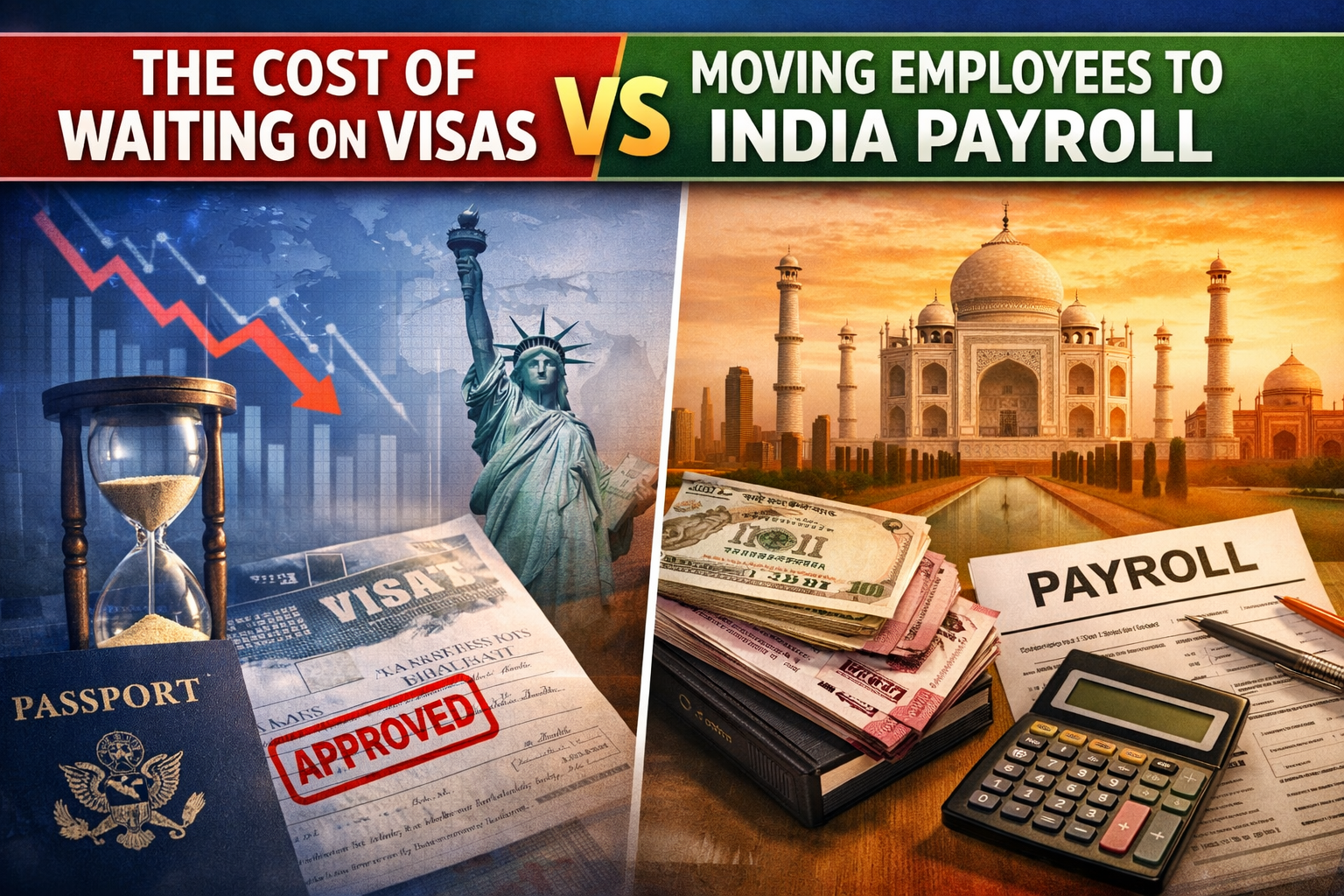
  • The Cost of Waiting on Visas vs Moving Employees to India Payroll

    The Cost of Waiting on Visas vs Moving Employees to India Payroll

    The Cost of Waiting on Visas vs Moving Employees to India Payroll

    India payroll solutions

    Introduction

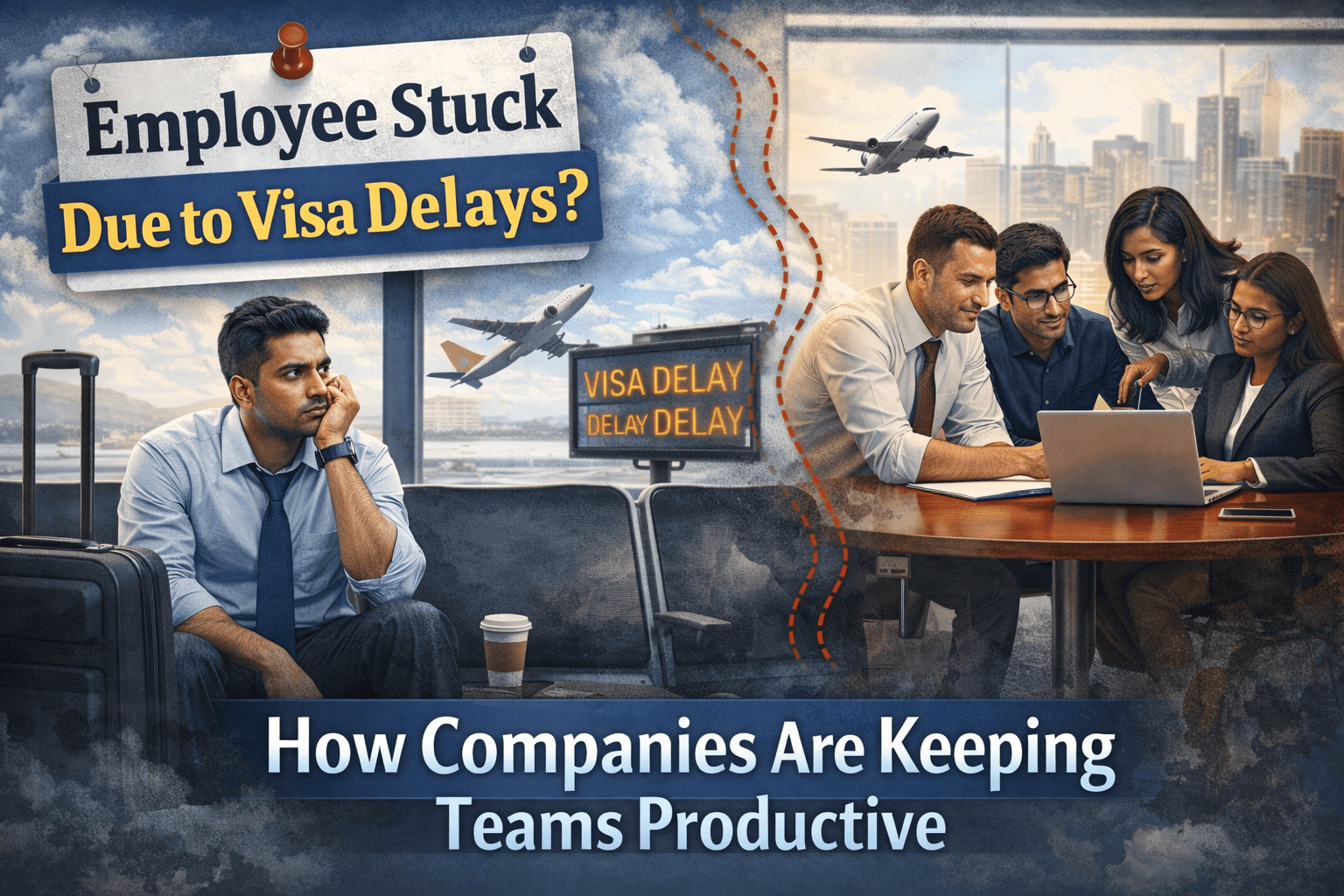
    Picture this: You’re a US-based company, and you’ve hired some amazing, highly skilled employees from abroad to help take your business to the next level. But there’s one huge problem—their H1-B visas are stuck in limbo. While you wait for approvals, everything seems to come to a screeching halt. Projects are delayed, productivity is down, and you’re still paying salaries to employees who can’t even start working.

    The situation isn’t just frustrating—it’s expensive. But here’s the good news: there’s a way out. Instead of waiting on visas that may take months, maybe even longer, there’s a much faster and cost-effective solution that allows your business to move forward. Moving employees to India payroll can be a game-changer.

    In this blog, we’ll walk you through the high costs of waiting on H1-B visas versus the benefits of transitioning to EOR (Employer of Record) solutions, highlighting how this approach can help your company stay productive, compliant, and competitive in the global market. Let’s dive in!

    Visa Delays and Their Impact on Businesses

    We’ve all felt the frustration of waiting for something beyond our control. For U.S. companies with H1-B visa applicants, this waiting period can feel like a business killer. Employees are ready to start, but they’re stuck. Projects get delayed, and customers grow frustrated. You’re left with idle resources that drain your finances.

    The real cost isn’t just the time lost; it’s the missed opportunities. Think about what your company could have accomplished if those employees had already started working. Meanwhile, your competitors move forward while you stay stuck in visa limbo.

    What About Employee Morale?

    The company isn’t the only one suffering. Employees who made big plans to relocate and start their new roles find themselves waiting. This uncertainty takes a serious toll on morale. It’s hard to stay motivated when you don’t know if or when you’ll begin your dream job.

    Worse yet, some employees may start looking for other opportunities. The risk of turnover increases, and if those talented employees leave, you lose valuable expertise that could have driven your company forward.

    Taxation and Compliance Issues with Delays

    Visa delays bring an additional hidden cost: double taxation. If employees remain stuck in India for too long, they may become tax residents in both the U.S. and India. This situation creates confusion, stress, and financial strain for both employees and the company.

    Your employees will need to pay taxes to both countries, complicating their financial situation. This doesn’t just create difficulties for them—it also burdens your HR team. They’ll have to navigate the complexities of two tax systems, increasing the likelihood of errors and penalties.

    Moving Employees to India Payroll: A Smart Solution

    Here’s the good news: Instead of waiting months for visa approvals, you can move your employees to India payroll solutions through an Employer of Record (EOR). This solution allows you to avoid visa complications, reduce financial strain, and keep your team productive.

    With EOR services, you don’t have to go through the lengthy process of establishing a legal entity in India. Instead, you can hire employees, get them on payroll, and have them working right away. The EOR handles all legal, tax, and compliance details, ensuring everything runs smoothly without any delays.

    Employer of Record (EOR) Services

    How do you make this happen? The solution lies in Employer of Record (EOR) services. With EOR, you don’t need to go through the expensive and time-consuming process of setting up a legal entity in India. Instead, you can quickly hire employees and get them on payroll in India. An EOR will take care of all the legal, tax, and compliance details, ensuring that everything is done right—without you having to worry about navigating the maze of international laws and regulations. With EOR, you can hire locally in India, avoid the headache of visa delays, and remain fully compliant with local labor laws and tax regulations. It’s a win-win for both you and your employees: they get paid, you get productivity, and everyone stays compliant.

    Quick, Efficient, and Flexible

    The beauty of moving employees to India payroll solutions via EOR is how quickly it can happen. Instead of waiting for months (or longer) for a visa to be approved, you can have your employees working on your team within a matter of weeks. The flexibility this provides is invaluable in today’s fast-paced world—especially when you’re trying to outpace competitors who are already ahead of the game.

    Benefits of Moving Employees to India Payroll

    • Simplifying Taxation
      By switching to India payroll solutions through EOR, you eliminate the risk of double taxation. No more juggling tax systems between two countries, no more worrying about who’s paying what. You can be confident that everything is handled correctly, with your employees only paying the appropriate taxes in India. It’s a smooth process for everyone involved.
    • Keeping Your Team Happy and Productive
      With payroll sorted out and taxes taken care of, your employees can get back to doing what they do best. No more stress, no more uncertainty. Just focus on the work at hand. This leads to better employee satisfaction and retention, crucial for keeping your best talent engaged.
    • Lowering Operational Costs
      Shifting to India payroll solutions through EOR means saying goodbye to high visa processing costs, unnecessary legal fees, and the administrative burden of managing visa delays. You get to free up resources, streamline operations, and focus on growth without the constant worry about paperwork or compliance issues.

    The Risks of Delaying Action

    • Simplifying Taxation

      By switching to India payroll solutions through EOR, you eliminate the risk of double taxation. Your team no longer juggles tax systems between two countries. With everything handled correctly, your employees only pay taxes in India, streamlining the process for everyone involved.

    • Keeping Your Team Happy and Productive

      Once you sort out the payroll, employees can focus on what they do best. They’ll feel secure knowing they’re employed and paid regularly. This leads to higher employee satisfaction, better retention, and improved morale.

    • Lowering Operational Costs

      Shifting to India payroll solutions through EOR cuts your costs. You avoid waiting for visa approvals, high visa processing fees, and legal headaches. Moving your employees to India streamlines operations, reduces administrative costs, and helps your business grow faster.

    A Thought to Close With

    Waiting on visa approvals doesn’t have to cost your business time, money, or growth. With India payroll solutions via EOR, you can continue to scale your team, keep your projects on track, and ensure compliance across borders—all without the stress of visa delays.

    At Team Management Services, we specialize in providing Employer of Record (EOR) services that allow you to hire employees in India without the hassle of establishing a local entity or dealing with the complexities of international law. We handle payroll, taxes, and compliance, so you can focus on what matters: growing your business.

    Let us help you take the next step in your global expansion. For more information on how we can simplify your India payroll, check out our India Expansion EOR Services for US Companies.

    FAQs

    Yes. Extended stays in India may trigger tax residency for employees and increase compliance or regulatory risk for employers.

    When waiting on visas starts affecting productivity, planning, or compliance, transitioning to India payroll becomes a more stable alternative.

    It means employing team members under a compliant India-based payroll structure so work can continue without relying on visa approvals.

    Waiting on visas can lead to delayed onboarding, idle payroll, lost productivity, and long-term uncertainty for both employers and employees.

  • Employee Stuck Due to Visa Delays? How Companies Are Keeping Teams Productive

    Employee Stuck Due to Visa Delays? How Companies Are Keeping Teams Productive

    Employee Stuck Due to Visa Delays? How Companies Are Keeping Teams Productive

    H1B Visa Delays Employee Management

    Introduction:

    Visa delays have quietly become one of the most disruptive challenges for global employers. While most conversations focus on immigration paperwork, the real disruption happens inside organizations—paused projects, rising bench costs, and growing uncertainty within teams.

    For U.S. companies employing international talent on H-1B or H-4 visas, work authorization delays are no longer rare events. Instead, they have become recurring operational risks. As a result, employers are now asking a more practical question:


    How do we keep teams productive when visa timelines stop moving?

    Visa Delays Are No Longer a Temporary Problem

    Earlier, visa delays were treated as short-term obstacles. Employees were placed on temporary leave, projects were redistributed, and leadership waited for approvals to arrive. However, over time, this approach has become unsustainable.


    Processing delays now stretch across quarters. Consular backlogs, policy shifts, and administrative reviews have made outcomes unpredictable. Because of this, waiting is no longer a strategy—it is a cost.


    Meanwhile, many employees are required to return to India due to visa expiration or travel constraints. When that happens, employers are forced to make fast decisions, often without clear guidance.

    Why Remote Work Alone Is Not a Safe Solution

    At first glance, allowing employees to continue working remotely from India while staying on U.S. payroll may seem convenient. After all, the employee is available, and the work continues. Yet, this approach introduces several hidden risks.


    When employees work from India while remaining employed under U.S. payroll, companies may unintentionally trigger local employment laws, tax exposure, and compliance obligations. In addition, permanent establishment risks can arise, especially when roles are client-facing or revenue-linked.


    Over time, what looks like a flexible workaround can turn into a compliance issue that is far more expensive to fix.

    The Real Cost of Inaction During Visa Delays

    Paid leave during visa delays continues payroll expenses without output. Projects slow down. Teams lose momentum. More importantly, critical knowledge remains idle.


    Eventually, some companies choose to replace affected employees altogether. However, recruitment, onboarding, and ramp-up costs often exceed the cost of retention. In reality, losing trained talent is one of the most expensive outcomes of prolonged visa uncertainty.

    This is why H1B visa delays employee management has become a board-level conversation for many global employers.

    How Employers Are Rethinking Workforce Continuity

    Rather than tying workforce planning entirely to visa timelines, forward-looking companies are separating employment structure from work delivery. This shift allows businesses to retain talent, maintain productivity, and remain compliant—even when physical relocation is not possible. One model that has gained traction is transitioning affected employees to India-based payroll through an Employer of Record (EOR).

    Employer of Record Explained—Without the Legal Jargon

    An Employer of Record (EOR) becomes the legal employer of the employee in a specific country. The employee continues working operationally for the U.S. company, while payroll, statutory compliance, and local labor obligations are handled by the EOR partner.

    For employers, this means:

    • No need to set up an Indian entity
    • No exposure to Indian payroll or labor compliance risks
    • Full continuity of work and reporting structure

    As a result, EOR has become a structured solution for H1B visa delays employee management, especially when delays extend beyond short timelines.

    Keeping Teams Productive After Visa-Related Returns

    When employees return to India due to visa constraints, transferring them to India payroll under an EOR allows work to continue without interruption.

    Instead of pausing projects, companies can:

    • Keep employees actively engaged
    • Avoid bench costs and paid leave
    • Maintain delivery timelines

    Because employment remains compliant, leadership teams gain peace of mind while teams stay focused on output—not uncertainty.

    Cost Control Without Compromising Talent

    Cost efficiency plays a major role in employer decision-making. Maintaining U.S. payroll during visa delays often results in high costs with limited productivity. On the other hand, India payroll under an EOR structure aligns employment cost with actual work output.

    While cost savings should never be the only driver, they often become a deciding factor for finance leaders evaluating prolonged visa delays.

    Retaining Talent Without Visa Dependency

    Visa uncertainty places immense pressure on employees. Many fear that returning to India will automatically mean job loss.

    Employers who offer structured alternatives send a different message—one of stability and long-term commitment.

    By providing a compliant employment path during visa delays, companies preserve trust, retain institutional knowledge, and strengthen employee loyalty. When visas are eventually approved, mobility options remain open.

    This approach reflects mature H1B visa delays employee management, rather than reactive decision-making.

    Why This Model Is Becoming Standard Practice

    Global hiring is no longer limited by geography. Companies now design workforce strategies around flexibility, compliance, and continuity.

    Visa delays have simply accelerated this shift.

    EOR is increasingly viewed not as a temporary fix, but as part of broader global workforce planning—especially for companies working across borders.

    When Should Employers Consider an EOR Transition?

    EOR becomes particularly effective when:

    • Visa delays exceed predictable timelines
    • Employees are required to return to India
    • No local entity exists in India
    • Projects cannot afford disruption

    In such situations, structured employment models provide clarity where uncertainty dominates.

    A Practical Path Forward

    Visa systems may remain unpredictable. However, workforce continuity does not have to be. Employers who adopt flexible, compliant employment models protect productivity, control costs, and retain talent—even during prolonged immigration challenges.

    Instead of putting growth on hold, companies that adapt their employment strategy stay competitive.

    Final Thoughts

    Visa delays test more than patience—they test leadership decisions. Employers who respond with structure, rather than uncertainty, are better positioned for long-term success. Solutions like Team Management Services (TMS) as an EOR for workforce stability allow businesses to remain compliant while keeping operations moving.


    By leveraging TMS, companies can manage employee relocation due to visa issues, maintain productivity, and ensure workforce continuity during visa delays—all without legal risk or operational disruption.

    FAQs

    No. Payroll restructuring through EOR does not impact an employee’s future visa eligibility, as immigration and employment compliance remain separate processes.

    Yes. Employees can continue working on the same projects, provided data security, contracts, and compliance frameworks are properly managed.

    Not necessarily. Some companies use EOR proactively when visa timelines become uncertain, rather than waiting for delays to escalate.

    In most cases, transitions can be completed within a few weeks, depending on documentation and role complexity.