Part of SKAD HR Group — HR for every stage of business  ·  HRTailor.com  ·  HRTailor.AI

Author: Abhijit Divekar

  • India’s Tech Layoffs: How IT Staffing Firms Are Filling the Talent Gap

    India’s Tech Layoffs: How IT Staffing Firms Are Filling the Talent Gap

    India’s Tech Layoffs: How IT Staffing Firms Are Filling the Talent Gap

    IT staffing firms

    Introduction

    India’s technology sector has gone through a visible reset. Headlines around layoffs have dominated conversations, yet companies continue to face difficulty hiring the right talent when delivery timelines tighten. This contradiction has reshaped how organisations think about workforce planning.

    What looks like excess talent on the surface often turns out to be a mismatch between skills, timelines, and hiring models. As permanent recruitment slows, IT staffing firms have stepped into a critical role—connecting skilled professionals with immediate business needs without adding long-term risk.

    This shift marks a turning point in how India’s tech ecosystem adapts to uncertainty.

    What the Layoffs Really Signal

    Recent tech layoffs do not reflect a collapse in technology demand. Instead, they highlight a correction after years of aggressive expansion. Many firms hired rapidly during growth cycles, only to realign teams once funding slowed and priorities shifted.

    Despite job losses, the market still holds a deep pool of experienced engineers, analysts, and specialists. The issue lies in alignment rather than availability. Companies need specific skills for defined objectives, not large permanent teams built for uncertain futures.

    Why Hiring Still Feels Difficult

    At first glance, layoffs should simplify recruitment. In reality, hiring has become more selective. Businesses now focus on precise skill sets, shorter project cycles, and controlled budgets.

    Internal hiring processes often struggle to keep up. Lengthy interview rounds, approval delays, and notice periods slow execution. Teams hesitate to commit to permanent roles when workload visibility remains limited. This hesitation creates a gap between available talent and active demand.

    How IT Staffing Firms Bridge the Gap

    IT staffing firms operate where urgency meets opportunity. Their role extends beyond sourcing candidates. They translate market availability into deployable capability.

    By maintaining active talent pipelines, staffing firms quickly place professionals into roles that support product stabilisation, system upgrades, cloud transitions, and ongoing support work. This approach allows businesses to restart momentum without rebuilding internal hiring mechanisms from scratch.

    The focus shifts from filling seats to enabling outcomes.

    Speed Has Become a Strategic Advantage

    Time now dictates success in technology delivery. After workforce reductions, many organisations paused hiring altogether. When demand returned, internal teams found themselves unprepared to scale quickly.

    IT staffing firms reduce this friction. Pre-vetted professionals, faster documentation, and streamlined onboarding shorten hiring cycles dramatically. Teams regain delivery pace without compromising quality.

    In a competitive environment, speed often matters as much as skill.

    Contract Staffing Takes Centre Stage

    The post-layoff environment has accelerated the adoption of contract staffing. What once served as a temporary solution now functions as a core workforce strategy.

    Contract staffing offers flexibility without chaos. Businesses maintain control over daily work while staffing partners manage payroll, statutory compliance, and workforce continuity. This structure supports delivery while keeping fixed costs under control.

    Many organisations now rely on contract professionals to stabilise operations as they plan long-term recovery.

    Redeployment Over Replacement

    Another important change lies in how talent is utilised. Staffing firms increasingly focus on redeploying professionals instead of matching them to identical past roles.

    Engineers move across technology stacks. Support specialists transition into platform operations. Testing professionals expand into automation-led work. This adaptability benefits businesses by expanding the usable talent pool while helping professionals stay relevant.

    Redeployment keeps experience active within the ecosystem.

    Managing Risk Through Structured Staffing

    Workforce changes often introduce compliance and operational risk. Role transitions, multi-location hiring, and revised contracts require careful handling.

    IT staffing firms reduce this exposure by managing employment documentation, statutory filings, and payroll accuracy. Their involvement allows organisations to scale responsibly without expanding internal HR complexity.

    Confidence in compliance supports better decision-making during uncertain periods.

    Investors Quietly Support This Shift

    Few investors openly dictate hiring models, but preferences show through discussions.

    Predictable burn. Adjustable costs. Operational resilience. These signals build confidence.

    Startups using contract staffing demonstrate control rather than caution. They show intent to grow responsibly.

    That perception influences future funding conversations more than many founders realize.

    How Employer Mindsets Are Changing

    Layoffs have reshaped leadership thinking. Instead of focusing purely on growth, companies now prioritise resilience.

    Leaders ask how quickly teams can adapt, how costs remain predictable, and how workforce risk stays controlled. IT staffing aligns with this mindset by offering flexibility without long-term rigidity.

    This approach reflects a more mature and strategic view of hiring.

    What This Means for India’s Tech Ecosystem

    India’s tech layoffs mark recalibration, not decline. The industry continues to innovate, deliver, and expand—just with sharper focus.

    Flexible workforce models, outcome-driven hiring, and strategic partnerships now define success. IT staffing firms play a central role in maintaining this balance, ensuring that talent and demand reconnect efficiently.

    Conclusion: Turning Market Shifts Into Workforce Advantage

    India’s tech layoffs have reshaped hiring behaviour, but they have also created an opportunity to rethink workforce strategy. The focus has shifted from building large teams to building adaptable, outcome-driven teams that can respond quickly to changing business needs.

    In this environment, structured contract staffing has emerged as a practical way to maintain delivery momentum while managing cost and compliance responsibly. This is where the right staffing partner becomes critical.

    Team Management Services (TMS) works with organisations to support flexible workforce models through reliable contract staffing solutions, IT Staffing, helping teams scale, stabilise, and adapt without adding operational complexity. By handling payroll, statutory compliance, and workforce continuity, TMS enables businesses to focus on execution and long-term growth.

    As the tech ecosystem continues to evolve, companies that combine flexibility with strong execution will be best positioned to move forward with confidence.

    FAQs

    They redeploy skilled professionals quickly into active projects while managing payroll, compliance, and onboarding.

    No. Many companies now rely on long-term contract staffing for stable operations and recovery phases.

    Contract staffing allows businesses to stay agile, control costs, and maintain delivery without long-term workforce commitments.

    Many organisations are adopting IT and contract staffing models to access skilled professionals quickly without committing to long-term headcount.


     

  • How Leading Staffing Agencies in India Manage Payroll, Compliance & Taxes for Employers

    How Leading Staffing Agencies in India Manage Payroll, Compliance & Taxes for Employers

    How Leading Staffing Agencies in India Manage Payroll, Compliance & Taxes for Employers

    Leading Satffing agencies

    Introduction

    Managing payroll, compliance, and taxes in India is rarely straightforward. Multiple labour laws, frequent regulatory updates, and state-specific requirements make workforce administration complex—especially for companies that scale quickly or operate across locations.

    This complexity explains why many organisations rely on staffing agencies not just for hiring, but for end-to-end workforce management. Leading staffing agencies in India act as operational partners, ensuring that payroll accuracy, statutory compliance, and tax obligations stay aligned without slowing business momentum.

    This blog explains how top staffing agencies manage these critical responsibilities and why their role has become essential for modern employers.

    Why Payroll and Compliance Are No Longer Back-Office Tasks

    Payroll errors or compliance gaps do more than cause inconvenience. They create legal exposure, employee dissatisfaction, and operational risk. As hiring models become more flexible, the administrative burden grows heavier.

    Employers today face challenges such as:

    • Multi-state labour law variations

    • Frequent regulatory changes

    • Complex payroll structures

    • Tax reporting accuracy

    • Audit readiness

    Staffing agencies step in to manage this complexity systematically.

    How Staffing Agencies Structure Payroll Management

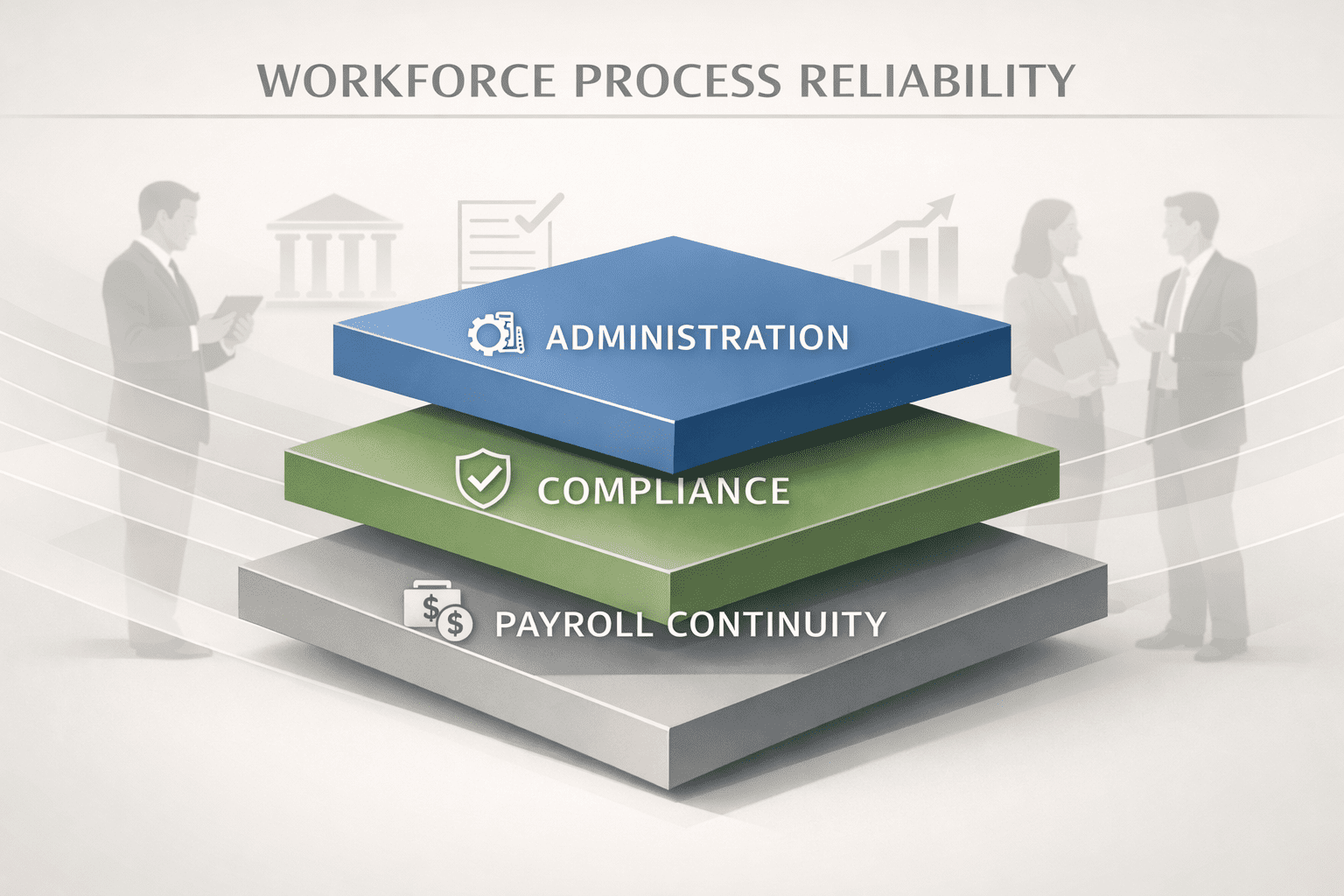
    Payroll management begins with precision. Leading staffing agencies use structured processes and technology-driven systems to ensure employees receive accurate and timely payments.

    Rather than treating payroll as a monthly task, agencies run it as a continuous operation that includes attendance validation, wage calculation, deductions, reimbursements, and reporting.

    Key payroll responsibilities handled by staffing agencies include:

    • Salary processing aligned with employment contracts

    • Overtime and shift-based calculations

    • Statutory deductions such as PF and ESI

    • Payslip generation and distribution

    • Payroll reconciliation and reporting

    This approach reduces payroll disputes and builds trust among employees while keeping employers insulated from operational errors.

    Compliance Management: Where Experience Truly Matters

    Compliance remains one of the most sensitive aspects of workforce management in India. Laws differ across states, industries, and workforce categories. Even a minor lapse can trigger penalties or audits.

    Leading staffing agencies maintain dedicated compliance teams that track regulatory changes and update processes accordingly. Their role goes beyond filing returns—it involves interpretation, documentation, and proactive risk prevention.

    Compliance responsibilities typically include:

    • PF, ESI, PT, and labour welfare filings

    • Employment contracts and documentation

    • Maintenance of statutory registers

    • Audit coordination and inspections

    • Exit formalities and final settlements

    This layered approach ensures employers remain compliant without maintaining large internal compliance teams.

    Tax Handling and Accuracy

    Taxes form another critical layer of workforce administration. Salary structures, deductions, and declarations must align with current tax laws.

    Staffing agencies handle tax compliance by integrating payroll data with tax reporting frameworks. This includes TDS calculations, Form 16 issuance, and year-end reconciliations.

    By centralising tax handling, agencies reduce errors that often arise from fragmented data or manual processing. Employers benefit from clean records, while employees receive clarity and consistency.

    Technology as the Backbone of Execution

    Leading staffing agencies rely heavily on technology to manage payroll and compliance at scale. Manual systems simply cannot keep up with growing workforce complexity.

    Modern staffing platforms enable:

    • Automated payroll calculations

    • Real-time attendance tracking

    • Digital document management

    • Compliance dashboards

    • Audit-ready reporting

    Technology improves transparency and allows employers to access workforce data without micromanaging processes.

    Managing Multi-Location and Distributed Workforces

    As businesses expand across cities and states, payroll and compliance challenges multiply. Different regions follow different labour norms, tax rules, and statutory timelines.

    Staffing agencies simplify this by acting as a single point of coordination. They manage region-specific compliance while maintaining a unified reporting structure for employers.

    This capability proves especially valuable for:

    • Companies expanding into new markets

    • Organisations with field staff

    • Businesses operating GCCs or IT delivery centres

    • Enterprises managing seasonal or project-based teams

    Employers gain scale without administrative overload.

    Risk Mitigation Through Structured Processes

    One of the less visible benefits of staffing agencies lies in risk management. Payroll discrepancies, delayed filings, or documentation gaps often surface during audits or employee exits.

    Staffing agencies reduce this exposure by maintaining process discipline. Clear records, consistent filings, and audit-ready documentation form part of their standard operations.

    For employers, this translates into peace of mind and predictable workforce governance.

    Why Employers Choose Staffing Agencies for Workforce Administration

    Companies partner with staffing agencies not only to outsource tasks, but to gain operational stability. The value lies in consistency, expertise, and accountability.

    Employers benefit from:

    • Reduced internal HR workload

    • Improved compliance confidence

    • Faster workforce scaling

    • Predictable administrative costs

    • Stronger employee experience

    As workforce models evolve, this support becomes a strategic advantage.

    The Bigger Picture: Payroll and Compliance as Enablers

    When payroll and compliance run smoothly, businesses operate without friction. Teams focus on delivery instead of administration. Leadership concentrates on growth instead of audits.

    Leading staffing agencies understand this connection. Their role extends beyond processing data—they enable businesses to function with agility and confidence.

    A Reliable Approach to Contract Staffing with TMS

    As workforce needs grow more complex, employers benefit from partners who handle payroll, compliance, and statutory responsibilities with consistency and care.

    Team Management Services (TMS) supports organisations with contract staffing solutions designed to simplify workforce administration while maintaining accuracy and compliance. From payroll processing and statutory filings to managing distributed teams, TMS helps businesses focus on execution without administrative strain.

    If your organisation is exploring contract staffing or seeking more reliable payroll and compliance support, understanding how structured staffing services work is a practical next step.

    A well-managed workforce doesn’t just run smoothly—it strengthens how a business grows and adapts.

    FAQs

    No. Long-term contract staffing supports ongoing roles, with employees working for extended periods while remaining on the staffing provider’s payroll.

    Because business cycles have become unpredictable, making flexible workforce structures necessary to manage changing demand and timelines.

    Because certain industries experience predictable demand spikes during specific periods such as festive seasons or peak business cycles.

    By clearly defining role duration, workload type, and ownership of payroll and statutory compliance for each model, and by working with a staffing partner that executes consistently across all three.

  • How India’s Contract Staffing Market Is Evolving After New Labour Code Delays

    How India’s Contract Staffing Market Is Evolving After New Labour Code Delays

    How India’s Contract Staffing Market Is Evolving After New Labour Code Delays

    New Labour Code

    Introduction

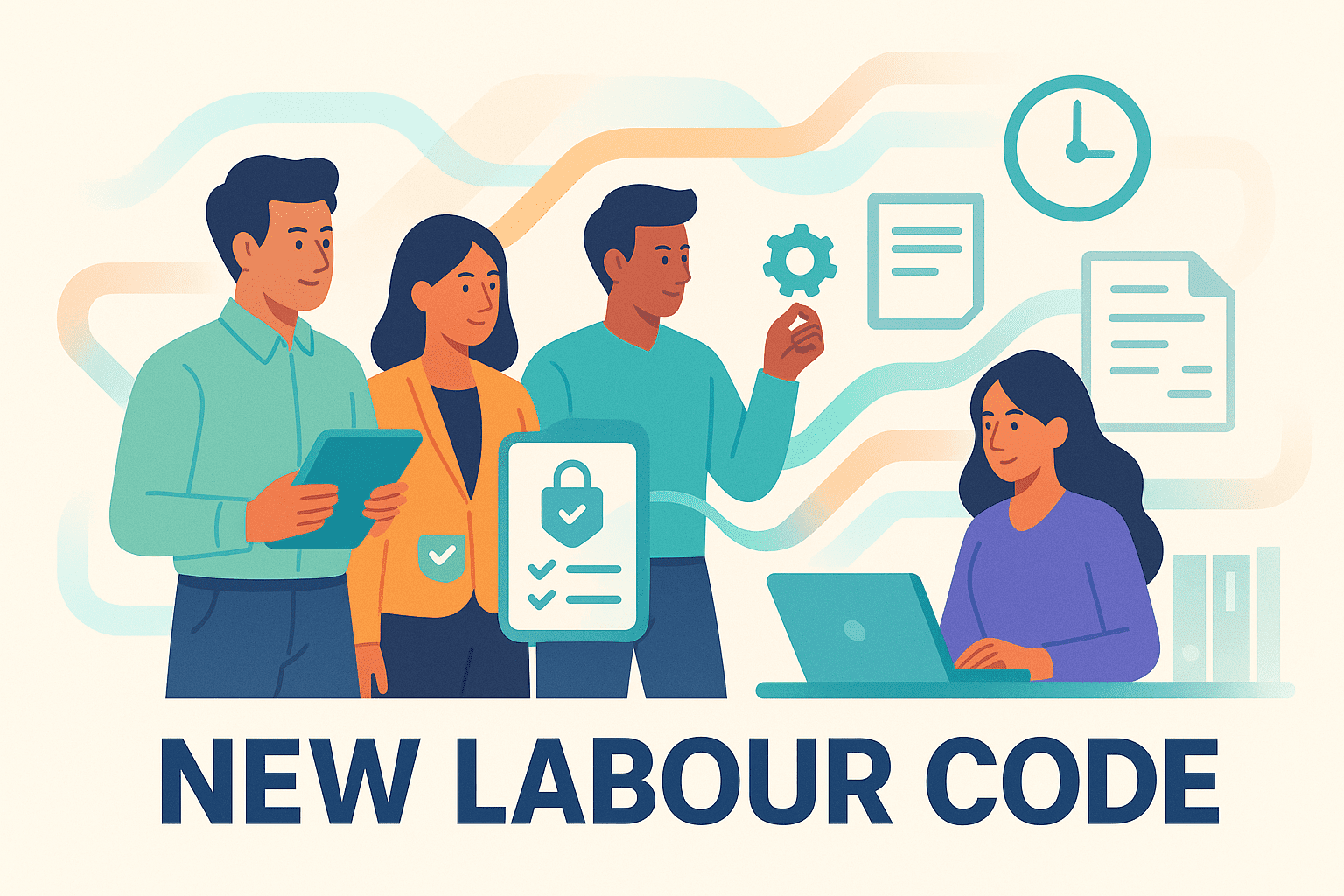
    India’s labour law reforms were introduced with the promise of simplification. The new Labour Codes aimed to streamline compliance, reduce ambiguity, and create a uniform framework for workforce management. Instead, repeated delays in implementation have created a period of prolonged uncertainty.

    Businesses, however, have not waited for clarity. Operations continue, hiring continues, and workforce decisions still need to be made. In response, companies have quietly adjusted how they build and manage teams. One clear outcome of this shift is the rapid evolution of India’s contract staffing market.

    What began as a short-term response to uncertainty has now developed into a structured and strategic workforce approach. This blog explores how contract staffing is adapting to Labour Code delays, how employer behaviour is changing, and what this means for the future of hiring in India.

    Why Labour Code Delays Matter to Employers

    The four Labour Codes were designed to replace multiple existing laws covering wages, industrial relations, social security, and occupational safety. While the framework is clear, staggered timelines and state-level preparedness have slowed full implementation.

    This delay has left employers navigating uncertainty around compliance structures, workforce classification, cost forecasting, and long-term hiring commitments. Instead of pausing decisions, companies have chosen flexibility.

    Contract staffing has emerged as a practical way to continue hiring while limiting exposure to regulatory shifts. It allows organisations to stay operational without locking themselves into rigid structures too early.

    Risk-Controlled Hiring Replaces Compliance Anxiety

    One of the earliest effects of Labour Code delays has been a noticeable rise in cautious hiring. Businesses remain careful about expanding permanent headcount when future compliance costs remain unclear.

    Contract staffing provides a buffer in this environment. Companies continue to hire, but they distribute responsibility differently. Staffing partners manage payroll, documentation, and statutory obligations, while businesses focus on delivery and outcomes.

    This shift does not indicate reduced compliance standards. Instead, it reflects a smarter allocation of responsibility during uncertain times.

    Contract Staffing Moves Beyond Short-Term Use

    Earlier perceptions linked contract staffing mainly to temporary or low-skill roles. That view no longer holds true.

    Today, organisations use contract staffing across a wide range of functions, including IT, engineering support, operations, consulting, and client-facing technical roles. These positions often run for extended durations and play a critical role in business continuity.

    Labour Code delays have strengthened this approach. Employers prefer workforce models that allow continuity without forcing premature long-term commitments. As a result, long-term contract staffing now forms a stable layer within many organisations.

    Staffing Partners Take on a Strategic Role

    As regulations remain in transition, internal HR teams face growing pressure. Tracking current requirements while preparing for future changes demands time and specialised knowledge.

    This reality has increased reliance on staffing partners for more than recruitment. Employers now expect staffing firms to interpret regulatory developments, align contracts with existing laws, maintain audit-ready records, and ensure payroll accuracy across locations.

    Staffing partners have evolved from service providers into risk-management allies who help organisations navigate complexity with confidence.

    Workforce Flexibility Reaches the Boardroom

    Workforce flexibility once sat primarily within HR discussions. Labour Code delays have pushed it into strategic leadership conversations.

    Business leaders now prioritise hiring models that allow teams to scale quickly, adjust without disruption, avoid sudden compliance exposure, and support geographic expansion. Contract staffing meets each of these requirements effectively.

    This explains why sectors such as IT services, GCCs, fintech, logistics, and manufacturing continue to invest heavily in contract staffing. The focus is not cost reduction, but governance, resilience, and adaptability.

    IT Contract Staffing Accelerates Faster Than Other Sectors

    Among all industries, IT has responded most rapidly to regulatory uncertainty. Technology businesses already operate in fast-moving cycles. Regulatory ambiguity only increases the need for adaptable workforce models.

    IT contract staffing has expanded across cloud engineering, DevOps, cybersecurity, product development, application support, and GCC operations. Companies need specialised skills immediately, not after long permanent hiring cycles.

    Contract staffing enables speed without compromising innovation or delivery quality.

    How Staffing Firms Are Adapting

    Staffing firms themselves have adjusted to meet rising expectations. Success now depends on balancing legal awareness with operational urgency.

    Leading firms invest in stronger compliance frameworks, clearer workforce classification models, hybrid staffing solutions, deeper talent pools for long-term contracts, and improved payroll transparency. These capabilities allow them to support employers more effectively during regulatory transition.

    What This Shift Means Going Forward

    Labour Code delays may eventually resolve, but the behavioural shift among employers is unlikely to reverse. Companies have experienced the benefits of flexibility, faster hiring, and controlled exposure.

    Contract staffing has moved beyond being a reactive choice. It now represents a deliberate workforce strategy aligned with modern business realities.

    Organisations that adopt this approach early gain better cost visibility, shorter hiring cycles, reduced compliance burden, and stronger operational resilience.

    A Practical Path for Growing Businesses

    Navigating regulatory change requires informed execution. The right staffing model and the right partner play a critical role in maintaining stability during transition.

    Businesses that rely on experienced staffing partners adapt more smoothly, remain compliant, and scale without disruption.

    Building Workforce Flexibility with TMS

    As India’s contract staffing market continues to evolve, businesses benefit from partners who understand both regulatory dynamics and talent requirements.

    Team Management Services (TMS) supports organisations with IT staffing and contract workforce solutions tailored for today’s changing environment. From sourcing skilled professionals to managing payroll, documentation, and compliance, TMS helps companies build agile teams without operational strain.

    Whether you are expanding IT capabilities, supporting project-based work, or restructuring workforce models, TMS provides structured staffing support designed for long-term stability.

    In a labour landscape shaped by change, flexibility has become essential—not optional.

    FAQs

    They have pushed companies to adopt flexible workforce models like contract staffing to reduce long-term compliance and cost uncertainty.

    They manage payroll, documentation, statutory compliance, and regulatory interpretation while businesses focus on delivery.

    Using contract staffing shifts compliance and payroll responsibility to experts while your team stays focused on delivery.

    By clearly defining role duration, workload type, and ownership of payroll and statutory compliance for each model, and by working with a staffing partner that executes consistently across all three.

  • What Staffing Agencies in India Actually Do? A Complete Guide

    What Staffing Agencies in India Actually Do? A Complete Guide

    What Staffing Agencies in India Actually Do? A Complete Guide

    contract staffing service TMS

    Introduction

    If you work in HR or run a business, you already know how hectic things can get. New employees are joining. Some are leaving. Payroll day is around the corner. Compliance deadlines are approaching. Managers want updates. Employees want support. And somehow, everything is urgent at the same time. 


    In the middle of this rush, many organisations turn to Staffing Agencies in India for help. Yet a lot of people still assume these partners only “share resumes” or “support hiring.” 


    However, the reality is very different. 


    Modern staffing partners support the entire employee journey—from joining to exit. They take over many recurring HR tasks, reduce workload for internal teams, and make workforce operations smoother and more reliable. 


    In this guide, you’ll see what staffing agencies really do day-to-day, how they work with your HR and business teams, and why companies of all sizes depend on them to keep their workforce operations under control. 

    Understanding Staffing Partners the Simple Way

    Instead of thinking of staffing agencies as recruitment vendors, imagine them as workforce support partners who plug into your HR system wherever you need help.


    They make life easier by:


      • managing employee lifecycle tasks from onboarding to exit

      • reducing administrative load on HR and managers

      • keeping documentation organised and audit-ready

      • handling payroll inputs and statutory requirements

      • supporting employees with everyday HR queries

    They usually operate across multiple industries and cities, offering flexible workforce models that help organisations stay efficient without continuously expanding their internal HR teams.


    Once you see them this way, it becomes much clearer why so many companies rely on them as an extension of their HR and operations function.

    The Real Work Staffing Agencies in India Handle Day-to-Day

    A strong staffing partner takes responsibility for a mix of HR operations and workforce management. This allows companies to manage employees smoothly while keeping compliance and payroll risks under control.


    Below are the core areas they typically support, beyond just sourcing candidates.

    1. Helping With Hiring and Onboarding

    Hiring is only the beginning. A lot happens before and after a candidate is selected, and each step needs coordination. 


    Staffing partners usually help with: 


    • understanding the job requirement and role expectations 
    • sourcing and screening candidates against clear criteria 
    • coordinating interviews, feedback, and next steps 
    • collecting mandatory documents from selected candidates 
    • issuing offers and appointment letters as per the agreed model 
    • supporting onboarding and joining formalities 
    • guiding new employees on basic processes and policies 

    Because they run this process every day, they know where delays normally happen. As a result, they keep the cycle moving so every new joiner starts smoothly, while internal HR focuses on alignment and decision-making instead of constant follow-ups. 

    2. Managing Monthly Payroll

    Payroll needs to be accurate, on time, and fully compliant. Any delay or error can create distrust among employees and expose the organisation to penalties. 


    Staffing partners typically take care of: 


    • monthly salary calculations based on attendance and inputs 
    • PF, ESIC, Professional Tax, LWF and other applicable deductions 
    • TDS calculations and basic tax-related support 
    • overtime, reimbursements, and incentive processing 
    • coordination for salary disbursement 
    • generating payslips and payroll reports 

    Since labour laws and tax rules change often, many companies prefer to rely on specialists who track these changes regularly. Consequently, payroll errors reduce and month-end stress drops for HR and finance. 

    3. Ensuring Statutory Compliance

    Compliance in India can feel overwhelming. Rules differ by state, timelines vary, and there are multiple filings to handle. Missing one deadline or document can create avoidable legal or reputational risk. 


    Staffing partners help manage: 


    • PF and ESIC registrations and periodic filings 
    • Professional Tax and Labour Welfare Fund requirements 
    • monthly statutory returns and mandatory registers 
    • Shops & Establishments-related obligations 
    • application of gratuity and bonus rules where relevant 
    • support during statutory audits and inspections 

    Because they work with multiple clients and locations, they bring standardised processes and checklists. Therefore, companies gain more confidence that workforce-related compliance is being handled in a systematic way. 

    4. Creating and Managing HR Documentation

    Documentation is the backbone of HR and governance. When records are incomplete or scattered, audits and employee queries become painful. 


    Staffing partners prepare and maintain essential documents such as: 


    • offer and appointment letters 
    • salary and CTC structure documents 
    • HR policies and employee handbooks 
    • code of conduct and workplace guidelines 
    • leave and attendance policies 
    • probation and confirmation letters 
    • warning, disciplinary, and separation letters 

    This ensures each employee has clear documentation around their employment, and HR has reliable records to refer to when questions or audits arise. 

    5. Supporting Employees With Day-to-Day HR Queries

    Employees often need quick help with small but important issues. If these are not handled promptly, frustration builds and HR inboxes overflow. 


    Staffing partners act as a structured first point of contact for: 


    • salary and payslip-related queries 
    • PF and ESIC concerns or clarifications 
    • basic tax and TDS questions 
    • attendance and leave corrections 
    • requests for HR letters and employment verification 
    • routing and tracking escalations and grievances 

    Additionally, because they run these processes for many employees, they can resolve common questions quickly and escalate only the complex cases to internal HR. This reduces workload and keeps employees better informed. 

    6. Managing Attendance and Leave Records

    Accurate attendance and leave data are critical for correct payroll and compliance. Even small gaps can lead to disputes or rework. 


    Staffing partners typically maintain: 


    • timesheets and attendance inputs from sites and teams 
    • integrations with biometric or attendance systems where applicable 
    • leave applications, approvals, and updated balances 
    • monthly attendance and leave reports 
    • periodic reviews and audits of exceptions 

    When this layer is managed well, payroll cycles become smoother and employees see fewer surprises in their payslips, which improves trust. 

    7. Handling Contract Renewals and Extensions

    Workforce needs rarely stay static. Projects end, new clients come in, and volumes change. If contract timelines are not tracked, organisations can suddenly find themselves short of people. 


    Staffing partners help by: 


    • monitoring contract end dates for deployed staff 
    • initiating renewal or extension discussions in advance 
    • preparing and issuing extension or amendment letters 
    • coordinating salary revision discussions where required 
    • updating related HR and compliance documentation 

    As a result, companies avoid last-minute rushes and reduce the risk of unnecessary attrition purely due to missed paperwork. 

    8. Managing Exits and Full-and-Final Settlements

    When an employee exits, there are multiple steps that must be completed correctly to avoid future complications. 


    Staffing partners usually handle: 


    • resignation processing and confirmation 
    • coordination of basic exit formalities or interviews 
    • calculation of leave encashment and other dues 
    • preparation of full-and-final settlements 
    • completion of compliance and documentation requirements 
    • issuing relieving and experience letters as per policy 

    A structured offboarding process protects the organisation, reduces follow-up queries, and leaves a better impression with the exiting employee. 

    Why Companies Rely on Staffing Partners

    Organisations do not work with staffing partners only for hiring support. They do it for the broader operational advantages that come with a well-run workforce engine. 


    Key reasons include: 


    • Lower HR workload 
      Day-to-day HR and coordination tasks are handled by specialists, so internal HR and business leaders can focus on strategy, culture, and performance. 
    • Faster deployment 
      Because staffing partners maintain active networks and talent pools, they can support quicker onboarding and deployment when new roles or projects come up. 
    • Better compliance safety 
      They bring structure and discipline to payroll and statutory processes, which helps reduce missed deadlines and documentation gaps. 
    • Cost-effective operations 
      Companies can access professional HR, payroll, and compliance capabilities without continuously expanding in-house HR infrastructure. 
    • High flexibility 
      Workforce size can be ramped up or down based on business needs, seasons, or client requirements, without excessive long-term commitments. 
    • Improved employee experience 
      Faster responses, accurate salary processing, and clear communication help build trust and improve morale among employees on partner rolls. 

    How Team Management Services (TMS) Supports Workforce Operations

    Team Management Services (TMS) supports organisations across India as a long-term workforce and operations partner. The team helps with:


    • staffing and contract staffing solutions across industries 
    • workforce deployment for multi-location requirements 
    • HR operations and documentation support 
    • monthly payroll processing and statutory compliance 
    • employee query handling and escalation routing 

    By acting as an extension of internal HR, TMS helps businesses run their staffing and workforce operations in a structured, compliant, and employee-friendly way. 

    Conclusion 

    Team Management Services (TMS) goes beyond recruitment to manage the full lifecycle of deployed staff—onboarding, HR documentation, payroll, compliance, attendance, employee support, and exits.

    For fast-growing or multi-location businesses, TMS acts like an extension of your HR team, bringing structure, compliance discipline, and smoother day-to-day workforce operations across India.

    FAQs

    No. Along with sourcing and screening, they also support onboarding, payroll, compliance, documentation, employee queries, attendance, and exit processes, depending on the engagement. 

    Yes. They typically handle PF, ESIC, Professional Tax, Labour Welfare Fund, TDS, and other mandatory filings and records for employees on their rolls, helping reduce compliance risk. 

    In most models, yes. They address routine HR concerns, route escalations to the right stakeholders, and help ensure issues are tracked and closed in a structured way.

    IT, engineering, manufacturing, healthcare, retail, financial services, logistics, consulting, and many other sectors use staffing partners to manage parts of their workforce.

    Yes. They usually handle full-and-final settlements, documentation, and relieving formalities for employees on their rolls, as per the agreed processes and timelines.

    Look for process clarity, strong compliance discipline, robust screening and operations capability, responsiveness, and the ability to scale across locations. Most importantly, evaluate whether the partner can act like a long-term extension of your team rather than a purely transactional vendor.

  • GCC Consulting India: Build a High-Performance Global Capability Centre

    GCC Consulting India: Build a High-Performance Global Capability Centre

    GCC Consulting India: Build a High-Performance Global Capability Centre

    Global Capability Centre

    Global leaders know India is a powerhouse for technology, analytics, finance and shared services. However, many CXOs are unsure how to structure, design and launch a Global Capability Centre that goes beyond cost arbitrage and truly creates strategic value. That uncertainty often delays decisions, even when the business case is strong.


    That’s where gcc consulting india and the right advisory partner become critical. A specialised GCC consulting team helps you clarify your strategy, choose the right location, define the operating model, and build a talent and governance framework that actually works in the Indian context.


    In this article, you’ll learn what a GCC is, why global companies choose India, how consulting supports you at every stage, the key benefits of working with a specialist partner, and how TMS supports you across the full GCC lifecycle – from first idea to scaled, high-performing centre.

    Table of Contents

    • What Is a Global Capability Centre (GCC) in India?
    • Why Do Global Companies Choose India for Their GCCs?
    • How GCC Consulting India Helps at Every Stage
    • Key Benefits of Working With a GCC Consulting Partner
    • TMS Approach to GCC Consulting in India
    • Final Takeaway & Call to Action
    • FAQs About GCC Consulting and GCC Setup in India

    What Is a Global Capability Centre (GCC) in India?

    A Global Capability Centre in India is an extension of your organisation that runs critical business, technology and support functions from within the country. Unlike a traditional outsourcing or vendor arrangement, the GCC is an integrated part of your enterprise – aligned with your culture, processes and long-term strategy.


    Instead of buying services from a third party, you build your own centre of excellence inside India. As a result, you get deeper control over quality, IP, culture and innovation, while still enjoying cost and talent advantages.


    GCCs have evolved far beyond the old “back office” label. Today, they host product engineering, AI and analytics, transformation programs, finance centres of excellence, global HR operations and more – often driving strategic initiatives for the entire organisation.

    From Back Office to Strategic GCC

    Initially, many organisations set up India units to handle transactional or support work. However, as the talent market matured, GCCs gradually moved up the value chain into high-impact roles.


    Now, GCCs often lead global digital initiatives, innovation programs, platform development and analytics-driven decision-making. Therefore, your India GCC can become a genuine engine of transformation, not just a cost-saving hub.

    Typical Functions Run from a GCC in India

    A modern GCC in India might run a mix of:


    • Software development, product engineering and DevOps
    • Data engineering, analytics, AI/ML and business intelligence
    • Finance and accounting, controllership and FP&A
    • HR operations, payroll, talent acquisition and learning
    • Procurement, supply chain planning and vendor management
    • Customer support, success and inside sales

    Because of this breadth, you need a clear design for what the GCC should own, how it will integrate with global teams and how it will evolve over time.

    Key GCC locations in India for Global Capability Centre setup

    Why Do Global Companies Choose India for Their GCCs?

    India has become the default choice for many global GCCs, and that’s not just because of cost.


    • Deep, diverse talent pool: Access engineers, analysts, finance specialists and HR professionals at scale.
    • Cost efficiency with quality: Optimise your cost-to-skill ratio while maintaining strong capability and delivery standards.
    • Mature digital and tech ecosystem: Strong startup scene, cloud adoption, and digital infrastructure support innovation.
    • Time zone advantage: Overlap with both APAC and European time zones, and flexible support for North America.
    • Proven GCC ecosystem: Thousands of successful GCCs, experienced leaders and well-understood practices.
    • Scalability and resilience: Ability to grow teams quickly across multiple Indian cities if needed.

    Moreover, Global Capability Centre consulting in India helps you navigate local nuances like city selection, state incentives, talent availability and regulatory considerations so your choices are data-driven, not based on guesswork.

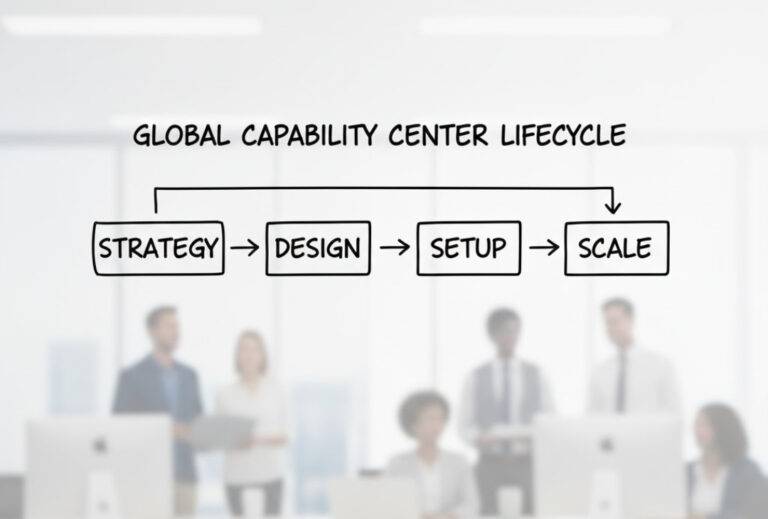
    How GCC Consulting India Helps at Every Stage

    GCC setup consulting in India is not just about choosing an office. It spans strategy, business case, location decisions, operating model, people model and ongoing optimisation.


    Firstly, a structured consulting approach breaks the journey into stages so stakeholders can make clear decisions at each step.


    Stage 1 – Strategy & Business Case
    Firstly, consultants work with your leadership team to define the role of the GCC: what functions it will own, how it will add value and how success will be measured. Next, they build a robust business case, comparing different scenarios and models so you can secure internal approval with confidence.

    Stage 2 – Location & Talent Assessment
    In this stage, advisors evaluate potential cities based on talent depth, competition, infrastructure, costs and quality of life. Meanwhile, they also examine the availability of niche skills and leadership talent, ensuring that your centre can scale beyond the first wave of hiring.

    Stage 3 – Operating Model & Governance Design
    Next, you define how the GCC fits into the global organisation: reporting lines, decision rights, engagement models with business units and KPIs. In addition, a clear governance framework is set up to avoid confusion about roles, responsibilities and escalation paths.

    Stage 4 – Setup, Compliance & HR/People Model
    At this point, the focus moves to entity setup, regulatory registrations, HR policies, compensation philosophy, benefits, and HR operations. As a result, your GCC is built on a compliant, scalable foundation that aligns with both global standards and Indian regulations.

    Stage 5 – Scale-Up, Optimisation & Transformation
    Finally, once the GCC is live, consulting support often continues into scale-up phases, maturity assessments and transformation programs. In addition, advisors can help you move from transactional work to higher-value activities, strengthening the GCC’s strategic position.

    Choosing the Right GCC Location in India

    Location strategy is more than picking a famous city. You must consider talent pools, competition for skills, rental and salary benchmarks, regulatory environment and connectivity to your core markets.

    An experienced India GCC advisory partner will help you compare options like Bengaluru, Hyderabad, Pune, Gurugram, Chennai and others, based on your specific talent and functional needs.

    Designing the Right Operating Model for Your GCC

    A well-designed GCC operating model defines what work happens where, who owns which decisions, how teams collaborate and how success is measured.


    If you’re still evaluating models, you can also explore Employer of Record services in India as a lower-risk way to start, before you fully commit to a large-scale GCC structure.

    Key Benefits of Working With a GCC Consulting Partner

    Working with a seasoned consulting partner dramatically reduces trial-and-error and accelerates your GCC journey.


    • Faster, better decisions: Get structured frameworks, benchmarks and data to make high-stakes GCC decisions quickly.
    • Reduced setup and compliance risk: Avoid missteps on legal, tax, workforce and regulatory matters.
    • Sharper talent strategy: Align roles, skills, compensation and employer brand to attract and retain the right people.
    • Robust operating and governance model: Design processes, metrics and ways of working that scale as the centre grows.
    • Higher strategic impact: Move beyond cost savings to innovation, transformation and capability-building.
    • Smoother stakeholder alignment: Ensure global and local leaders are aligned on expectations and outcomes.

    Moreover, you can learn more about our Global Capability Centre services in India and how we support companies across the GCC lifecycle to get a sense of typical engagement models and outcomes.

    TMS Approach to GCC Consulting in India

    TMS brings together HR, staffing, Employer of Record and GCC advisory capabilities under one roof. This combination means we don’t just design a strategy on paper – we stay with you through hiring, HR operations, payroll and ongoing workforce management.


    Over the years, we have supported global clients across technology, professional services, manufacturing, financial services and more. Because we already manage thousands of employees on payroll across India, we understand how GCC strategies connect to real-world hiring, retention and compliance on the ground.


    In addition, our on-ground teams across multiple Indian cities give you practical insight into talent availability, local nuances and regulatory requirements. Our dedicated gcc consulting india practice works closely with your leadership team to deliver a GCC that is both strategic and execution-ready.

    TMS typically supports GCC clients through:


    • End-to-end GCC lifecycle support – from strategy and business case to setup and scale.
    • Workforce planning and talent acquisition – including leadership hiring and niche skills.
    • Employer of Record and staffing support – to help you ramp up quickly during early phases.
    • HR policies, payroll and compliance management – aligned with Indian laws and your global standards.
    • HR operations and employee experience design – to ensure your GCC becomes a great place to work.
    • Ongoing optimisation and transformation advisory – to move your GCC up the value chain over time.

    To understand how these pieces fit together, you can also explore our broader HR and staffing solutions in India, which often integrate with GCC roadmaps.

    Final Takeaway & Call to Action

    GCC consulting in India is about much more than selecting a city or leasing an office. It is a structured way to design, set up and scale a Global Capability Centre that delivers real strategic value – from innovation and transformation to sharper customer and business outcomes. The organisations that benefit most are those that want to build long-term capabilities in India while minimising risk and avoiding costly trial-and-error.

    With TMS as your integrated HR, staffing, Employer of Record and GCC advisory partner, you get both strategic guidance and strong on-ground execution. Ready to explore or scale your GCC in India?

    Book a consultation with TMS and let our experts guide your GCC strategy and execution from first idea to fully mature centre.

    FAQs

    A GCC is an in-house centre that is part of your organisation, whereas outsourcing typically involves a third-party vendor delivering services. In a GCC, you control strategy, IP, culture and performance, while leveraging Indian talent and cost advantages.

    Ideally, you should engage a partner at the very beginning, when you are still shaping your strategy and business case. However, even if you already have a small presence or are mid-setup, consulting support can help you refine your model, governance and scale-up plans.

    Timelines vary based on scope, approvals and complexity, but many organisations move from decision to initial team in a few months. A structured consulting approach helps you compress timelines by front-loading key decisions and avoiding rework.

    Technology, product engineering, analytics, finance, HR operations, procurement and customer support are common starting points. Over time, many organisations add higher-value functions like transformation, automation, design and global process ownership.

    Yes, many companies start with a focused team or a few functions, then expand as the model proves successful. Consulting support helps you design a roadmap so early decisions don’t limit future scale-up.

    TMS supports you with HR policies, payroll, benefits, compliance, staffing and Employer of Record options. Therefore, your leadership can concentrate on building capabilities and delivering outcomes, while we handle the complex HR and statutory aspects in India.

  • When Should Companies Outsource Contract Staffing? Key Signs to Watch

    When Should Companies Outsource Contract Staffing? Key Signs to Watch

    When Should Companies Outsource Contract Staffing? Key Signs to Watch

    Contract Staffing

    Introduction

    Most companies don’t wake up planning to outsource. The decision usually comes after repeated frustration. Payroll becomes stressful. Compliance questions don’t have clear answers. HR teams feel buried in operational work. These moments are signals. They indicate that managing contract employees internally is no longer working as it should. Knowing when to act prevents small issues from turning into business risks.

    Sign 1: Payroll Errors or Delays Start Happening

    Payroll should be consistent and predictable. When corrections become frequent or timelines slip, it’s a warning sign. As contract employee numbers increase, payroll calculations become more complex. Manual inputs, validations, and approvals multiply. If payroll accuracy depends heavily on specific individuals rather than structured processes, the risk increases. This is often the first point where companies consider outsourcing.

    Sign 2: Compliance Feels Uncertain or Hard to Track

    Labour laws change regularly. Contribution structures, wage definitions, and statutory filings evolve over time. When HR teams struggle to keep up with these changes, compliance shifts from proactive to reactive. Missing updates can lead to penalties or audits. Outsourcing becomes relevant when staying compliant internally starts to feel risky.

    Sign 3: HR Spends More Time on Administration Than People

    HR teams are meant to support employees and plan for the future. However, contract employee management often pulls them into paperwork and follow-ups. As administrative work increases, strategic initiatives get delayed. Over time, this affects engagement, retention, and workforce planning. This imbalance signals that internal capacity is being stretched too thin.

    Sign 4: Workforce Scale Is Growing, but Systems Are Not

    Processes that work for small teams break down at scale. Spreadsheets become unreliable. Tracking attendance, payroll inputs, and documentation becomes inconsistent. As volume increases, even small gaps create larger risks. Fixing these gaps internally often requires time and investment. This is where Contract Staffing helps companies maintain structure without rebuilding internal systems.

    Sign 5: Operating Across Multiple Locations Adds Complexity

    Different states or regions come with different labour rules. Managing these variations manually increases the chance of mistakes. Companies expanding geographically often underestimate this complexity. What works in one location may not apply elsewhere. Outsourcing workforce administration brings localized compliance under a single framework.

    Sign 6: Employment Risk Becomes a Leadership Concern

    Legal exposure related to contract employees is easy to overlook until something goes wrong. Disputes, audits, or regulatory notices demand immediate attention from senior leadership. These situations are disruptive and stressful. When employment risk starts reaching leadership discussions, it’s a clear sign that internal management needs support.

    Sign 7: Cost Visibility Is Lacking

    Contract employees involve more than just salary payouts. Statutory contributions, compliance costs, and penalties add up over time. Without clear tracking, costs become unpredictable. Finance teams struggle to forecast accurately. Outsourcing provides clearer cost structures and reduces surprises.

    Sign 8: Audits Feel Stressful Instead of Routine

    Audits test documentation, consistency, and compliance history. If preparing for audits requires scrambling for records or fixing inconsistencies, the system isn’t working well enough. Structured workforce administration improves audit readiness and reduces pressure on internal teams.

    Sign 9: Employees Experience Inconsistency

    Contract employees notice backend issues quickly. Delayed payments, unclear deductions, or inconsistent communication affect trust. Employee experience is shaped by accuracy and reliability, even if employees don’t see the process itself. Outsourcing helps ensure consistency across payroll and compliance processes.

    Sign 10: Internal Teams Depend on Individuals, Not Processes

    When knowledge lives in people instead of systems, continuity is fragile. Absences, exits, or transitions create gaps. Processes slow down. Errors increase. At this point, Contract Staffing becomes a way to build continuity and reduce dependency on individuals.

    Knowing What Outsourcing Does—and Does Not Do

    Outsourcing workforce administration does not change who manages daily work. Teams continue reporting to the same managers. What changes is who handles payroll, compliance filings, statutory obligations, and employment documentation. Understanding this distinction helps companies adopt outsourcing without fear of losing control.

    Conclusion

    Outsourcing contract employee management is rarely about filling roles. It’s about reducing operational pressure when payroll accuracy, compliance responsibilities, and administrative work begin to stretch internal teams. When these signs appear, outsourcing becomes a practical way to restore stability without disrupting how teams work. Companies retain full control over daily operations while shifting employment administration to a structured framework.

    At Team Management Services, the focus is on managing the employment side of contract work—placing employees on a compliant payroll, handling statutory obligations, and ensuring consistency across processes. This allows organizations to scale their workforce with confidence, knowing that payroll, compliance, and documentation are managed reliably in the background. The right time to outsource isn’t after something breaks. It’s when the signs first become impossible to ignore.

    FAQs

    Not always. Many companies outsource payroll and compliance management while retaining control over hiring and team management.

    Yes, when managed by experienced providers who stay aligned with local labor regulations and statutory requirements.

    The company manages daily work and performance, while the staffing partner manages payroll, compliance, and employment administration.

  • Do You Actually Need an EOR? A Simple Test for Global Employers

    Do You Actually Need an EOR? A Simple Test for Global Employers

    Do You Actually Need an EOR? A Simple Test for Global Employers

    Employer of record

    Introduction

    Employer of Record (EOR) services have changed significantly over the last few years. What once served as a temporary workaround for international hiring has evolved into a strategic operating model for global workforce management.

    Today, companies use EORs to manage compliance risk, control payroll complexity, respond faster to market opportunities, and maintain operational flexibility across borders. The question most global employers now face is not what an EOR is, but when it actually makes sense.

    This blog explores how the EOR model is evolving in the market and offers a practical way to assess whether your business truly needs one.

    The EOR Shift: From Hiring Shortcut to Risk Framework


    Earlier, EORs were often positioned as a way to hire quickly in countries where setting up an entity felt slow or expensive. That narrative no longer captures the full picture.

    Modern EOR usage is driven by risk management and governance, not speed alone. Companies now rely on EORs to manage employment risk in environments where regulations change frequently, enforcement varies, and penalties are costly.

    In many regions, compliance uncertainty—not hiring difficulty—is the primary reason employers adopt EOR models.

    This shift has redefined staffing priorities. GCCs are no longer hiring just to fill roles; they are building capability-led teams that can operate independently while aligning with global standards.

    As a result, workforce planning has become a strategic exercise rather than a transactional one.

    What’s Driving the Rise of EOR Adoption Globally

    Several market shifts have accelerated EOR adoption worldwide.

    Businesses are expanding faster than regulatory clarity allows. Labour laws are becoming more detailed, enforcement is tightening, and cross-border payroll compliance has grown more complex. At the same time, leadership teams want flexibility without creating permanent overhead.

    EORs sit at the intersection of these needs. They provide a compliant employment structure while allowing companies to operate without committing to long-term legal infrastructure prematurely.

    A Simple Test to Know If an EOR Makes Sense for You

    Instead of asking whether you can use an EOR, ask whether your business environment benefits from one.


    1. Are regulatory requirements changing faster than your internal processes?

      If labour laws, tax rules, or social security requirements are evolving and your team struggles to stay current, an EOR helps absorb that volatility.

    2. Are employment risks outweighing operational benefits in new markets?

      When penalties, audits, or misclassification risks feel disproportionate to headcount size, EORs provide a controlled entry point.

    3. Is payroll becoming harder to manage across countries or states?

      Multi-country payroll often creates fragmentation. Different cycles, filings, and benefit structures increase error risk. EORs centralise execution while keeping local compliance intact.

    4. Are you scaling cautiously rather than committing fully?

      Many companies enter markets incrementally. An EOR supports this approach by keeping employment flexible while business strategy matures.


      If these challenges resonate, the EOR model likely fits your current stage.

    What’s New in the EOR Market Today

    The EOR market itself has matured.

    Clients now expect more than contract issuance and salary processing. Modern EOR providers are expected to offer transparent payroll reporting, proactive compliance updates, strong employee experience, and seamless coordination with internal HR teams.

    Another shift is longer engagement cycles. EORs are no longer short-term placeholders. Many organisations use them for years as part of a stable operating model, especially in regulated or fast-changing regions.

    EORs and Compliance-Led Workforce Design

    One of the biggest changes in how EORs are used lies in workforce design.

    Instead of building employment structures first and adjusting later, companies now design their workforce around compliance realities from the beginning. EORs enable this by embedding compliance into everyday operations rather than treating it as an afterthought.

    This approach reduces downstream restructuring and improves long-term stability.

    When an EOR May Not Be the Right Fit

    EORs are powerful, but not universal.

    If your organisation has an established entity, deep local HR expertise, and long-term scale certainty in a country, direct employment may offer more control.

    The value of an EOR depends on uncertainty levels, not company size.

    EOR as a Strategic Operating Choice

    The most effective global employers treat EORs as a strategic option, not a temporary fix.

    They use EORs to:

    • Enter new markets safely

    • Manage compliance exposure

    • Maintain workforce agility

    • Avoid premature structural commitments

    This mindset shift reflects how global workforce management itself is evolving.

    Supporting Modern EOR Needs

    As the Employer of Record model continues to evolve, businesses need partners who understand more than basic employment mechanics.

    Team Management Services (TMS) provides Employer of Record solutions designed around compliance accuracy, payroll governance, and operational flexibility. Beyond hiring, TMS supports organisations with structured employment management, statutory compliance, payroll administration, and workforce continuity across regions.


    Whether you are managing regulatory uncertainty, expanding cautiously into new markets, or restructuring global workforce models, TMS helps businesses operate with confidence—without building unnecessary legal complexity.


    In today’s global environment, the right EOR doesn’t just support employment—it strengthens how your business operates across borders.

    FAQs

    An EOR helps companies manage payroll, compliance, taxes, and employment risk in countries where they don’t have a legal entity.

    Yes, when used correctly. Many companies rely on EORs for extended periods to stay compliant while maintaining operational flexibility.

    Compliance capability, payroll accuracy, local law expertise, transparency, and experience with cross-border employment.

    No. Businesses retain full control over performance, tasks, and outcomes. The EOR manages legal employment responsibilities.

  • The Most Common EOR Mistakes Companies Make in New Markets

    The Most Common EOR Mistakes Companies Make in New Markets

    The Most Common EOR Mistakes Companies Make in New Markets

    employer of record mistakes

    A Reality Check Before You Expand

    Global expansion often begins with confidence. The business model works, demand exists, and leadership is ready to move. The first hires in a new country usually feel like a small step—until employment rules, payroll requirements, and compliance obligations turn that step into a complex decision.

    This is where Employer of Record (EOR) services enter the picture. Used well, an EOR removes friction. Used poorly, it introduces new risks. Most challenges don’t come from the EOR model itself, but from how companies approach it.

    Understanding common mistakes early helps organisations avoid setbacks when entering new markets.


    Mistake 1: Choosing an EOR Without a Clear Purpose

    Many companies adopt an EOR simply because expansion needs to happen fast. Speed alone, however, is not a strategy.

    Without clarity on why an EOR is being used—market testing, regulatory risk management, or phased expansion—employment structures remain loosely defined. Over time, this leads to confusion around roles, contracts, and internal ownership.

    Successful EOR usage starts with intent. When companies define what the EOR is meant to support, execution becomes smoother and more predictable.

    Mistake 2: Treating Compliance as a One-Time Setup

    Compliance is not a checklist that ends after onboarding. Labour laws, tax rules, and statutory obligations change frequently, especially in emerging markets.

    Some companies assume that once contracts are issued and payroll begins, compliance takes care of itself. That assumption creates blind spots. Ongoing monitoring, documentation updates, and regulatory alignment matter just as much as initial setup.

    An EOR works best when compliance is treated as a continuous process rather than a one-time task.

    Mistake 3: Overlooking Local Employment Culture

    Employment expectations vary widely across countries. Notice periods, benefits, working hours, and exit practices often reflect local norms as much as legal requirements.

    When companies apply home-country policies without adjustment, friction follows. Employees feel disconnected, and operations slow down due to misaligned expectations.

    EORs help bridge legal requirements, but employers still need to respect local employment culture. Adapting early avoids unnecessary course corrections later.

    Mistake 4: Assuming Payroll Is Simple Everywhere

    Payroll complexity increases quickly once operations cross borders. Multiple tax structures, benefit contributions, and reporting timelines create layers of dependency.

    Some companies underestimate this complexity and treat payroll as a background function. Small inconsistencies then surface during audits, exits, or regulatory reviews.

    Strong EOR engagement places payroll governance at the centre of operations. Accuracy, transparency, and documentation protect both the employer and the workforce.

    Mistake 5: Expecting the EOR to Drive Workforce Decisions

    An EOR manages employment administration, not business direction. Confusion arises when companies expect EORs to decide compensation strategy, role evolution, or workforce planning.

    Clear separation of responsibility matters. Employers retain control over performance, growth plans, and organisational design. The EOR ensures those decisions operate within legal and payroll frameworks.

    Alignment improves when roles are clearly defined on both sides.

    Mistake 6: Ignoring What Happens After Growth Begins

    Many companies start small in a new market. Teams grow faster than expected, or priorities shift. Without planning for scale, employment structures become reactive.

    Contract terms need revision. Reporting needs increase. Leadership asks new questions about cost, control, and compliance exposure.

    Companies that plan for workforce change—even without fixed timelines—navigate growth more confidently within the EOR model.

    What These Mistakes Usually Lead To (If Left Unchecked)

    When the earlier mistakes stack up, the impact rarely appears immediately. Issues surface gradually—often at the worst possible time.

    Payroll questions arise during audits. Compliance gaps appear during exits. Teams feel operational friction when scaling accelerates. None of these problems stem from the EOR model itself. They result from unclear expectations, weak planning, or poor alignment between employer and provider.

    Recognising early warning signs allows companies to correct course before minor gaps become structural problems.

    How Companies Can Avoid These Pitfalls Altogether

    Avoiding EOR mistakes doesn’t require complex frameworks. It starts with clarity.

    Companies that succeed define ownership early, understand local realities, treat compliance as ongoing, and plan for change even when timelines are uncertain. They also reassess their EOR setup periodically instead of treating it as a fixed decision.

    Most importantly, they choose partners who focus on execution quality—not just onboarding speed.

    What Companies That Get EOR Right Do Differently

    Organisations that succeed with EORs approach expansion with realism. They plan for uncertainty, define responsibilities clearly, and treat compliance as an ongoing discipline.

    They also view EORs as operating partners rather than transactional vendors. This mindset creates stability even when markets or regulations shift.

    Supporting EOR Execution with the Right Structure

    Employer of Record services are powerful when paired with clarity and disciplined execution. The right partner helps companies avoid common pitfalls while maintaining flexibility.


    Team Management Services (TMS) supports organisations with Employer of Record solutions designed around compliance accuracy, payroll governance, and workforce continuity. Beyond onboarding, TMS helps businesses manage evolving employment needs, statutory obligations, and operational consistency across markets.

    Whether entering a new region, scaling cautiously, or reassessing global workforce structures, TMS enables compliant expansion without unnecessary complexity.


    Avoiding EOR mistakes is less about perfection and more about choosing the right structure from the start.

    FAQs

    Poor EOR usage can lead to compliance gaps, payroll errors, unclear role ownership, and operational delays during growth.

    They should clarify compliance ownership, payroll responsibility, role control, scaling plans, and exit strategy.

    Smooth payroll, clear documentation, timely compliance filings, and minimal operational friction are key indicators.

    Yes. When an EOR is aligned with clear goals and proper structure, it supports faster expansion by keeping payroll, compliance, and workforce operations consistent.

  • Why Businesses of All Sizes Choose Staffing Agencies for Their Workforce Needs

    Why Businesses of All Sizes Choose Staffing Agencies for Their Workforce Needs

    Why Businesses of All Sizes Choose Staffing Agencies for Their Workforce Needs

    Staffing Agencies in india

    Introduction

    A startup may think its biggest challenge is finding people—but very quickly, the real pressure becomes running workforce operations without a full HR, payroll, and compliance setup. Growing business expanding into multiple cities often struggles more with deployment readiness, documentation discipline, attendance tracking, and monthly payroll coordination than with “applications.” And for enterprises or GCCs, the risk is bigger: a small gap in contractor governance can turn into audit exposure, payroll escalations, or compliance issues across sites. 

    That’s why businesses of every size increasingly choose Staffing Agencies not only to access talent, but to build a reliable workforce engine—one that supports deployment, contract workforce administration, payroll coordination, statutory compliance, documentation governance, and ongoing workforce support. 

    At Team Management Services (TMS), this is exactly where we operate: as a long-term HR partner offering Contract Staffing, Payroll, Compliance, and Employer of Record (EOR) solutions with proven scale across India.

    Quick Snapshot: What Staffing Agencies Can Handle Beyond Hiring

    If you only think “recruitment,” you’re missing most of the value. Depending on the engagement model, modern staffing agencies can support: 


    • Contract staffing / third-party payroll workforce 
    • Multi-location deployment planning and joining readiness 
    • Onboarding documentation and compliance checklists 
    • Attendance/time inputs coordination and escalation handling 
    • Payroll processing coordination and monthly query management 
    • Statutory compliance support (PF, ESIC, PT, LWF, etc.) 
    • Workforce lifecycle operations (replacements, exits, full-and-final coordination) 
    • MIS reporting + SLA governance for predictable delivery 

    This is why staffing partnerships become more valuable as your organization scales—because workforce execution becomes an ongoing system, not a one-time activity. 

    From “Resume Vendor” to Workforce Partner: The Difference That Matters

    Some companies treat staffing agencies like CV suppliers. That’s where outcomes usually break. 


    A strong staffing partner functions like an extension of HR + operations and helps you: 


    • convert workforce demand into clear role + deployment briefs 
    • manage pipeline communication and joining feasibility 
    • standardise onboarding documentation 
    • run a repeatable delivery rhythm across locations 
    • support governance through SLAs, MIS reporting, and escalation paths 
    • manage recurring workforce operations for contract staff (queries, replacements, exits) 

    When staffing agencies are used this way, they don’t just “fill roles”—they reduce operational noise and improve workforce predictability. 

    Why Startups & Small Businesses Choose Staffing Agencies

    Early-stage businesses move fast, but they often don’t have the infrastructure to run end-to-end workforce operations smoothly. 

    1) Speed without building heavy overhead

    Startups may not want to hire a full talent acquisition + HR ops + compliance team too early. Staffing agencies help execute workforce needs while internal capacity catches up. 

    2) Onboarding and documentation hygiene from day one

    Small teams often underestimate documentation discipline—until an enterprise client, vendor onboarding process, or audit requirement exposes gaps. A staffing partner helps keep joining paperwork and records structured. 

    3) Payroll coordination support as the team grows

    The moment you add contractors, remote employees, or multi-city staff, payroll coordination and query handling can consume leadership bandwidth. Staffing agencies help reduce operational load and escalations. 

    4) Protecting founder/manager time

    Scheduling, follow-ups, joining readiness, and documentation chasing can drain leadership time. A staffing partner carries much of that execution burden. 

    Mini example (realistic scenario):

    A small startup with 30 employees grows and opens offices in two different cities. They also hire some contract staff. Very soon, the company’s leaders start spending a lot of time on routine HR work like employee joining paperwork, tracking attendance, and answering payroll questions. This takes their focus away from growing the business. When they hired a staffing partner, these basic HR tasks are handled by the partners smoothly, allowing the founders to concentrate on business growth instead of daily admin work. 

    Decision lens:

    If your week is getting consumed by coordination and workforce admin instead of product/customers, staffing agencies add value beyond hiring.

    Why Mid-Sized Companies Rely on Staffing Agencies During Scale-Up

    For mid-sized businesses, the main challenge isn’t “finding people.” It’s that scale creates complexity. 

    1) Multi-location expansion without chaos

    As you expand into new cities, HR can’t “run everywhere at once.” Staffing agencies help activate local execution and keep workflows consistent across sites. 

    2) Workforce ramp-ups for projects and seasonal spikes

    New client wins, seasonal peaks, or plant expansions create volume needs. A Staffing partners help ramp capacity while maintaining operational discipline. 

    3) Managing a mixed workforce model

    Many organisations run blended teams: permanent employees + contract workforce + project-based teams. his approach helps organisations maintain flexibility and continuity without breaking processes. 

    4) Standardising onboarding + workforce operations

    Consistency becomes a big problem at scale—different sites doing onboarding differently, documentation gaps, uneven attendance discipline, etc. A staffing partner can standardise intake, onboarding checklists, and operational rhythms. 

    Decision lens:

    If quality varies by location, onboarding errors are increasing, or your HR team is stretched by operational coordination, staffing agencies help stabilise the engine. 

    Why Enterprises and GCCs Partner With Staffing Agencies

    At enterprise scale, staffing is less about “more resumes” and more about predictability, governance, and risk control. 

    1) Large-scale deployments with consistent governance

    National rollouts and multi-site programs require consistent deployment, documentation discipline, and reporting. Staffing partners support scale with predictable execution. 

    2) Contractor governance and compliance discipline

    Enterprises often need structured compliance support—especially for agency-managed staff—so documentation and statutory requirements don’t become audit issues. 

    3) Workforce operations continuity

    At scale, the real workload is ongoing: replacements, exits, payroll queries, documentation trackers, and escalation handling. Staffing agencies can own much of this operational layer. 

    4) Blended workforce strategies for GCCs

    GCCs and global organisations often mix permanent talent with contractors to stay agile. Staffing partners help ramp controlled capacity with governance and reporting. 

    Mini example (realistic scenario):

    A GCC launches a new function and needs a blended model: core permanent hires plus contract specialists for 6–12 months. Internal approvals take time. A staffing partner keeps communication tight, manages joining readiness, and supports payroll/compliance governance for the contract layer.

    Decision lens:

    If delays are coming from coordination, governance, or inconsistent site practices—not candidate availability—staffing agencies deliver measurable operational value. 

    What TMS Means by “Staffing Support” Beyond Hiring

    TMS positions staffing as a full workforce execution model across contract staffing, payroll, compliance, and EOR—so businesses can scale without building heavy internal admin layers.

    Here are the service areas businesses typically use TMS for: 

    1) Contract Staffing for flexible workforce capacity

    TMS contract staffing supports workforce flexibility while placing employees on third-party payroll—covering onboarding, salaries, PF, ESIC, taxes, and admin support with a dedicated manager.

    2) Payroll Outsourcing for accuracy and time savings

    Payroll outsourcing reduces internal workload and helps minimise errors and compliance risk by entrusting payroll management to specialists.

    3) Statutory Compliance support (PF, ESIC and more)

    TMS provides statutory compliance support—including PF and ESIC administration—helping organisations stay audit-ready through consistent documentation and governance.

    4) Employer of Record for hiring in India without entity setup

    For global companies, an Employer Of Record model enables hiring in India without setting up a local entity—while the EOR handles compliance, payroll, and employment administration.

    Key Advantages of Staffing Agencies Across the Business Lifecycle

    Even though needs vary by size, the underlying drivers are consistent: 


    • Workforce agility: scale up/down without destabilising internal teams 
    • Operational relief: reduce coordination load on HR and managers 
    • Deployment predictability: better joining readiness, fewer last-minute breakdowns 
    • Payroll and query stability: fewer monthly escalations in managed models 
    • Compliance discipline: stronger documentation, fewer audit surprises 
    • Consistency across locations: shared workflows and measurable SLAs 
    • Improved workforce experience: clearer communication and faster issue resolution 

    This is why staffing agencies often become long-term partners—because execution is continuous. 

    How a Staffing Partnership Works (Best-Practice Operating Rhythm)

    Staffing partnerships perform best when run like a system—not a one-off transaction. 

    Step 1: Align on outcomes and governance

    • role outcomes and must-haves 
    • volumes, locations, and deployment timelines 
    • decision owners and approval flow 
    • onboarding documentation expectations 
    • SLAs (response times, resolution times) 
    • reporting cadence (weekly reviews, MIS dashboards) 

    Step 2: Execute sourcing + joining readiness with discipline

    • sourcing and pre-screening aligned to outcome 
    • shortlist notes mapped to evaluation criteria 
    • interview coordination (if required) 
    • joining feasibility checks and documentation readiness 

    Step 3: Stabilise workforce operations (for contract/managed models)

    • attendance/time input coordination 
    • payroll input coordination and monthly queries 
    • replacements and exits management 
    • compliance trackers and escalation handling 

    What to Track to Know Your Staffing Agency Is Delivering Value

    To measure a staffing agency properly, track operational outcomes—not just speed. 

    Operational + delivery KPIs:

    • Time-to-shortlist (how fast relevant profiles arrive after brief lock) 
    • Deployment success / joining readiness (drop-offs, delays, document gaps) 
    • Replacement TAT (how fast attrition is handled) 
    • Query resolution time (payroll and workforce issues) 
    • Documentation completeness (audit readiness) 
    • SLA adherence (predictable service levels) 
    • Location-wise consistency (quality stability across cities/sites) 

    Common Mistakes That Reduce Results With Staffing Agencies

    • Vague requirements → inconsistent shortlists and wasted cycles 
    • Treating the partner as a CV supplier → you lose operational value 
    • Slow feedback / delayed approvals → drop-offs and restarts 
    • No SLA + review cadence → recurring issues never get fixed 
    • Ignoring documentation and compliance discipline → risk grows quietly 
    • Multiple vendors without ownership split → confusion and weak accountability 

    Conclusion 

    Startups choose staffing agencies to move fast without building heavy HR ops overhead too early. Mid-sized businesses rely on them to maintain consistency while expanding across cities and teams. Enterprises and GCCs partner with staffing agencies to manage volume, governance, and operational predictability—where compliance, documentation, and reporting standards matter as much as speed. 


    If you want staffing to work long-term, treat it as a workforce execution system: clarify outcomes, set SLAs, measure the right KPIs, and run a steady review rhythm. 


    Team Management Services (TMS) supports organisations with Contract Staffing, Payroll Outsourcing, Statutory Compliance, and Employer of Record (EOR)—built to help you scale across India with operational control.

    FAQs

    When workforce execution starts consuming founder/manager time—coordination, joining readiness, documentation, attendance issues, and payroll-related queries—staffing agencies can stabilise operations early.

    No. Many staffing agencies support contract staffing, workforce deployment, payroll coordination, compliance documentation, and ongoing workforce operations depending on scope.

    Track deployment success, documentation completeness, replacement TAT, query resolution time, SLA adherence, and location-wise consistency—not only time-to-shortlist.

    Yes. Multi-location execution is a core reason businesses use staffing agencies—especially when internal HR cannot operate across locations with the same speed and consistency.

    Yes, but split ownership by role type, location, or function and centralise tracking—otherwise duplication and inconsistent communication reduce results.

  • Is Third-Party Contract Staffing Right for Your Business?

    Is Third-Party Contract Staffing Right for Your Business?

    Is Third-Party Contract Staffing Right for Your Business?

    By Abhijit Divekar  •  Published: December 16, 2025  •  Updated: May 13, 2026 Key Takeaway: Third-party contract staffing is right for your business if you operate across multiple states, need to scale workforce quickly, want to offload compliance obligations (PF, ESI, PT, TDS), or lack in-house HR infrastructure to manage statutory requirements. Indian companies using third-party staffing report 30-50% reduction in HR administrative costs and near-zero compliance penalties compared to managing contract workers directly.

    Introduction: The Growing Shift Toward Third-Party Contract Staffing

    The question of whether to manage your workforce directly or engage a third-party contract staffing partner is no longer just about cost — it is fundamentally about compliance risk, operational scalability, and strategic resource allocation.

    India’s flexi staffing market has grown to over 6 million workers, with the Indian Staffing Federation projecting continued 15-20% annual growth. This expansion is driven not by companies trying to cut corners, but by the recognition that managing statutory compliance across India’s complex regulatory landscape requires specialised expertise that most businesses — especially those scaling rapidly — cannot build in-house without significant investment.

    If your company employs contract workers, temporary staff, or project-based teams, this guide will help you determine whether engaging a third-party contract staffing company is the right strategic decision for your operations.

    What Third-Party Contract Staffing Actually Means

    In the third-party contract staffing model, a staffing company becomes the legal employer of the workers deployed at your premises. The staffing company (contractor) handles:

    • Employment contracts compliant with local labour laws
    • Payroll processing with all statutory deductions
    • PF, ESI, PT, TDS, LWF filings and payments
    • Bonus and gratuity calculations and disbursements
    • Shops & Establishments Act and Contract Labour Act compliance
    • Employee onboarding, documentation, and offboarding

    Your company (the principal employer) provides the workspace, assigns tasks, manages daily operations, and pays the staffing company a consolidated fee that covers employee costs plus a management margin. You get the workforce you need without the compliance burden.

    Signs Your Business Needs Third-Party Staffing

    Not every company needs external staffing support. But certain business situations make third-party contract staffing the clearly superior option:

    1. Your Compliance Workload Is Becoming Unmanageable

    If your company has employees in 3+ states, the compliance workload — different PT slabs, separate ESI branch offices, state-specific LWF schedules, and multiple Shops & Establishments registrations — grows exponentially. A third-party staffing partner already maintains registrations and compliance infrastructure across all states, eliminating the need to build this internally.

    2. Your HR Team Is Overwhelmed

    When your HR team spends more time on payroll processing, PF ECR filings, and compliance documentation than on talent development, culture building, and strategic initiatives, it is a clear signal that operational HR needs to be outsourced. Third-party staffing liberates your HR team to focus on functions that directly contribute to business growth.

    3. You Need to Scale Quickly

    Project-based hiring, seasonal demands, or rapid business expansion requires onboarding dozens or hundreds of workers within days — not the weeks or months that in-house hiring and registration processes demand. Contract staffing companies in India can deploy workers within 5-10 business days because their compliance infrastructure is already operational.

    4. You Have Received Compliance Notices

    If your company has received penalty notices from the EPFO, ESIC, or state Professional Tax authorities, it indicates gaps in your internal compliance process. A third-party staffing partner with specialised compliance teams significantly reduces the probability of future notices.

    5. You Want Financial Predictability

    In-house workforce management involves variable costs — compliance penalties, overtime calculations, unexpected gratuity payouts, and audit expenses. Third-party staffing converts this into a predictable per-employee monthly fee that includes all statutory obligations, giving your finance team accurate cost projections.

    Business Scenarios: When Third-Party Staffing Makes Sense vs. When It Doesn’t

    Business Scenario Third-Party Staffing? Reasoning
    100+ contract workers across 5 states ✅ Yes Multi-state compliance is complex and penalty-prone without specialised infrastructure
    Seasonal hiring (50+ temp workers for 3 months) ✅ Yes Rapid deployment without permanent overhead; clean exit after project
    Small team (5-10) in one office, one state ⚠️ Maybe Manageable in-house if you have a competent accountant/HR person
    Foreign company entering India ✅ Yes No local entity needed; avoids PE risk; hire through EOR/staffing partner
    Core leadership team (CXO, directors) ❌ No Senior leaders should be on direct payroll for retention and governance
    Startup scaling from 20 to 200 in 6 months ✅ Yes Staffing partner handles rapid scale-up across states without HR bottleneck
    Manufacturing plant with skilled operators ✅ Yes Factory compliance (Factories Act + Contract Labour Act) requires specialised expertise

    What to Look for in a Third-Party Staffing Partner

    Not all contract staffing companies in India deliver the same level of service. Evaluate potential partners across these dimensions:

    • Contractor licence validity: The staffing company must hold valid licences under the Contract Labour Act in every state where workers will be deployed
    • Compliance audit trail: Ask for evidence of on-time PF ECR filings, ESI payments, and PT challans. A good partner will share compliance dashboards.
    • Multi-state capability: Can they deploy workers in any Indian state with existing registrations, or will they need to set up new registrations (adding delays)?
    • Technology: Do they provide an employee self-service portal, real-time payroll dashboards, and automated compliance alerts?
    • Transition support: If you are moving existing contract workers from another vendor, will they manage the transition without disrupting employee pay or benefits?
    • Dedicated account management: A named account manager who understands your business is far more effective than a generic helpdesk

    Team Management Services (TMS) provides third-party contract staffing across 100+ Indian cities with active contractor licences, established PF/ESI registrations, and dedicated account managers for every client — from 10-employee startups to 5,000+ enterprise deployments.

    Common Concerns — and the Facts

    “We’ll lose control over our workers”

    In contract staffing, you retain full operational control — work assignments, schedules, performance management, and project decisions remain with you. The staffing company handles only the administrative and compliance functions. Day-to-day management does not change.

    “Our employees will feel like outsiders”

    Employee experience depends on how your company treats contract staff — not on who processes their payroll. Companies that integrate contract staff into team activities, provide equal access to facilities, and communicate transparently about the employment structure report high satisfaction levels among their contract workforce.

    “It will cost more than doing it in-house”

    When you calculate the total cost of in-house management — dedicated payroll staff, compliance advisors, software licences, penalty risk, and management time — third-party staffing is typically 20-40% more cost-effective. The staffing fee includes everything; in-house management has hidden costs that are often not fully accounted for.

    Frequently Asked Questions

    What is third-party contract staffing?

    Third-party contract staffing is a workforce model where a staffing company (the third party) becomes the legal employer of workers who are deployed at your business premises. The staffing company handles all employment obligations — contracts, payroll, PF, ESI, PT, TDS, bonus, gratuity — while you maintain operational control over the workers’ daily tasks and performance. This model is regulated under the Contract Labour (Regulation and Abolition) Act, 1970.

    Is third-party staffing legal in India?

    Yes, third-party contract staffing is fully legal and regulated in India. The Contract Labour Act requires the staffing company to obtain a contractor licence and the client company to obtain a principal employer registration. When both parties comply with these requirements and the staffing company fulfils all statutory obligations, the arrangement is fully compliant with Indian labour law.

    How is third-party staffing different from labour contracting?

    Professional third-party staffing companies are registered entities that maintain full compliance with the Contract Labour Act, PF Act, ESI Act, and all applicable labour laws. They provide formal employment contracts, process payroll through banking channels, file all statutory returns on time, and maintain proper records. Informal labour contracting often lacks these safeguards, exposing both the contractor and the principal employer to legal liability.

    Can contract workers be converted to permanent employees?

    Yes. If a contract worker demonstrates strong performance and you want to bring them onto your direct payroll, the staffing company facilitates the transition. This typically involves processing the worker’s full and final settlement under the staffing company, settling any gratuity or bonus obligations, and re-onboarding the worker on your company’s payroll with a new employment contract. Many companies use contract staffing as a trial period before making permanent offers.

    What industries benefit most from third-party contract staffing in India?

    Third-party staffing is widely used across IT and ITES (project-based deployments), manufacturing (factory floor workers and supervisors), BFSI (back-office and operational roles), retail (seasonal and store-level staff), logistics and warehousing (delivery and warehouse personnel), healthcare (support staff and technicians), and FMCG (field sales and distribution teams). Any industry with variable workforce needs or multi-state operations benefits from the compliance and flexibility advantages of third-party staffing.

    Conclusion: Match Your Staffing Model to Your Business Reality

    Third-party contract staffing is not the right answer for every situation — but it is the right answer for an increasing number of Indian businesses facing multi-state compliance complexity, rapid scaling requirements, and the need to focus internal resources on core business functions.

    If compliance penalties, HR administrative burden, or workforce scalability limitations are slowing your growth, third-party staffing removes these barriers while giving you full operational control over your team.

    Speak with TMS about contract staffing for your business — compliant, scalable workforce solutions across 100+ Indian cities.

    Last Updated: March 2026

    Need Contract Staffing Solutions?

    TMS provides compliant contract staffing across India — end-to-end contractor management, payroll, EPF, ESIC & CLRA compliance for 450+ clients. 20 years, 100+ cities.

    View Staffing ServicesTalk to a Specialist Staffing Cost GuideFlexi Staffing IndiaTop Staffing Companies

    About the Author

    Abhijit Divekar

    Abhijit Divekar is the Managing Partner of Team Management Services (TMS), with 19+ years of experience in HR outsourcing, contract staffing, and statutory compliance across India. He has helped 450+ companies build compliant, scalable workforces.