Part of SKAD HR Group — HR for every stage of business  ·  HRTailor.com  ·  HRTailor.AI

Author: Abhijit Divekar

  • Why Many Talent Acquisition Strategies Fail — and How to Fix Them

    Why Many Talent Acquisition Strategies Fail — and How to Fix Them

    Why Many Talent Acquisition Strategies Fail — and How to Fix Them

    An HR professional analyzes a modern dashboard displaying colorful hiring metrics with charts and graphs.

    Introduction

    Talent acquisition is more than just filling open roles — it’s about building a pipeline of skilled, motivated employees who align with your company’s culture and long-term goals. Yet, many businesses struggle with this. Even companies that hire frequently find their strategies failing to deliver the right talent at the right time.

    In this blog, we’ll explore why talent acquisition strategies often fail, the consequences, and actionable steps to fix them. The aim is to make it easy to understand, even for someone new to HR or business management.

    1. Poor Workforce Planning

    One of the biggest reasons strategies fail is lack of planning. Companies often hire reactively — filling vacancies as they arise — instead of proactively thinking about future needs.

    • Symptoms:

      • Hiring too fast for short-term needs

      • Overlooking succession planning

      • Creating bottlenecks during peak growth

    • Why it matters:
      Reactive hiring can lead to mismatched roles, overworked employees, and higher turnover.

    How to fix it:

    • Conduct a workforce needs assessment for the next 6–12 months.

    • Align hiring plans with company growth, new projects, and market trends.

    • Build a talent pipeline before positions open.

    2. Weak Employer Branding

    Candidates today don’t just look at salary — they evaluate culture, mission, and reputation. Companies with weak branding often struggle to attract top talent.

    • Symptoms:

      • Few quality applicants

      • High drop-off during interviews

      • Difficulty attracting skilled or specialized talent

    • Why it matters:
      Employer brand influences candidate perception, engagement, and retention. Poor branding can make even a great company appear unattractive.

    How to fix it:

    • Showcase company culture through social media, blogs, and employee testimonials.

    • Maintain a strong Glassdoor or LinkedIn presence.

    • Encourage employee advocacy — employees who speak positively about your company attract more talent.

    3. Inadequate Candidate Experience

    Even if you attract great candidates, a poor recruitment process can ruin your strategy.

    • Symptoms:

      • Long response times after applications

      • Confusing interview schedules

      • Lack of feedback or communication

    • Why it matters:
      Candidates share their experiences online, impacting your brand and future hiring. A bad experience can drive top talent away permanently.

    How to fix it:

    • Streamline the hiring process with clear timelines.

    • Use applicant tracking systems (ATS) to manage applications efficiently.

    • Give timely feedback and maintain communication.

    4. Misaligned Hiring Metrics

    Many organizations focus only on metrics like time-to-fill or cost-per-hire, neglecting quality-of-hire and retention rates.

    • Symptoms:

      • Hiring quickly but seeing high turnover

      • Candidates performing poorly despite fast recruitment

      • Spending more on re-hiring

    • Why it matters:
      Metrics drive strategy. If you measure the wrong things, your hiring decisions will be flawed.

    How to fix it:

    • Track quality-of-hire, retention, and employee engagement.

    • Analyze long-term performance of hires.

    • Adjust sourcing strategies based on data, not just speed.

    5. Lack of Collaboration Between HR and Business Leaders

    Talent acquisition works best when HR and department heads collaborate closely.

    • Symptoms:

      • Roles are poorly defined

      • Managers complain about unsuitable candidates

      • HR feels disconnected from business needs

    • Why it matters:
      Miscommunication leads to wasted time, frustration, and poor hires.

    How to fix it:

    • Involve department heads in defining roles and competencies.

    • Conduct regular workforce planning meetings.

    • Ensure HR understands strategic business objectives.

    6. Overlooking Employee Retention

    Acquiring talent is just the first step — keeping them is equally important. Many strategies fail because companies ignore retention when hiring.

    • Symptoms:

      • High early attrition

      • Employee disengagement

      • Frequent re-hiring for the same roles

    • Why it matters:
      Losing employees quickly increases costs, lowers morale, and affects company culture.

    How to fix it:

    • Offer career growth opportunities and clear paths for advancement.

    • Build strong onboarding programs to integrate new hires.

    • Encourage feedback loops and recognize achievements.

    7. Adapting to Market Trends

    The hiring landscape is constantly changing — remote work, AI recruiting tools, gig economy growth, and candidate expectations evolve quickly. Strategies that don’t adapt often fail.

    • Symptoms:

      • Competitors attract better talent

      • Candidates expect flexibility and modern tools

      • Company struggles to fill niche roles

    • How to fix it:

    • Embrace digital tools for recruitment and talent management.

    • Offer flexible work arrangements where possible.

    • Monitor industry trends and adjust your talent acquisition strategy accordingly.

    Conclusion

    Talent acquisition strategies fail not because hiring is inherently difficult, but because businesses overlook planning, branding, metrics, candidate experience, and retention. By addressing these areas, companies can attract, engage, and retain the right talent.


    At Team Management Services (TMS), we help businesses design smarter talent acquisition strategies that work — ensuring your company hires fast, hires right, and builds teams for long-term success.

    Partner with TMS’s Talent Acquisition Services to build stronger teams—faster, smarter, and stress-free.

    From defining roles to setting up sourcing channels, structuring interviews, and creating a repeatable pipeline, TMS makes hiring calm, consistent, and effective.

  • How U.S. Companies Can Avoid the $100K Visa Cost by Hiring in India

    How U.S. Companies Can Avoid the $100K Visa Cost by Hiring in India

    How U.S. Companies Can Avoid the $100K Visa Cost by Hiring in India

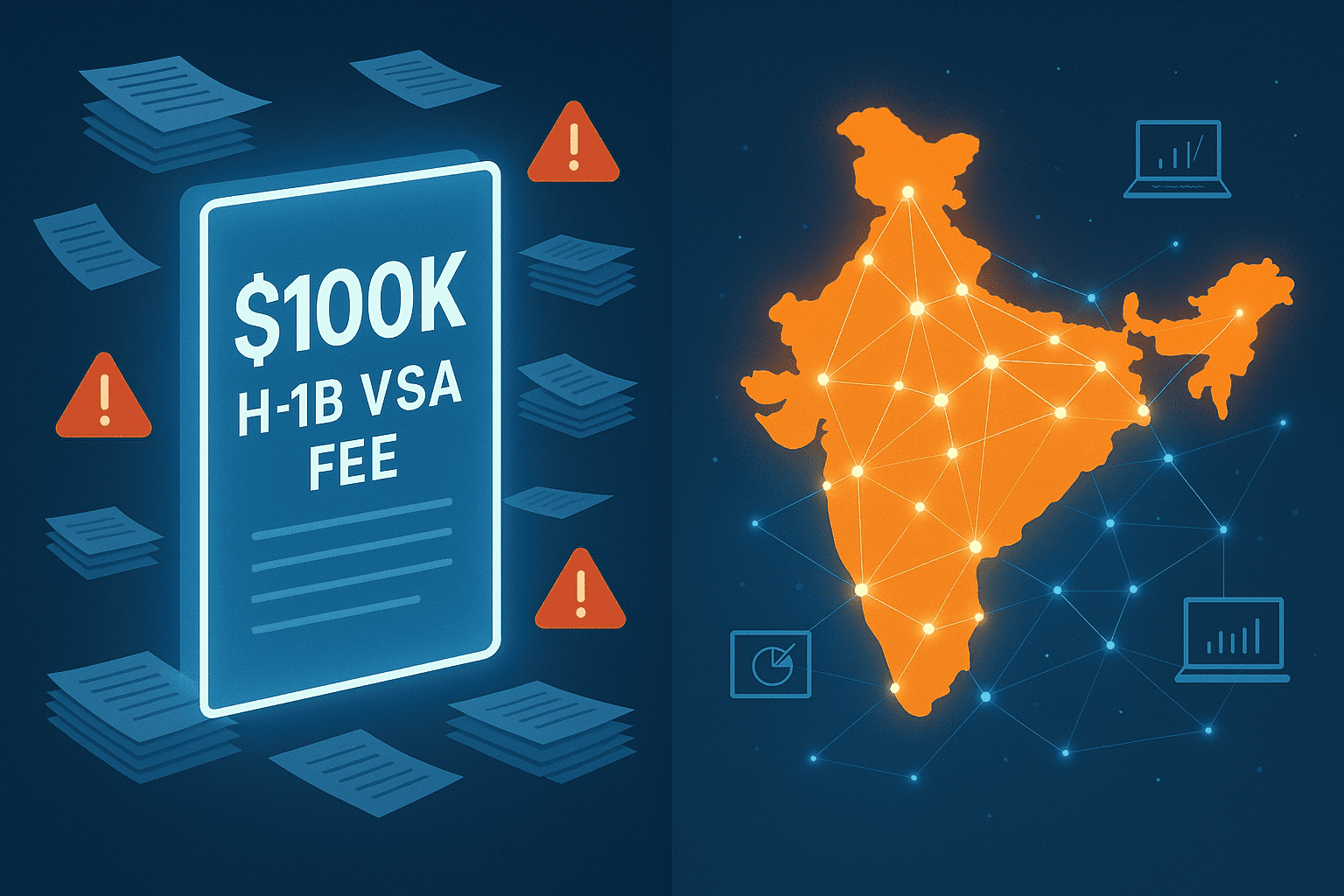
    Visa Fees vs India Connections

    Introduction:

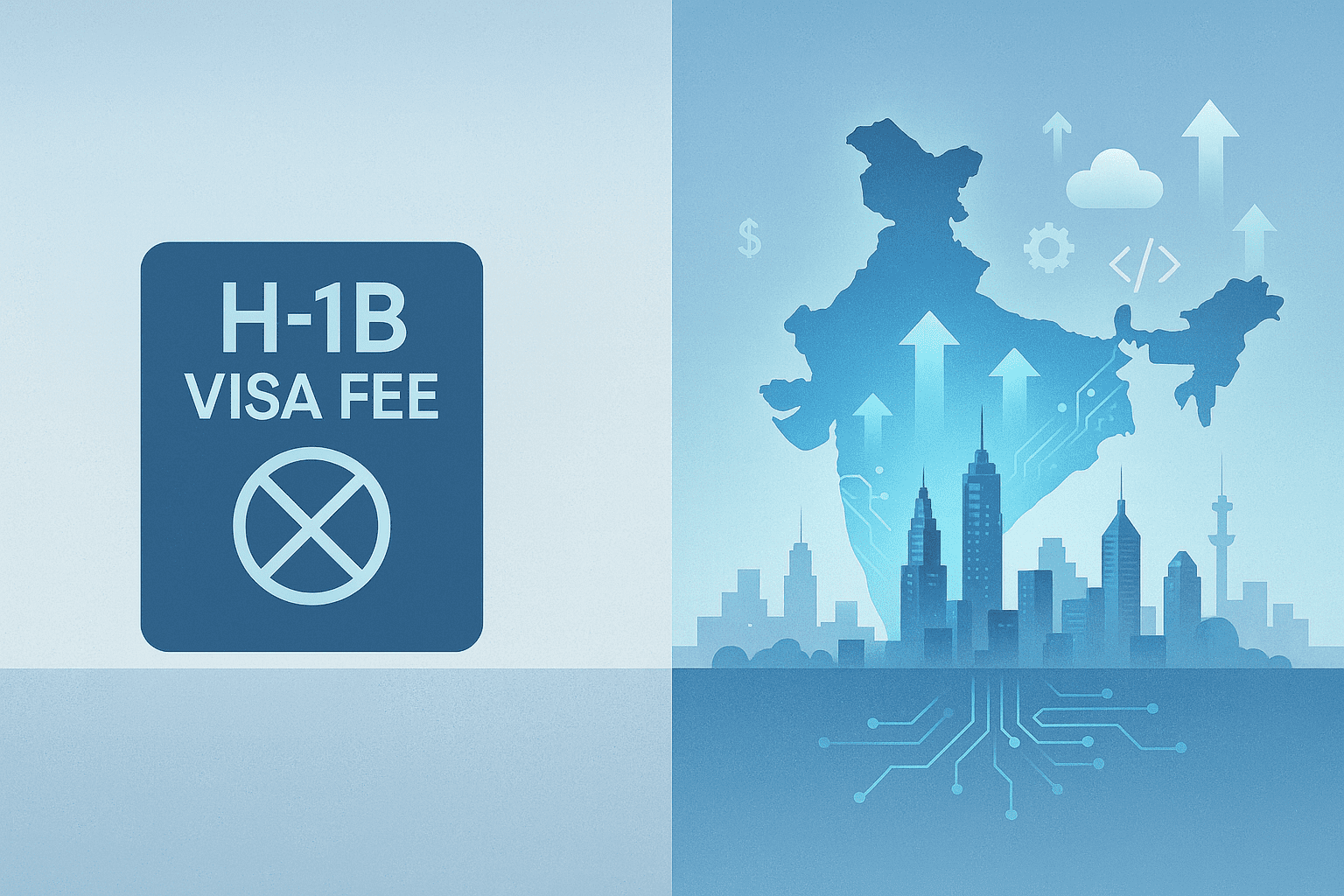
    The recent $100,000 H-1B visa fee has left many U.S. businesses stunned. For decades, the H-1B program was the go-to option for companies needing highly skilled professionals from India. It wasn’t perfect, but it worked. Now, with the new fee structure, relocating even one employee can cost more than ever.

    The impact is immediate. Budgets shrink. Hiring slows. Growth plans stall. Yet, the demand for global talent remains high. Technology companies, finance firms, and startups still need skilled engineers, analysts, and designers. Cutting back on talent is not an option.

    So, what’s the smarter move? Hire employees directly in India instead of relocating them to the U.S.

    Why Paying $100K Per Visa Doesn’t Add Up

    Consider this. Moving a single engineer under the new H-1B visa rules can cost your company $100,000 before salary, benefits, or relocation costs. Planning to relocate five employees? That’s half a million dollars gone—money that could fund product development, marketing, or global expansion.

    Even if your company can afford it, the process is slow and uncertain. The H-1B lottery remains unpredictable, and thousands of qualified professionals are denied visas every year.

    Clearly, traditional relocation is no longer the best option for international hiring.

    The Alternative: Building Teams in India

    Instead of spending heavily on visas, companies can build teams in India, where talent is abundant and diverse. India is home to one of the largest pools of skilled professionals in the world. Think software engineers, data analysts, finance specialists, designers, digital marketers, and customer support experts—you can build nearly any team you need. And it’s not just about the talent—it’s about where the talent is. Cities like Bengaluru, Hyderabad, Pune, Gurugram, and Chennai have vibrant ecosystems of tech and business professionals. These cities are hubs for innovation and offer ready access to experienced employees who understand global standards.


    Companies also have flexibility in how they hire. Remote teams can work from anywhere in India, reducing real estate costs. Hybrid setups let some employees work from the office while others contribute remotely, providing a balance of collaboration and flexibility. With this approach, scaling becomes seamless, and your operations are not bound by the complexities of relocation or visas.

    By hiring directly in India, you get cost savings, faster onboarding, and access to highly motivated teams who are already familiar with global workflows.

    For more insights, check out our blog: EOR Secrets: Why Companies are Ditching Local Entities for Global Hiring

    Overcoming Compliance with EOR

    Navigating compliance, payroll, and labor laws in a foreign country can feel overwhelming. That’s where Employer of Record (EOR) services come in. Here’s how it works:

    1. Contract and Onboarding – The EOR signs a legal employment contract with your team member in India, while you retain operational control.

    2. Payroll and Benefits – The EOR manages salaries, statutory benefits, and bonuses, ensuring employees are paid correctly and on time.

    3. Compliance Management – They handle labor laws, taxes, employee contracts, and termination procedures, removing risk from your company.

    4. HR Support – From performance reviews to conflict resolution, the EOR acts as the local HR team, keeping everything compliant and efficient.

    Many companies using EOR in India have scaled teams quickly without establishing a local entity. For example, a U.S.-based SaaS startup needed a 15-person engineering team fast. Using an EOR, they were able to onboard the entire team within 6 weeks, fully compliant and operational, with zero visa dependency.

    EOR services also help avoid risks like legal fines, payroll errors, labor disputes, or missed tax obligations—issues that can arise if a company tries to hire directly without local expertise.

    Curious about how it works? Read: Want to Expand Internationally Without Setting Up a Legal Entity? Here’s How

    Long-term Strategy: GCCs and Beyond

    While EOR is perfect for immediate hiring, Global Capability Centers (GCCs) are a strategic move for companies planning long-term operations in India. GCCs are essentially full-scale offices staffed by employees under local contracts but integrated into your global business operations.

    The benefits go beyond cost savings:

    • 24/7 Operations: Teams in India can cover multiple time zones, providing round-the-clock support or development cycles.

    • Innovation Hubs: Indian teams contribute fresh ideas and insights, often creating solutions tailored for both local and global markets.

    • Risk Diversification: By building in India, your company reduces reliance on U.S. immigration policies or visa approvals. Even if the H-1B process is delayed or blocked, your projects continue uninterrupted.

    • Talent Retention: Employees in India often stay longer due to career growth opportunities, stability, and local incentives, reducing turnover costs.

    Setting up a GCC isn’t just a backup plan; it’s a forward-thinking strategy to strengthen global operations, accelerate product delivery, and mitigate operational risks.

    Strategic Benefits Beyond Cost Savings

    Avoiding the $100K visa fee is just the start. By hiring in India:

    • Access a diverse talent pool ready to innovate.

    • Gain operational flexibility across global time zones.

    • Scale teams quickly without visa limitations.

    • Reduce risk from sudden policy changes.

    This isn’t just about saving money—it’s about creating a future-ready workforce.

    The Bottom Line

    The new H-1B visa fee is a wake-up call. Relocating talent to the U.S. is no longer the only way to access skilled professionals. Hiring in India with the support of an EOR allows companies to:

    • Save hundreds of thousands of dollars

    • Access a rich talent pool

    • Scale faster without visa delays

    Smart companies are already moving forward—building stable, cost-efficient teams in India and reducing dependency on U.S. visas.

    At Team Management Services, we make India expansion simple. Whether you need a small team or a full global capability center, we handle payroll, HR, and compliance so you can focus on growth. Contact us today and discover how your company can avoid the $100K H-1B visa cost—and gain access to world-class talent in India


  • Navigating Uncertain U.S.–India Relations: How Foreign Companies Can Still Hire in India with Ease

    Navigating Uncertain U.S.–India Relations: How Foreign Companies Can Still Hire in India with Ease

    Navigating Uncertain U.S.–India Relations: How Foreign Companies
    Can Still Hire in India with Ease

    US-India Relations

    Understanding the Current U.S.–India Business Environment

    2025 has brought a wave of changes in global business dynamics. Rising tariffs, stricter visa rules, and sudden political shifts are prompting foreign companies to rethink cross-border expansion. India has always been an attractive market — a hub of talent, innovation, and growth. Yet, with U.S.–India relations entering a more uncertain phase, many companies are asking: how can we continue hiring in India confidently and efficiently?


    The positive news is that India’s workforce remains resilient, skilled, and ready. The key is adopting the right strategy to hire, operate, and grow without unnecessary risk.

    Why India Remains a Strategic Choice

    Despite tariffs and visa challenges, India continues to appeal to global businesses for several reasons:

    • A large, skilled talent pool across multiple sectors.

    • Competitive labour costs compared to Western markets.

    • A growing consumer base, making India both a talent hub and a market.

    • Supportive state-level initiatives that encourage foreign investment.

    Viewed strategically, India is more than an option — it’s a logical move for companies seeking scale, efficiency, and resilience.

    Overcoming Visa Challenges

    Rising H-1B visa fees and immigration uncertainties make relocating talent increasingly complex and expensive. Many companies are now realizing that building teams directly in India offers an effective alternative.

    By hiring locally, businesses can access highly skilled professionals without the added hurdles of international relocation. This approach provides the same operational value — often faster and more cost-effective.

    Navigating Trade and Market Risks

    Trade tensions impact not only goods but also how companies plan market entry. Unexpected levies, higher costs for exports, and geopolitical friction can make expansion feel daunting.

    Flexible and low-risk hiring strategies allow companies to enter India confidently while minimizing exposure to these external challenges. Waiting for trade relations to normalize isn’t necessary when effective options exist today.


    Ensuring Compliance and Legal Safety

    Hiring in India requires understanding labor laws, payroll regulations, and tax obligations. Adding these responsibilities on top of market and visa uncertainties can overwhelm companies.

    Partnering with local experts ensures that all employees are legally compliant and operations continue smoothly. It’s not about avoiding regulations — it’s about navigating them confidently.

    Hiring Without a Legal Entity

    Many companies assume a legal entity is required before hiring. This is not true. Establishing an entity can slow operations, tie up capital, and introduce unnecessary risks.

    Through a local partner or Employer of Record (EOR), businesses can:

    • Enter the market without heavy infrastructure investments.

    • Onboard employees quickly without waiting months for entity registration.

    • Maintain compliance while focusing on core operations.

    This approach allows foreign companies to move quickly and flexibly, even amid political and trade uncertainty.

    Moving Forward Strategically

    Adapting to challenges like visa rules, tariffs, and compliance requirements gives companies an edge. Those who act early gain access to top talent, expand faster, and stay ahead of the competition.


    With the right local support, growth in India becomes both safe and sustainable. Learn more about how to make Entering the Indian market easy with Employer of Record and streamline your hiring process.

    Conclusion

    Uncertain U.S.–India relations don’t have to slow your business. By hiring locally, leveraging India’s talent, and using smart entry solutions, companies can continue growing confidently.


    At Team Management Services (TMS), we help foreign companies hire in India seamlessly, manage compliance, and scale operations efficiently — so you can focus on growth without the legal and administrative burden. India is open, the workforce is ready, and TMS is here to help you take the next step.

  • Why the New H-1B Fee Is Accelerating India Expansion

    Why the New H-1B Fee Is Accelerating India Expansion

    Why the New H-1B Fee Is Accelerating India Expansion

    India Business Expansion

    Introduction:

    The news landed like a thunderbolt for U.S. companies: the H-1B visa fee has jumped to $100,000 per applicant. For businesses planning to bring skilled talent from India to the United States, this is more than just a number—it’s a game-changer. Suddenly, even relocating a single engineer feels like a massive budget strain.


    Hiring globally has always been about more than just filling roles. It’s about timing, risk, cost, and long-term strategy. And now, with visa costs ballooning, companies are realizing the old approach of moving talent across borders may no longer make sense. The good news? This disruption is accelerating a trend that savvy companies have already been considering: India expansion. Instead of letting U.S. visa hurdles slow growth, businesses are turning their attention to India, a country brimming with talent, scalability, and efficiency.

    The $100K Shock: Why Companies Are Rethinking Talent Mobility

    Let’s break it down. Imagine a mid-sized U.S. tech company planning to relocate five engineers from India. Before the fee hike, visa costs per employee might have been around $10,000–15,000. Now, the same move would cost over $500,000 in visa fees alone, not including relocation, benefits, or salary.

    This sudden spike is more than a budget headache; it alters the way companies think about global hiring.

    Add the usual unpredictability of the H-1B lottery, long processing times, and administrative delays, and you have a perfect storm of frustration. Many companies are realizing that relying on U.S. visas is riskier than ever.

    Yet, the demand for skilled talent hasn’t disappeared. Engineers, data analysts, finance specialists, and operations experts are still critical to growth. The question is: how do you access this talent efficiently and cost-effectively?

    India: The Obvious Alternative

    India has long been a global talent powerhouse, but the H-1B fee spike is giving businesses an extra nudge to consider it seriously.

    What makes India so appealing? First, the sheer size and diversity of the workforce. Every year, millions of professionals graduate with degrees in IT, engineering, finance, business, and other high-demand fields. Many have global exposure and are comfortable working in international environments.

    Second, India offers speed and scalability. While U.S. visa approvals can take months or even years, hiring local talent in India can happen in weeks, making it easier to scale projects without delays.

    Certain cities are particularly attractive for global operations:

    • Bengaluru – Known as India’s tech capital, home to countless startups and multinational engineering teams

    • Hyderabad – A hub for IT services and business process outsourcing

    • Pune – Strong in analytics, finance, and software development

    • Gurugram & Delhi NCR – Focused on corporate services, consulting, and operations

    Hiring in these cities doesn’t just save money; it gives companies speed, reliability, and access to top-tier talent.

    For a practical guide to legal and HR compliance when hiring in India, check out: Understanding Employer of Record Services.

    Employer of Record: Simplifying Global Hiring

    Many companies hesitate to hire abroad due to taxation, labor laws, payroll, and compliance concerns. That’s where an Employer of Record (EOR) becomes invaluable.

    An EOR acts as the legal employer for your team in India, while your company retains full operational control. They handle:

    • Payroll and statutory benefits – ensuring employees are paid correctly and on time

    • Labor law compliance – navigating the complex Indian regulations

    • HR administration – onboarding, contracts, and employee support

    This allows companies to hire in India without setting up a local entity, saving time, money, and legal headaches.

    A real-world example: a U.S.-based SaaS startup wanted a 20-person engineering team. Using an EOR, they onboarded the entire team in just six weeks, fully compliant and operational, with no need to establish a local subsidiary.

    Learn more about scaling your India team efficiently here: Want to Expand Internationally Without Setting Up a Legal Entity? Here’s How


    Global Capability Centers: Thinking Long-Term

    While EORs are excellent for immediate hiring needs, many companies are taking a strategic approach by establishing Global Capability Centers (GCCs) in India.

    GCCs allow businesses to:

    • Centralize operations like software development, analytics, customer support, and R&D

    • Reduce operational costs compared to running teams in the U.S.

    • Enhance innovation by leveraging a diverse, highly skilled workforce

    • Maintain business continuity with employees covering multiple time zones

    India’s GCCs are not just a workaround for high visa costs—they’re strategic hubs for sustained global growth.

    Strategic Benefits Beyond Cost

    Yes, the H-1B fee increase hurts budgets—but the move to India offers benefits that money can’t buy:

    • Operational flexibility: Teams can cover global time zones, supporting 24/7 operations

    • Diverse perspectives: India-based employees bring innovative solutions and new ways of thinking

    • Reduced risk: Diversifying workforce geography minimizes exposure to unpredictable U.S. immigration policies

    • Scalable growth: Teams can expand or contract quickly without being tied to visa approvals

    In short, India is not just a cost-saving alternative—it’s a strategic advantage.

    The Bottom Line

    The $100,000 H-1B visa fee might have been a shock, but it’s also a wake-up call for global hiring strategies. Companies that embrace India as a talent hub—through EORs or GCCs—can:

    • Access top-tier talent without visa delays

    • Scale teams quickly and efficiently

    • Reduce operational risk and ensure compliance

    • Maintain global competitiveness while controlling costs

    Instead of letting U.S. visa challenges slow growth, businesses can turn them into an opportunity for strategic expansion. With Team Management Services by your side, India becomes a launchpad for innovation, productivity, and sustainable global growth.

  • Why EOR in India Is the Fastest Fix for Visa Delays and Compliance Risks

    Why EOR in India Is the Fastest Fix for Visa Delays and Compliance Risks

    Why EOR in India Is the Fastest Fix for Visa Delays and Compliance Risks

    EOR in India

    Introduction:

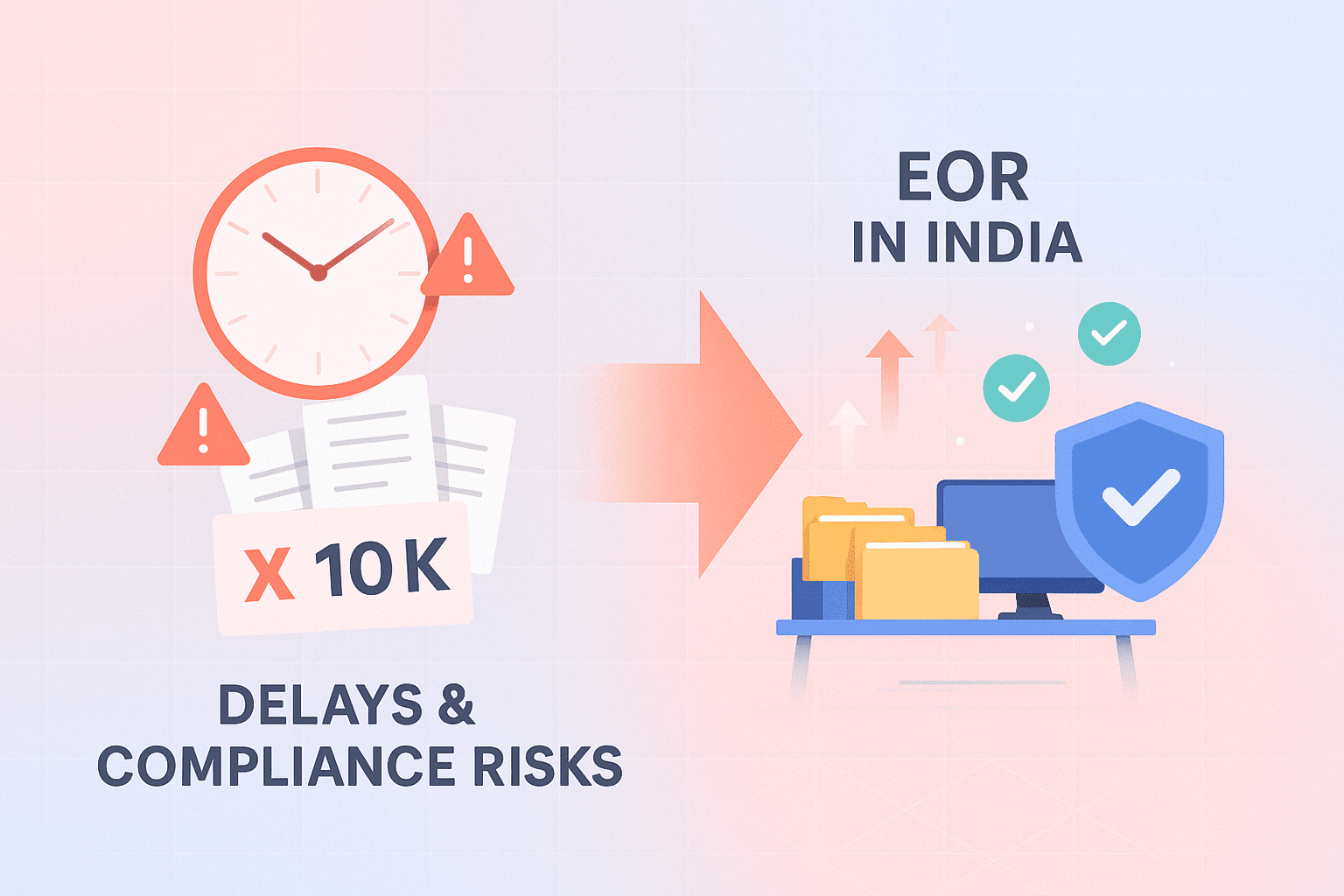
    The global talent market is evolving rapidly, but for many U.S. and international companies, visa delays and compliance risks have become a major roadblock. Companies find themselves stuck in prolonged paperwork, unpredictable approvals, and high costs—all of which can stall innovation, delay product launches, and increase operational risk.


    Consider the recent changes in H-1B visa regulations and fees. What once was a manageable process for moving skilled professionals to the U.S. has suddenly become a financial and operational headache. The high cost, coupled with long waiting times and uncertainty, is forcing companies to rethink how they access top talent.

    Fortunately, there’s a solution that addresses these challenges without relying on visas: an Employer of Record (EOR) in India.

    The Reality of Visa Delays

    Visa programs like the H-1B, L-1, and others were created to allow companies to access global talent. But today, the process is far from simple. Companies face multiple challenges, including:

    • Long approval timelines: Even under normal circumstances, H-1B visas can take months to approve. With increased scrutiny and new regulations, these timelines are extending further.

    • Lottery and uncertainty: Many visa programs are lottery-based, meaning even highly qualified employees may not secure approval. Companies cannot rely on a guaranteed timeline.

    • High costs: The visa fees alone can reach tens of thousands of dollars per employee. Additional costs like legal fees, relocation, and benefits make international hiring extremely expensive.

    • Risk of denials: Policy changes and administrative reviews can result in visa denials, forcing companies to scramble for alternatives.

    The result? Teams are left waiting, projects are delayed, and operational plans are disrupted. For startups and mid-sized companies, these delays can be catastrophic, especially when key talent cannot be deployed in time.

    Compliance Risks Are Another Hidden Threat

    Even when visas are approved, companies face compliance risks in foreign countries. Managing payroll, taxes, labor laws, and benefits in a country where you don’t have a legal presence is complex. A single misstep can result in fines, legal disputes, or reputational damage.

    Global expansion without proper compliance is high-stakes:

    • Employees must receive correct salaries, benefits, and statutory contributions.

    • Contracts must align with local labor laws.

    • Companies must handle terminations, leaves, and local regulations properly.

    Many organizations underestimate the complexity of compliance and only realize the risk after issues arise. This is why relying solely on visas and remote management without local legal support is dangerous and inefficient.

    For a practical guide to legal and HR compliance when hiring in India, check out: Understanding Employer of Record Services.

    How EOR in India Solves the Problem

    An Employer of Record (EOR) acts as the legal employer for your team in India while you maintain operational control. This model directly addresses the two most pressing challenges companies face: visa delays and compliance risks.

    Here’s how:

    1. No visa dependency: Your employees work in India, meaning you don’t need to wait for H-1B, L-1, or other foreign visa approvals. Projects can start immediately, keeping your business agile.

    2. Full compliance: The EOR handles payroll, taxes, statutory benefits, labor law compliance, contracts, and HR administration. You avoid legal risks while remaining fully compliant.

    3. Operational focus: With the administrative burden removed, your leadership and HR teams can focus on strategy, growth, and innovation rather than paperwork.

    This approach is fast, reliable, and predictable, unlike the uncertainty of visa-dependent hiring.

    The Financial Impact of Delayed Visas

    Visa delays aren’t just a timing issue—they have a direct financial impact. Consider a scenario:

    • A startup wants to bring in a key engineer from India.

    • Visa fees, legal costs, and relocation add up to $50,000–100,000 per employee.

    • The visa is delayed by six months due to lottery or processing issues.

    During those six months, the company may:

    • Miss critical project deadlines

    • Lose first-mover advantage in product launches

    • Spend additional resources maintaining operations without the new talent

    These hidden costs often exceed the apparent visa fees. EOR solutions eliminate both the waiting period and these indirect financial losses. By hiring locally in India, companies can avoid high visa fees, reduce operational delays, and maintain project momentum.

    Real-World Examples

    Consider a U.S.-based SaaS company planning to scale its engineering team. They intended to move five engineers to the U.S., but H-1B delays and high fees threatened the launch of a new product. By partnering with an EOR in India, they were able to:

    • Onboard the full team within weeks, not months

    • Maintain compliance with Indian labor laws

    • Keep the project timeline intact without risking U.S. visa approvals

    Another example is a mid-sized consulting firm facing uncertainty with L-1 visa transfers. Instead of waiting, they used an EOR to hire locally in India, allowing them to continue client projects without interruption.

    These examples highlight a key point: EOR is not just a workaround—it’s a business continuity strategy.

    Strategic Advantages Beyond Speed

    While speed and compliance are the immediate benefits, EOR in India provides long-term strategic advantages:

    • Scalability: Teams can expand or contract based on project needs without legal delays.

    • Predictable costs: No surprise fees or unexpected legal fines.

    • Global coverage: Teams can work across multiple time zones, supporting 24/7 operations.

    • Talent retention: Employees remain motivated with correct benefits, contracts, and career growth opportunities.

    In short, companies gain agility, security, and efficiency—all critical factors in today’s competitive global market.

    Looking Ahead

    Visa delays and compliance challenges are not going away—they are becoming increasingly common as global talent demand grows and immigration regulations tighten. Companies that wait for visas risk losing time, money, and market opportunities.


    EOR in India provides a fast, reliable, and compliant alternative. It allows businesses to:

    • Hire skilled professionals without visa dependency

    • Avoid compliance pitfalls in foreign countries

    • Reduce operational risk while maintaining growth

    • Save significant costs compared to visa-based relocation

    For companies aiming to stay agile, competitive, and compliant, EOR is no longer just an option—it’s the fastest solution.

    By leveraging Team Management Services, businesses can transform visa delays and compliance headaches into an opportunity for strategic growth.

  • Tariffs, Visas, and Market Access: The New Reality of Doing Business in India

    Tariffs, Visas, and Market Access: The New Reality of Doing Business in India

    Tariffs, Visas, and Market Access: The New Reality of Doing Business in India

    Doing Business in India

    The Changing Landscape of Doing Business in India

    2025 is reshaping global business, and India is at the center of attention. Tariffs, visa challenges, and evolving trade policies are forcing companies to rethink how they operate. For foreign businesses, the question is no longer if to enter India — it’s how to do it efficiently and safely.


    Despite uncertainties, India remains one of the world’s most promising markets. Its skilled workforce, expanding consumer base, and state-level incentives make it a hotspot for strategic growth. Companies that approach the market thoughtfully can navigate challenges and seize opportunities effectively.

    Tariffs and Trade Policies: Managing Costs Smartly

    Rising tariffs and changing trade rules are impacting costs for foreign companies. Import duties on goods, fluctuating exchange rates, and sector-specific policies require careful planning.


    However, these factors don’t have to be barriers. Businesses that source locally, form strategic partnerships, or optimize supply chains can maintain profitability while doing business in India. Flexibility is key — adapting operations to local conditions ensures resilience and efficiency.

    Visa Regulations: Hiring the Right Talent

    Stricter visa rules, higher fees, and longer processing times are reshaping workforce strategies. Relocating staff has become more complicated and expensive, challenging traditional expansion plans.


    The solution? Hiring locally. India offers a rich talent pool familiar with market dynamics. By building teams in India, companies bypass visa complications, gain local insights, and operate without unnecessary delays.

    Accessing the Indian Market

    India’s market is massive but complex. Regional regulations, compliance requirements, and infrastructure variations can be intimidating.

    Yet, companies that navigate these considerations strategically gain a significant advantage. Efficient entry into India allows businesses to secure top talent, build brand presence, and establish operations before competitors. Proactive planning is critical to long-term success.

    Compliance and Legal Navigation

    Understanding labour laws, payroll rules, and tax regulations is essential for foreign companies. Missteps can lead to penalties or delays.

    Partnering with local experts simplifies this process. Businesses can focus on core operations while professionals manage compliance, ensuring smooth hiring, payroll, and employee management.

    Hiring Without a Legal Entity

    Setting up a legal entity isn’t always necessary. Companies can leverage local partners or Employer of Record (EOR) services to employ staff legally.

    Benefits include:

    • Quick onboarding without entity registration delays.

    • Full compliance with labour laws and payroll obligations.

    • Freedom to focus on strategy while administrative tasks are handled by experts.

    For a deeper understanding, explore our  full Employer of Record (EOR) guides

    Turning Challenges into Opportunities

    Tariffs, visas, and regulatory complexities may seem like hurdles, but they are opportunities for companies that plan proactively. Those who act decisively can:

    • Access the best talent efficiently.

    • Expand operations without unnecessary risk.

    • Establish a strong, competitive presence in India.

    Strategic planning, combined with local expertise, allows businesses to transform potential obstacles into growth advantages.

    Moving Forward Confidently

    India remains open and full of potential. Businesses that hire locally, leverage EOR services, and plan strategically can continue doing business in India confidently.


    At Team Management Services (TMS), we help foreign companies navigate tariffs, visas, and compliance while building and managing teams efficiently. Partnering with TMS ensures your business can focus on growth while we handle the complexities of entering and operating in the Indian market. Discover how we make expansion seamless, safe, and effective.

  • Why Global Talent Strategies Are Shifting Toward India in 2026

    Why Global Talent Strategies Are Shifting Toward India in 2026

    Why Global Talent Strategies Are Shifting Toward India in 2025

    Global Talent Strategies

    A New Era for Global Talent

    By 2025, over 60% of multinational companies report reevaluating where they hire talent due to rising costs, visa restrictions, and economic uncertainty. India, with its vast pool of skilled professionals, has quickly become a central hub for global workforce planning.


    Companies are no longer relying solely on traditional hubs like the U.S. or Europe. Instead, they are exploring flexible models that allow access to top talent while managing operational risks. Understanding why India is becoming a priority is essential for any business shaping its workforce strategy in this new global reality.

    India’s Workforce Advantage

    India offers a unique combination of diverse skills, technological literacy, and cost efficiency. From IT and finance to healthcare and engineering, the country has a talent pool that supports specialized roles and large-scale projects.


    Moreover, India’s workforce is highly familiar with digital collaboration. Cloud-based tools, remote working platforms, and a thriving startup ecosystem make it possible for companies to manage teams effectively without relocating staff abroad. Consequently, India is emerging as a strategic location rather than a secondary or outsourced option.

    Economic and Policy Drivers

    Several economic and policy factors have accelerated this shift:

    • Visa limitations and higher relocation costs in traditional markets make local hiring more attractive.

    • Government initiatives and state-level incentives continue to encourage foreign investment.

    • Technological infrastructure in India enables effective remote collaboration.

    These elements reduce operational friction for global companies while improving access to India’s skilled talent pool. For firms planning for 2025 and beyond, India presents a low-risk, high-reward scenario for workforce expansion.

    Tackling Visa and Mobility Challenges

    Visa restrictions have become a growing concern for companies relocating employees. Processing delays, stricter eligibility criteria, and rising costs make international moves challenging.

    By hiring locally, companies can avoid these obstacles. India’s talent pool allows businesses to quickly assemble teams capable of delivering results, without the uncertainty of cross-border relocations. In effect, local hiring not only saves time and money but also ensures operational continuity.

    Market Access and Flexibility

    Having a local team in India goes beyond cost considerations. Companies gain direct access to one of the fastest-growing markets in the world. Local teams provide insights into consumer behavior, operational efficiency, and market dynamics that remote or overseas teams cannot replicate.


    Additionally, organizations can scale their operations flexibly. Hiring locally enables companies to adjust workforce size based on project needs, market demand, or seasonal fluctuations, giving them a competitive advantage.

    Navigating Compliance and Regulations

    India’s labour laws, payroll rules, and tax regulations can appear complex for foreign companies. Missteps can result in penalties or operational delays.


    This is where local expertise becomes vital. By partnering with professionals familiar with India’s regulatory framework, businesses can ensure compliance while focusing on strategic goals. Tools like Employer of Record (EOR) allow companies to legally employ staff in India without establishing a full legal entity.


    For detailed guidance, check our Employer of Record (EOR) guides

    How Companies Are Adapting

    Global companies are increasingly shifting their talent strategies toward India. They are building local teams, integrating remote collaboration, and leveraging technology to maintain productivity.


    This shift is not temporary. India is no longer just a cost-effective alternative — it has become a central hub for innovation, talent development, and operational efficiency. Companies that act now gain an edge in securing skilled professionals and establishing strong market positions.

    Turning Challenges Into Opportunities

    Global talent strategies face challenges like visa restrictions, regulatory complexities, and rising labor costs in traditional markets.

    Yet these challenges present opportunities:

    • Visa limits encourage local hiring, reducing dependency on overseas relocations.

    • Regulatory complexity promotes collaboration with local experts, mitigating risks.

    • Rising labor costs in other markets make India’s workforce more attractive.

    Companies that embrace these opportunities can establish resilient operations, secure talent efficiently, and operate with greater agility.

    Preparing for 2025 and Beyond

    The global workforce is becoming decentralized, digital, and flexible. Businesses that prioritize India in their talent strategies can access skilled professionals, manage projects effectively, and respond to market changes faster.


    Partnering with Team Management Services (TMS) enables companies to hire in India, manage compliance, and handle payroll efficiently. With TMS, businesses can focus on innovation and strategy while experts manage the operational complexities of the Indian workforce.

    India’s potential for 2025 and beyond is vast, and companies that act now are positioned to gain maximum advantage.

  • A Complete Guide to Hiring Employees in India Through EOR

    A Complete Guide to Hiring Employees in India Through EOR

    A Complete Guide to Hiring Employees in India Through EOR

    EOR Guide

    Introduction:

    Expanding into India is one of the smartest moves global companies can make right now. The country is home to world-class talent in technology, finance, healthcare, and countless other industries. Salaries are cost-effective, the workforce is young and ambitious, and India is quickly becoming a global hub for innovation.


    But here’s the catch: hiring in India is not as simple as posting a job ad and onboarding someone. If you’re a foreign company, you’ll quickly find yourself buried under complex labor laws, endless compliance paperwork, and unexpected legal risks. So what do you do if you want to build a team in India without wasting months on legal entity setup or getting tangled in compliance red tape?

    The answer is straightforward: you hire through an Employer of Record (EOR). This guide will break down exactly what EOR is, why it’s the fastest and safest way to hire employees in India, and how you can use it to scale your team quickly and compliantly.

    First, What Exactly Is an Employer of Record (EOR)?

    Think of an Employer of Record as your local partner who takes care of everything related to employment, payroll, and compliance—so you don’t have to.

    When you hire through an EOR:

    • They become the legal employer of your employees in India.

    • They handle contracts, payroll, benefits, and compliance.

    • You remain in full control of the employee’s work, goals, and performance.

    In short: the EOR manages the legal side, while you focus on business growth.

    If you’re new to the concept, check out our Employer of Record guides for more details.

    Why Hiring in India Is So Complicated Without an EOR

    Here’s the truth: India’s workforce is a goldmine, but the rules for employing people here can feel like a maze.

    You’ll need to worry about:

    • Entity setup: Opening a subsidiary in India takes months and involves heavy paperwork.

    • Labor laws: Different states in India have their own rules. Missing even one detail can cause penalties.

    • Statutory contributions: From Provident Fund (PF) to Employee State Insurance (ESI), you’ll need to get these right every month.

    • Payroll compliance: Salaries, taxes, and benefits must follow strict legal frameworks.

    • Employee protections: Benefits like gratuity, leave entitlements, and termination policies are tightly regulated.

    Now, if you’re a foreign company trying to do this alone, it’s almost impossible to stay compliant without hiring expensive local experts. That’s why EOR exists—it removes these roadblocks entirely.

    Why Companies Choose EOR in India

    So why do companies prefer EOR over setting up their own entity? Simple:

    1. Speed. You can start hiring in weeks instead of waiting 6–12 months for entity registration.

    2. Cost savings. No incorporation fees, no dedicated compliance team, and no surprise penalties.

    3. Risk-free. The EOR ensures you’re fully compliant with Indian labor laws.

    4. Flexibility. Hire one employee or 100—without worrying about long-term commitments.

    This makes EOR perfect for:

    • Companies testing the Indian market before going all-in.

    • Startups that need talent fast but don’t have resources for a legal entity.

    • Established enterprises that want to avoid visa hassles by hiring locally in India.

    How the EOR Hiring Process Works in India

    Let’s break it down step by step so you know exactly what to expect.

    Step 1: Define Your Hiring Needs

    Decide who you want to hire, their roles, and whether they’ll be full-time employees or contractors.

    Step 2: Partner With an EOR

    Choose a provider that understands India’s compliance landscape. With a trusted partner like Team Management Services, you’ll know everything is handled correctly.

    Step 3: Draft Compliant Contracts

    The EOR prepares employment contracts that align with Indian laws—including salary, probation periods, benefits, and termination rules.

    Step 4: Onboarding Made Easy

    The EOR manages background checks, documentation, and local formalities. You focus on welcoming your new team member into your projects.

    Step 5: Payroll and Benefits Management

    Your employees are paid in Indian rupees, with all taxes and statutory benefits like PF and ESI taken care of.

    Step 6: Ongoing Compliance and HR Support

    From tax filings to leave management, your EOR keeps your team compliant and supported.

    Compliance Challenges You Avoid With an EOR

    India’s labor laws are strict—and penalties for non-compliance can be painful. Here’s what your EOR will cover for you:

    • Provident Fund (PF): Mandatory retirement savings contributions.

    • Employees’ State Insurance (ESI): Health coverage for eligible employees.

    • Professional Tax: Required in some Indian states.

    • Gratuity: End-of-service benefit for employees after five years.

    • Shops & Establishments Act: Covers work conditions, hours, and leave rules.

    With an EOR, you don’t need to worry about missing deadlines or misinterpreting regulations. They keep your workforce fully compliant.

    For more details, you can explore our compliance resources

    Benefits of Hiring Employees in India Through EOR

    Let’s put it all together. By hiring in India through an EOR, you gain:

    • Faster time-to-hire – onboard employees in weeks.

    • Lower costs – no need for entity setup or a full HR department.

    • Peace of mind – compliance handled end-to-end.

    • Scalability – expand or shrink your workforce easily.

    • Focus on growth – leave the admin to experts and concentrate on strategy.

    It’s not just about solving compliance problems—it’s about creating a scalable hiring model.

    Common Misconceptions About EOR

    Let’s bust a few myths:

    • “We’ll lose control of our employees.”
      Not true—you control their work. The EOR only manages the legal side.

    • “EOR is just for short-term hires.”
      Wrong—many businesses use EOR for years before setting up an entity.

    • “It’s too expensive.”
      In reality, it’s far cheaper than entity setup, compliance fines, or visa costs.

    Is EOR Right for You?

    EOR in India isn’t for every company—but it’s the perfect solution if:

    • You want to hire quickly without waiting months for entity setup.

    • You need flexibility to scale your team up or down.

    • You want to avoid compliance mistakes and legal risks.

    • You’re exploring India as a new market or talent hub.

    If you plan to build a massive, long-term operation, you might eventually move to a full Global Capability Center (GCC). But EOR is the fastest, safest way to get started today.

    Conclusion: The Smartest Way to Hire in India

    Hiring in India can unlock enormous opportunities—but only if you do it right. Visa delays, entity setup hurdles, and compliance risks can slow you down. An Employer of Record removes these barriers completely. At Team Management Services, we make hiring in India simple, compliant, and fast. From payroll to benefits to HR compliance, we handle the complexities so you can focus on growing your business. If you’re serious about expanding into India without the headaches, explore our EOR guides and discover how we can help you start building your team today.

    FAQs

    Yes. Using an EOR lets you employ talent in India without setting up a local legal entity. The EOR becomes the formal employer, while you manage day-to-day work.

    Yes. EORs manage payroll, TDS, EPF/ESI contributions, and work-permit compliance for both Indian citizens and foreign nationals, helping you scale cross-border.

    Depending on the provider, onboarding via EOR can take just a few days (often one week or more), since you skip entity formation and the provider handles compliance, contracts, and payroll setup.

    Most EORs offer background checks as part of onboarding, including ID verification, employment history, and education checks.

    There is no minimum. Companies often start with one employee and scale as needed.

  • Why More U.S. Companies Are Building Global Capability Centers in India

    Why More U.S. Companies Are Building Global Capability Centers in India

    Why More U.S. Companies Are Building Global Capability Centers in India

    Global Capability Centre

    Introduction:

    The global business landscape is shifting, and companies are realizing that innovation and efficiency no longer have to be centered in the U.S. alone. Today, India has emerged as one of the most attractive destinations for building Global Capability Centers (GCCs). These centers allow companies to access world-class talent, reduce costs, and maintain high operational efficiency—all without compromising on quality.

    For U.S. companies, the combination of skilled talent, favorable business policies, and technological infrastructure makes India an irresistible choice. In this guide, we’ll explore why GCCs in India are growing in popularity, what advantages they offer, and how companies can navigate this expansion successfully.

    What Is a Global Capability Center?

    A Global Capability Center is a dedicated office or hub in a foreign country that handles key business operations for a company. Unlike outsourcing, GCCs are fully owned or controlled by the parent company and focus on delivering high-value functions such as:

    • Technology development

    • Product engineering

    • Analytics and business intelligence

    • Finance and accounting operations

    • Research and innovation

    In simple terms, a GCC allows a company to extend its core operations internationally while keeping control over strategy, IP, and quality.

    Many U.S. companies are now choosing India for GCCs because it offers a scalable workforce, cost advantages, and operational flexibility.

    Why India Is Becoming the Preferred Destination

    Several factors make India the top choice for U.S. companies building GCCs:

    1. Access to Top Talent

    India has one of the largest pools of skilled professionals in the world. Engineers, data scientists, software developers, and finance experts are abundant, motivated, and highly trained. For U.S. companies struggling with talent shortages at home, India provides an immediate solution.

    2. Cost-Effective Operations

    Operating a GCC in India can be up to 50–70% cheaper than running similar operations in the U.S. Salaries, infrastructure, and operational costs are significantly lower, allowing companies to invest more in innovation and growth.

    3. Time Zone Advantages

    With India’s strategic time zone, U.S. companies can run near 24/7 operations by coordinating between their home offices and Indian GCCs. This ensures faster product development, continuous customer support, and round-the-clock analytics.

    4. Growing Tech Ecosystem

    India’s technology infrastructure, including cloud services, high-speed internet, and IT parks, is world-class. Combined with government support for innovation, India provides an ecosystem where GCCs can thrive.

    The Strategic Benefits of GCCs in India

    Building a GCC is more than just cost savings—it’s a strategic move. Here’s how U.S. companies gain from India-based GCCs:

    1. Innovation and R&D

    GCCs allow companies to centralize their innovation and research efforts. Indian engineers and analysts work closely with global teams, driving innovation while keeping intellectual property protected.

    2. Risk Diversification

    By expanding operations internationally, companies mitigate risks associated with concentrating talent and resources in a single country. Global Capability Centers allow companies to maintain business continuity in case of regional disruptions.

    3. Talent Retention and Growth

    GCCs offer employees challenging, high-value work while providing growth opportunities. Companies can retain top talent by giving Indian teams access to global projects and career advancement.

    4. Full Control Over Operations

    Unlike outsourcing, GCCs are owned by the company. This allows full control over quality, processes, and compliance, ensuring that the parent company’s standards are maintained globally.

    How U.S. Companies Can Set Up a GCC in India

    Step 1: Define Your Goals

    Determine the functions your GCC will handle. Will it focus on technology development, analytics, finance, or a combination? Clear objectives help in planning the team, infrastructure, and tools.

    Step 2: Choose the Right Location

    India has multiple cities offering strong talent pools: Bengaluru, Hyderabad, Pune, Gurugram, and Chennai are among the most popular. While city selection is important, many companies also focus on regional talent availability and infrastructure.

    Step 3: Hire the Right Team

    You can hire directly or work with an Employer of Record (EOR) to onboard employees quickly and compliantly. Partnering with an EOR like Team Management Services ensures payroll, compliance, and HR responsibilities are fully handled.

    Step 4: Establish Infrastructure

    Set up office space, IT systems, and communication tools to ensure seamless collaboration with global teams. Cloud-based systems and remote work flexibility can reduce costs and improve efficiency.

    Step 5: Focus on Compliance

    India has multiple labor laws, tax regulations, and employment standards. A GCC must comply with all local regulations to avoid legal issues. Using a trusted EOR or local consultants helps mitigate compliance risks.

    The Role of EOR in Supporting GCCs

    While GCCs are fully owned, an Employer of Record can make the initial setup and early operations easier. Here’s how:

    • Rapid onboarding: EORs allow companies to hire Indian employees quickly without waiting for legal entity setup.

    • Compliance management: EORs handle payroll, taxes, benefits, and labor law adherence.

    • Scalability: Companies can start with a small team and expand as the GCC grows.

    • Focus on operations: Leadership can focus on strategic objectives while the EOR manages administrative tasks.

    For more details on how an EOR can support international expansion, see our EOR guides.

    Common Challenges and How to Overcome Them

    Setting up a GCC in India is rewarding, but companies must be prepared for challenges:

    • Cultural Differences: Indian work culture differs from the U.S. Ensuring cross-cultural training and communication is key.

    • Compliance Complexity: Multiple laws and state regulations make legal compliance tricky. A local EOR or compliance expert is essential.

    • Talent Competition: India’s top talent is in high demand. Companies must offer competitive salaries, growth opportunities, and meaningful work.

    • Infrastructure: Ensuring secure IT systems and connectivity is critical, especially for tech-heavy GCCs.

    Proactive planning, strategic partnerships, and local expertise can overcome all these challenges.

    Conclusion: Why GCCs in India Are the Future

    For U.S. companies, India offers a perfect combination of talent, cost-efficiency, and innovation potential. Global Capability Centers allow companies to:

    • Scale operations quickly and effectively

    • Access skilled professionals in technology, finance, and analytics

    • Maintain full control over quality and compliance

    • Reduce operational costs while expanding global reach

    With the support of Team Management Services and EOR solutions, companies can establish GCCs with speed and confidence. From hiring talent to managing payroll and compliance, the right partner ensures your GCC operates smoothly from day one.

    If you’re ready to explore India for your next Global Capability Center, start by understanding your team’s needs, partnering with local experts, and leveraging EOR services for seamless expansion.

  • India Market Entry in 2026: What Global Executives Should Watch Closely

    India Market Entry in 2026: What Global Executives Should Watch Closely

    India Market Entry in 2025: What Global Executives Should Watch Closely

    India Market Entry

    Introduction:

    India is no longer just an “emerging market.” It’s fast becoming the epicenter of global business expansion. With a booming economy, a young workforce, and a growing appetite for innovation, India in 2025 presents one of the most attractive opportunities for multinational companies.


    But opportunity always comes with complexity. Entering India’s market requires more than enthusiasm—it requires strategy, compliance readiness, and a clear understanding of local dynamics. For global executives, knowing what to watch closely in 2025 will make the difference between successful expansion and costly mistakes. This guide breaks down the key factors you need to consider for India market entry in 2025, why the timing is right, and how to make your expansion smooth with the right partners.

    Why 2025 Is a Defining Year for India Market Entry

    The numbers tell a clear story:

    • India’s GDP is projected to grow above 6% annually, making it one of the fastest-growing large economies.

    • The country is home to over 1.4 billion people, with a median age under 30—meaning a dynamic, tech-savvy workforce and consumer base.

    • Tech investment in AI, fintech, and digital infrastructure is accelerating, attracting global companies.

    For U.S. and European executives, 2025 represents not just growth, but a chance to future-proof operations by tapping into India’s scale, talent, and cost advantages.

    What Global Executives Should Watch in 2025

    When planning a market entry, executives must look beyond surface-level growth numbers. Here’s what to pay close attention to in India’s business landscape:

    1. Regulatory Environment

    India has made progress in streamlining regulations, but compliance is still complex. Labor laws, tax rules, and corporate governance vary across states. In 2025, new reforms are expected to further digitize compliance—but the landscape will remain demanding.

    Pro Tip: Use an Employer of Record (EOR) to handle payroll, HR, and compliance while you focus on strategy. This is one of the fastest ways to de-risk your entry. Learn more in our EOR guides.


    2. Talent Competition

    India’s workforce is its biggest strength, but demand for top talent is fierce. Global firms will compete with both multinational players and fast-growing Indian startups for the best engineers, data analysts, and finance professionals.

    Companies entering in 2025 should focus on building an attractive employer brand and providing clear growth opportunities for Indian talent.


    3. Infrastructure and Location Choice

    India offers multiple business hubs:

    • Bengaluru – tech and innovation capital

    • Hyderabad – IT and life sciences

    • Gurugram & Noida – finance and corporate services

    • Pune & Chennai – automotive, manufacturing, and IT services

    Choosing the right location depends on your industry and talent needs. For many companies, setting up a Global Capability Center (GCC) is the most efficient route.


    4. Cost vs. Compliance Balance

    India is cost-effective compared to the U.S. or Europe, but cutting corners on compliance can be expensive. Penalties, reputational risks, and legal challenges can derail expansion.

    An EOR ensures that employees are hired compliantly, benefits are correctly administered, and taxes are managed—without requiring you to establish a legal entity on day one.


    5. Rising Consumer Market

    India isn’t just a place to source talent—it’s also becoming a massive consumer market. With rising disposable incomes and digital adoption, consumer-facing companies will find huge opportunities in retail, fintech, and e-commerce.

    Global executives should tailor their strategies for local tastes, cultural nuances, and pricing sensitivities.

    Why EOR Is the Fastest Market Entry Route in 2025

    Many companies delay entry into India because they believe they must first establish a subsidiary or branch office. In reality, that can take months and involve heavy legal costs.

    An Employer of Record offers a faster, safer option:

    • Hire employees in India without setting up a local entity.

    • Payroll, HR, and compliance are fully managed.

    • Scale quickly as you test the Indian market.

    • Focus on building your team and strategy while the EOR handles complexity.

    In fact, many companies use EOR as their “market entry bridge”—hiring teams through an EOR first, then moving to a full GCC once they’ve validated the market. For details, see our Employer of Record guides.

    The Strategic Edge of Entering in 2025

    So why act now? Because the trends are converging:

    • Visa restrictions in the U.S. are making offshore hiring more attractive.

    • India’s digital economy is accelerating, backed by government initiatives.

    • Global Capability Centers (GCCs) are booming—over 1,500 GCCs already exist in India, and more are being established every quarter.

    • Competition is heating up—delaying entry means losing the first-mover advantage.

    Companies that enter in 2025 will be better positioned to capture market share, hire top talent, and establish strong operations before competitors saturate the space.

    Key Challenges Executives Must Navigate

    Market entry isn’t without challenges. Global executives should prepare for:

    • Regulatory complexity – Every state has different rules.

    • Cultural adaptation – Building trust with Indian employees requires understanding local work culture.

    • Talent retention – Offering career growth and global exposure is essential.

    • Infrastructure readiness – Strong cybersecurity and IT systems must be in place from day one.

    Partnering with local experts or an EOR removes much of this friction, giving you a smoother entry path.

    Conclusion: India in 2025 Is an Opportunity You Can’t Miss

    India is no longer just a “back office” for global firms—it’s a strategic growth hub. In 2025, executives who act decisively will gain access to unmatched talent, cost advantages, and a thriving consumer base. Yes, the road to entry comes with compliance hurdles and operational complexities. But those who partner with the right experts—such as Team Management Services, specializing in EOR solutions and India expansion—can bypass delays and start building immediately.


    If your company is exploring India in 2025, don’t let red tape slow you down. Use an Employer of Record to test the waters, hire talent, and establish a foundation for long-term growth. Explore our EOR guides to learn how we help global companies expand into India—quickly, compliantly, and cost-effectively.