Part of SKAD HR Group — HR for every stage of business  ·  HRTailor.com  ·  HRTailor.AI

Author: Abhijit Divekar

  • Step-by-Step Guide: How Japanese Companies Can Hire in India Without a Legal Entity

    Step-by-Step Guide: How Japanese Companies Can Hire in India Without a Legal Entity

    Step-by-Step Guide: How Japanese Companies Can Hire in India Without a Legal Entity

    Hire in India Without a Legal Entity

    Introduction

    India has rapidly become one of the most attractive destinations for global expansion. With its large talent pool, cost efficiency, and rising market demand, it offers excellent opportunities for international businesses. For Japanese companies, entering India can unlock growth in IT, manufacturing, clean energy, and R&D.

    However, there’s a challenge. Setting up a legal entity in India takes 4–6 months and involves significant costs and compliance requirements. Fortunately, Japanese businesses can bypass this hurdle by using an Employer of Record (EOR) solution.

    As a result, this guide explains how Japanese companies can expand smoothly into India with EOR services from Team Management Services (TMS).

    What Is an Employer of Record (EOR) in India?

    An Employer of Record (EOR) is a third-party organization that legally employs workers on your behalf. While you manage daily operations and performance, the EOR handles:


    • Payroll and statutory compliance

    • Employment contracts

    • Taxes and employee benefits

    In short, an EOR allows Japanese companies to hire in India without forming a subsidiary. Therefore, it saves time, reduces costs, and lowers compliance risks.

    Step-by-Step Guide to Hiring in India Without an Entity

    Step 1: Define Your Business Needs


    Start by identifying the roles you want to hire in India—such as IT specialists, engineers, sales staff, or R&D professionals. In addition, decide whether you need a short-term project team, a remote setup, or a long-term workforce.


    Step 2: Partner with an EOR in India


    Next, select a trusted provider like TMS to act as your Employer of Record. By contrast, forming a subsidiary would delay hiring and increase costs. Therefore, choosing an EOR ensures faster entry into the Indian market.


    Step 3: Onboarding & Employment Contracts


    The EOR drafts employment contracts that comply with Indian labor laws. Once signed, employees are seamlessly onboarded onto the EOR’s local entity. Consequently, you reduce legal exposure while ensuring full compliance.


    Step 4: Payroll & Tax Management


    Payroll outsourcing in India ensures accurate and timely salary disbursement. Moreover, the EOR also manages statutory deductions such as:

    • Provident Fund (PF)

    • Employee State Insurance (ESIC)

    • Professional Tax (PT)

    As a result, payroll accuracy and compliance are guaranteed.

    Step 5: Compliance & HR Support


    Indian labor compliance can be complex. Fortunately, the EOR takes care of tax filings, statutory compliance, and HR services like leave tracking, attendance, and expense management.


    In addition, this support allows Japanese companies to focus on growth while HR functions are handled professionally.


    Step 6: Employee Benefits & Engagement


    To attract and retain talent, the EOR provides mandatory benefits such as PF, ESIC, and gratuity. Moreover, companies can add perks like health insurance or allowances to boost employee satisfaction.


    Therefore, engagement and retention become easier for Japanese firms entering India.


    Step 7: Scale as Needed


    Unlike a fixed legal entity, an EOR model gives flexibility. For example, Japanese companies can quickly scale teams up or down depending on project needs.


    In fact, this makes it ideal for testing the Indian market before committing to a subsidiary setup.

    Key Benefits of Using EOR in India for Japanese Companies


      • Faster Market Entry – Start hiring within 2–4 weeks.

      • No Entity Required – Avoid lengthy and costly incorporation.

      • Significant Cost Savings – No office setup or HR infrastructure needed.

      • Full Compliance – 100% adherence to Indian labor laws.

      • Payroll Accuracy – Timely processing and statutory deductions.

      • Flexibility – Hire permanent, contract, or project-based staff with ease.

    EOR vs Subsidiary Setup in India

    Factor EOR in India (via TMS) Subsidiary Setup
    Time to Hire 2–4 weeks 4–6 months
    Compliance Managed by TMS Full responsibility of company
    Costs Low (service fee only) High (legal, infra, HR costs)
    Flexibility High – scale quickly Limited – fixed structure
    Risk Low – shared with EOR High – full liability

    Final Thoughts

    The India–Japan economic partnership provides a strong foundation for business expansion. However, setting up a legal entity in India can delay growth. Therefore, by using Employer of Record (EOR) services, Japanese companies can hire employees quickly, remain compliant, and focus on scaling.


    With TMS as your EOR partner, expansion into India becomes simple, affordable, and risk-free.

    Ready to hire in India without setting up a legal entity?
    Partner with TMS’s Employer of Record (EOR) services and start building your Indian workforce—fast, compliant, and hassle-free.


  • Russia–India EOR: Expand Business Seamlessly

    Russia–India EOR: Expand Business Seamlessly

    Russia–India EOR: Expand Business Seamlessly

    Russia–India EOR Expand Business Seamlessly

    Introduction

    Expanding your company abroad is exciting but comes with challenges. For Russian firms eyeing India, an Employer of Record (EOR) offers a faster, safer, and smarter path. With EOR services, you can hire employees, manage compliance, and reduce risks without creating a local entity. This flexibility makes business expansion smooth under the RIC alliance framework.

    Why Russian Companies Should Choose an Employer of Record in India

    An Employer of Record in India takes care of HR and compliance while your company focuses on operations. For Russian businesses, this means:


    • Easy hiring of skilled professionals.
    • No delays with setting up a subsidiary.
    • Compliance with Indian labor laws.

    India’s tech talent, English-speaking professionals, and cost efficiency make it an ideal destination for business growth.

    How EOR Helps Russia–India Business Expansion

    The Russia–India business expansion story is strengthening under growing trade ties. By using EOR services, Russian companies can:


        • Enter the Indian market quickly.
        • Scale operations without administrative burdens.
        • Reduce costs compared to setting up a full branch office.

    This allows companies to focus on building clients and partnerships instead of navigating complex HR processes.

    Hiring Employees in India Without a Legal Entity

    One of the biggest challenges for foreign companies is hiring staff abroad. With an EOR, you can hire employees in India without entity setup. The EOR becomes the legal employer and manages:

    • Payroll and tax filings.
    • Employee contracts.
    • Statutory compliance.

    Meanwhile, you remain in control of day-to-day tasks and employee performance.

    Key Benefits of EOR Services for Russian Businesses

    Using EOR services for Russian companies in India provides:

    1. Quick Market Entry – Avoid long registration processes.
    2. Risk Reduction – Minimize exposure to compliance issues.
    3. Scalability – Add or reduce staff as needed.
    4. Local Expertise – Navigate Indian labor laws smoothly.
    5. Focus on Growth – Free your time to focus on clients and expansion.

    For example, our HR Outsourcing solutions make it easier for businesses to expand into India without extra overhead.

    The Role of the RIC Alliance in Cross-Border Growth

    The RIC alliance business opportunities are fueling collaboration across Russia, India, and China. By leveraging EOR services in India, Russian companies align with this strategic cooperation and gain a strong foundation for growth. The alliance creates trust, market access, and investment opportunities that benefit expanding firms.

    Conclusion

    For Russian businesses, India offers skilled talent and strong growth potential. Partnering with an Employer of Record in India ensures quick hiring, reduced risk, and full compliance. Under the RIC alliance, this is the best time to expand cross-border and build long-term success.

    Ready to explore India’s opportunities under the new India–Russia Alliance?
    Partner with TMS’s Employer of Record (EOR) services and expand into India—faster, smarter, and 100% compliant.

  • India–Russia Growth: EOR Hiring Made Simple

    India–Russia Growth: EOR Hiring Made Simple

    India–Russia Growth: EOR Hiring Made Simple

    India EOR

    Introduction

    Expanding into India is a smart move for Russian businesses. The country offers skilled talent, cost advantages, and strong trade ties. However, setting up a local entity can be time-consuming and costly. That’s where an Employer of Record (EOR) comes in. With EOR services in India, Russian firms can simplify hiring, manage compliance, and expand quickly — all while benefiting from the growing India–Russia partnership.

    Why Choose EOR for India–Russia Expansion?

    An Employer of Record in India makes hiring seamless for Russian companies. The EOR legally employs staff on your behalf and handles:


    • Payroll and tax filings.
    • Benefits and contracts.
    • Local compliance with Indian labor laws.

    This ensures your team is legally employed while you focus on business growth.

    Access to Skilled Talent Without a Legal Entity

    Indian markets are rich with professionals in IT, engineering, finance, and more. With EOR, Russian companies gain easy access to skilled talent without needing a subsidiary. You remain in charge of daily work, while the EOR manages the paperwork and legal side.

    Benefits of EOR Hiring for Russian Businesses

    Using EOR services in India offers several key benefits:


    1. Faster Hiring – Start operations in weeks.
    2. Full Compliance – Avoid legal risks and penalties.
    3. Cost Efficiency – No need for a local HR setup.
    4. Scalability – Grow or reduce staff as needed.
    5. Focus on Growth – Spend time on strategy, not administration.

    Learn more about our HR Outsourcing solutions designed to support international businesses.

    India–Russia Partnership Driving Growth

    The India–Russia partnership is creating new opportunities for cross-border trade and investment. By using EOR solutions, Russian firms can align with this relationship and secure long-term success in India’s dynamic market.

    Conclusion

    Hiring in India doesn’t need to be complex. With an Employer of Record, Russian companies gain access to top talent, reduce risks, and enjoy seamless expansion. Supported by the India–Russia partnership, EOR hiring makes growth simple, fast, and effective.

    Ready to explore India’s opportunities under the new India–Russia Alliance?
    Partner with TMS’s Employer of Record (EOR) services and expand into India—faster, smarter, and 100% compliant.

  • Hire in India: Russian Firms Choose EOR

    Hire in India: Russian Firms Choose EOR

    Hire in India: Russian Firms Choose EOR

    India EOR

    Introduction

    In 2025, Russian companies are looking at India as a key growth market. The challenge lies in navigating local labor laws, payroll, and compliance. An Employer of Record (EOR) makes this transition simple. By choosing EOR services, Russian firms can hire in India quickly, reduce risks, and focus on building their business with confidence.

    Why Russian Firms Choose EOR in India

    An Employer of Record in India acts as the legal employer for your staff. For Russian companies, this means:


    • No legal entity required to hire.
    • Compliance handled with Indian labor laws.
    • Payroll and benefits managed

    This creates a smooth entry into the Indian market without heavy administrative burdens.

    Faster Entry and Compliance in 2025

    Speed matters in today’s global economy. With EOR services in 2025, Russian firms can:

    • Start hiring within weeks.
    • Avoid delays linked to subsidiary registration.
    • Stay compliant with changing regulations.

    This efficiency gives businesses a competitive advantage in India’s fast-growing economy.

    Key Benefits of Employer of Record for Russian Companies

    Partnering with an Employer of Record in India offers many advantages:


    1. Faster Market Entry – Quick hiring solutions.
    2. Risk-Free Expansion – Reduced legal and financial exposure.
    3. Cost Savings – Avoid expenses of a full setup.
    4. Scalability – Add or downsize staff with ease.
    5. Focus on Growth – Spend time building clients and partnerships.

    For details on how we support international firms, visit our HR Outsourcing services.

    Payroll and Compliance Made Simple

    Payroll and compliance can become roadblocks for foreign companies. With EOR support, Russian businesses can:


    • Automate payroll processing.
    • Ensure accurate tax filings.
    • Provide statutory benefits for employees.

    This ensures peace of mind and keeps your business protected from penalties.

    Conclusion

    For Russian companies, 2025 is the perfect time to expand into India. By choosing an Employer of Record, firms gain faster entry, compliance assurance, and reliable payroll management. With EOR, hiring in India becomes simple, scalable, and growth-focused.

    Ready to explore India’s opportunities under the new India–Russia Alliance?
    Partner with TMS’s Employer of Record (EOR) services and expand into India—faster, smarter, and 100% compliant.

  • China–India EOR: Expand Without Entity

    China–India EOR: Expand Without Entity

    China–India EOR: Expand Without Entity

    China–India EOR: Expand Without Entity

    Introduction

    For Chinese companies, India is becoming one of the most attractive destinations for growth. But establishing a local entity takes time and resources. An Employer of Record (EOR) provides a faster, smarter solution. With EOR services, Chinese firms can expand in India without setting up a legal entity, hire teams quickly, and reduce costs — all while strengthening ties under the RIC alliance.

    Why Chinese Companies Should Consider an Employer of Record in India

    An Employer of Record in India acts as the official employer for your workforce. For Chinese businesses, this means:


    • Hassle-free hiring of skilled professionals.
    • Full compliance with Indian labor regulations.
    • Payroll and tax handled accurately.

    This makes it possible to scale operations while staying focused on strategy and clients.

    Expand Without a Legal Entity

    Setting up a subsidiary in India can take months and require heavy investment. With EOR services, Chinese firms can expand without entity setup. The EOR takes care of employee contracts, benefits, and compliance while you retain control of day-to-day operations.

    Benefits of EOR for Chinese Businesses in India

    Choosing EOR solutions in India provides several advantages:


    1. Quick Market Entry – Hire within weeks.
    2. Lower Costs – No upfront setup expenses.
    3. Regulatory Compliance – Stay aligned with Indian labor laws.
    4. Scalable Workforce – Add or reduce headcount easily.
    5. Risk Management – Minimize exposure to penalties or disputes.

    Discover how our HR Outsourcing services can help your business manage compliance and workforce needs efficiently.

    Strengthening the RIC Alliance

    The RIC alliance between Russia, India, and China is opening new doors for cooperation. For Chinese companies, entering India with the support of an EOR not only ensures smoother operations but also strengthens their position in this strategic partnership.

    Conclusion

    Expanding into India no longer requires complex legal setups. With an Employer of Record, Chinese firms can hire quickly, avoid setup costs, and grow confidently under the RIC alliance. EOR hiring makes cross-border business simple, scalable, and future-ready.

    Ready to explore India’s opportunities under the new India–China Alliance?
    Partner with TMS’s Employer of Record (EOR) services and expand into India—faster, smarter, and 100% compliant.

  • Employer of Record India for Chinese Firms

    Employer of Record India for Chinese Firms

    Employer of Record India for Chinese Firms

    Employer of Record India

    Introduction

    India’s fast-growing economy and skilled workforce make it an ideal market for Chinese companies looking to expand. Yet, setting up a local entity takes time and resources. An Employer of Record (EOR) in India offers a faster route. With EOR services, Chinese firms can hire local talent, manage compliance, and scale smoothly under the framework of India–China cooperation.

    Why Chinese Firms Need an Employer of Record in India

    An Employer of Record acts as the legal employer on behalf of your company. For Chinese businesses, this means:


    • Hiring employees without creating a subsidiary.
    • Full compliance with Indian labor laws.
    • Payroll and benefits managed seamlessly.

    This approach reduces risks and ensures smooth market entry.

    Hire Local Talent Without a Legal Entity

    Finding skilled employees in India is easier than ever. With EOR services, Chinese companies can hire local talent without setting up an entity. The EOR handles contracts, payroll, and compliance, while you focus on business growth and daily operations.

    Key Benefits of EOR for Chinese Businesses

    Using EOR in India provides multiple advantages:


    1. Quick Market Entry – Hire staff within weeks.
    2. Compliance Assurance – Stay aligned with Indian regulations.
    3. Cost Efficiency – Avoid the expenses of a full local setup.
    4. Flexibility – Scale your workforce as required.
    5. Risk Reduction – Prevent penalties and legal disputes.

    For more details on how we support international companies, visit our HR Outsourcing services.

    India–China Cooperation and Business Growth

    The India–China cooperation is creating new opportunities for trade and investment. By using EOR solutions, Chinese firms can expand quickly, strengthen their presence, and align with broader regional growth strategies.

    Conclusion

    For Chinese firms, India offers unmatched opportunities in 2025 and beyond. With an Employer of Record, businesses can hire talent easily, stay compliant, and scale without legal or financial risks. EOR is the smarter way to expand under the India–China cooperation framework.

    Ready to explore India’s opportunities under the new India–China Alliance?
    Partner with TMS’s Employer of Record (EOR) services and expand into India—faster, smarter, and 100% compliant.

  • Expand Chinese Business in India with EOR

    Expand Chinese Business in India with EOR

    Expand Chinese Business in India with EOR

    Expand Business in India with EOR

    Introduction

    For Chinese businesses, India presents a fast-growing market with a wealth of skilled talent. However, entering a new country often involves lengthy legal processes and high setup costs. An Employer of Record (EOR) makes expansion simple. With EOR services in India, Chinese firms can hire employees, manage compliance, and access talent easily — all while benefiting from RIC alignment.

    Why Use an Employer of Record in India

    An Employer of Record in India serves as the legal employer for your workforce, while you manage daily operations. For Chinese businesses, this means:


    • Hiring without creating a local entity.
    • Simplified payroll and tax management.
    • Full compliance with Indian labor regulations.

    This reduces risks and accelerates your entry into the Indian market.

    Gain Market Access Without Entity Setup

    Setting up a subsidiary can delay expansion plans. With EOR, Chinese companies can gain market access without entity setup. The EOR manages employment contracts, benefits, and compliance, while you focus on operations and growth.

    Benefits of EOR for Chinese Companies in India

    Choosing EOR solutions in India gives Chinese businesses:


    1. Fast Hiring – Start operations in weeks.
    2. Compliance Assurance – Stay aligned with labor and tax laws.
    3. Cost Efficiency – Avoid setup expenses.
    4. Scalable Growth – Expand or reduce workforce easily.
    5. Talent Advantage – Tap into India’s skilled professionals.

    For more on managing your workforce abroad, explore our HR Outsourcing services.

    RIC Alignment and Business Expansion

    The RIC alignment between Russia, India, and China strengthens cross-border cooperation. By using EOR, Chinese firms not only simplify hiring but also align their expansion with this strategic partnership, ensuring long-term growth opportunities in the region.

    Conclusion

    Expanding into India doesn’t need to be complicated. With an Employer of Record, Chinese businesses can hire quickly, stay compliant, and gain access to top talent. Backed by RIC alignment, EOR hiring provides a powerful foundation for business expansion in India.

    Ready to explore India’s opportunities under the new India–China Alliance?
    Partner with TMS’s Employer of Record (EOR) services and expand into India—faster, smarter, and 100% compliant.

  • What is Payroll Outsourcing? Complete Guide for Indian and Global Companies

    What is Payroll Outsourcing? Complete Guide for Indian and Global Companies

    What is Payroll Outsourcing? Complete Guide for Indian and Global Companies

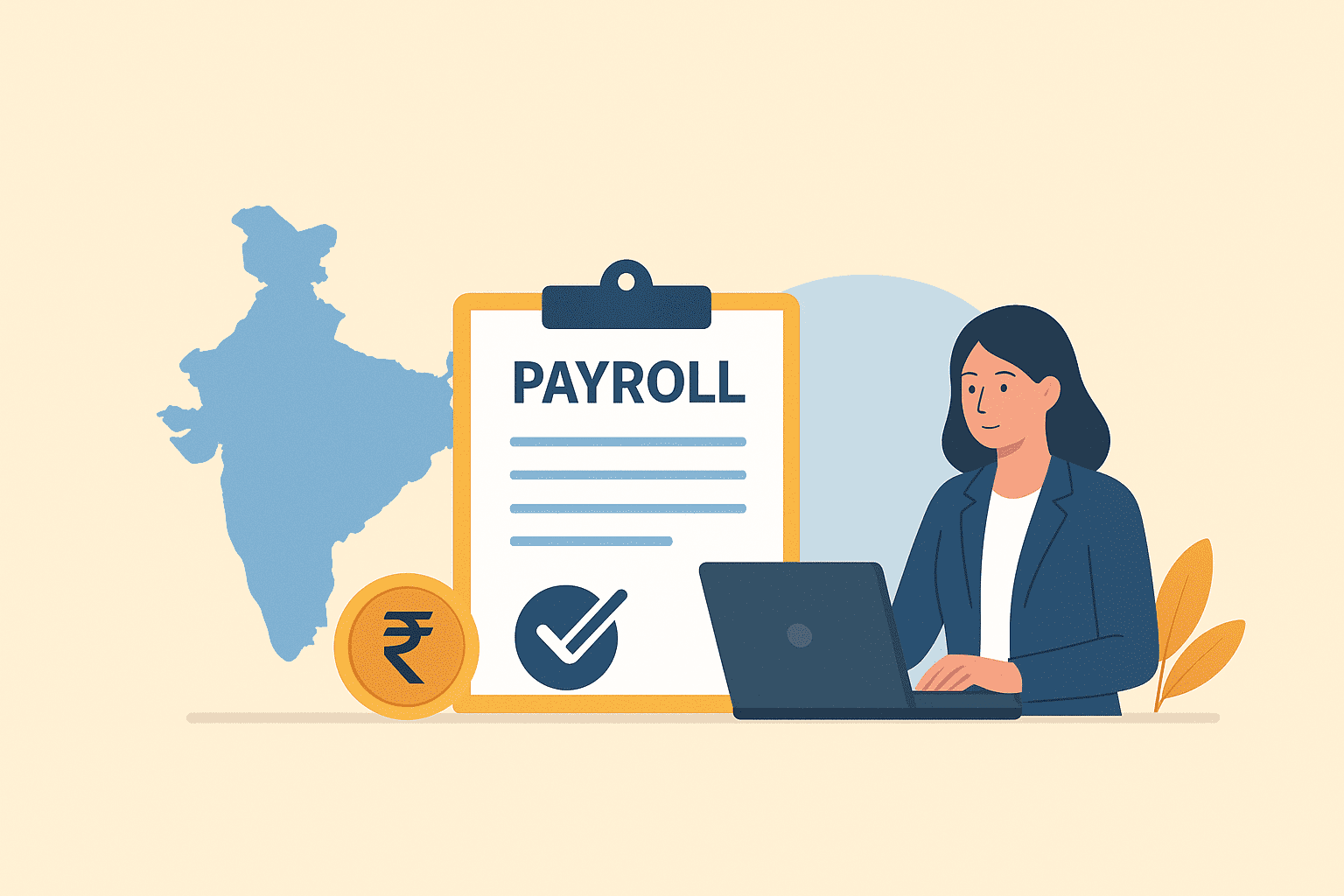
    Illustration of payroll outsourcing in India with woman on laptop, contract clipboard, rupee coin, and India map.

    Introduction

    On the surface, payroll may look simple: you pay salaries every month, deduct some taxes, and hand out payslips. But in practice, it is one of the most time-consuming, detail-heavy, and risky tasks for any business. In India, payroll includes not only salaries but also deductions for PF, ESI, Professional Tax, gratuity, and income tax. Add to this the constant changes in labour laws, tax rules, and government filings — and payroll quickly becomes a full-time job.

    Now imagine running payroll for a company that operates in multiple countries. You have different currencies, laws, tax systems — and employees who expect timely, accurate pay every single month.

    That’s where payroll outsourcing comes in. Instead of struggling with payroll in-house, businesses partner with professional payroll providers who handle it all — from calculations to compliance to reporting.

    This guide will give you a complete, simple explanation of payroll outsourcing:

    • What it means.
    • Why companies in India and abroad use it.
    • How it works step by step.
    • The benefits, drawbacks, and real-world use cases.
    • Tips for choosing the right provider.

    By the end, you’ll know exactly whether payroll outsourcing makes sense for your business.

    What is Payroll Outsourcing?

    Payroll outsourcing means giving the responsibility of managing employee salaries, deductions, compliance, and reporting to an external expert provider. Think of it this way: instead of hiring payroll staff and buying payroll software, you pay a specialized firm to run payroll for you. They act as your payroll department — but outside your office.

    A payroll outsourcing partner typically handles:

    • Salary calculations — based on attendance, leaves, and allowances.
    • Tax deductions (TDS) — ensuring correct income tax is deducted.
    • Provident Fund (PF) & ESI contributions — as per Indian laws.
    • Gratuity and bonus calculations.
    • Payslip generation for employees.
    • Filing of returns with government authorities.
    • Year-end reports for audits and compliance.

    For global companies, they also manage multi-country payroll, adapting to local laws while centralizing data for the employer.

    In short: payroll outsourcing is about making sure employees are paid correctly, on time, and in compliance with all laws — without the business owner or HR team having to do all the heavy lifting.

    Why Do Companies Outsource Payroll?

    Let’s break this down with simple, everyday examples. Companies Outsource Payroll to:

    1. Save Time:
      Payroll is repetitive and admin-heavy. If your HR team spends 40 hours every month just on salary calculations and compliance filings, that’s almost 480 hours per year wasted on routine work. Outsourcing frees up this time.
    2. Avoid Mistakes:
      Imagine paying an employee less by mistake or missing a PF contribution. Small errors can cause big frustration, loss of trust, or even legal trouble.This risk is significantly lower when payroll is handled by experts using reliable, error-reducing systems.
    3. Stay Compliant:
      Laws in India change often — from new tax slabs to PF contribution rules. Missing a filing deadline can mean penalties running into lakhs of rupees. It providers track these updates and ensure you’re always compliant.
    4. Save Money:
      Hiring full-time payroll staff, buying payroll software, training, and audits cost more than outsourcing. With outsourcing, you pay a fixed fee — often cheaper than building the entire system in-house.
    5. Scale Easily:
      Say your company doubles from 200 to 400 employees in a year. With outsourcing, payroll can scale instantly — no extra HR hires needed.
    6.  Data Security:
      Employee salaries and tax details are sensitive. Reputed providers use encryption and secure servers to protect this data better than small in-house setups.

    How Payroll Outsourcing works in India

    A good partner starts with understanding the current payroll—salary structures, leave and attendance rules, reimbursements, variable pay, and past records. Then comes a parallel run: one cycle where in‑house payroll and the provider’s payroll run together to catch mismatches. After fine‑tuning, the provider goes live, runs payroll on a monthly cadence, shares pay slips and reports, and files taxes and statutory returns on time. When the business changes—new locations,  policies, or expansion—the provider updates configurations so payroll stays smooth.

    How Payroll Outsourcing Works – Step by Step

    1. Needs Assessment:
      The company decides which functions to outsource: full payroll, compliance filings, or just payslip processing.
    2. Choosing a Partner:
      A payroll outsourcing provider is selected based on experience, technology, compliance track record, and pricing.
    3. Data Sharing:
      Employee data (attendance, salaries, benefits, leave records) is securely shared with the provider.
    4. Payroll Processing:
      The provider calculates salaries, deductions, benefits, and generates payslips.
    5. Compliance Management:
      PF, ESI, TDS, and other statutory contributions are deducted and deposited on time.
    6. Review & Approval:
      The company reviews payroll reports before final salary disbursement.
    7. Disbursement:
      Employees receive accurate, timely salaries in their accounts.
    8. Reporting & Analytics:
      Providers generate compliance reports, tax returns, and analytics for decision-making.

    Payroll Outsourcing vs In House Payroll

    FactorIn-House PayrollOutsourced Payroll
    CostHigher (staff, software, penalties)Predictable fee
    ComplianceRisk of missing updatesAlways updated
    ScalabilityHard to expandEasy to scale
    TechnologyExtra investmentComes with service
    HR FocusStuck in adminFocus on strategy

    In‑house payroll gives full control, but it also means keeping up with frequent legal updates, maintaining software, and having backup when a key person is on leave. Outsourcing trades some control for fewer errors, better continuity, and expert compliance—often at a lower total cost once software, audits, penalties avoided, and time saved are included. 

    Real-World Examples

    • Mid-Sized IT Firm in Pune
      With 300 employees, payroll was consuming 2 full-time HR staff every month. After outsourcing, errors dropped, compliance improved, and HR could focus on talent retention.
    • Global E-commerce Company
      Managing payroll in multiple countries created confusion around local taxes. Outsourcing to a global provider ensured compliance and centralized reporting.
    • Manufacturing Plant in Gujarat
      During expansion, the company added 200 new employees in 3 months. Outsourced payroll scaled instantly without hiring extra HR staff.

    Benefits of Payroll Outsourcing

    Employers

    • Reduced workload on HR teams.
    • Lower compliance risks.
    • Transparent, predictable payroll costs.
    • Expertise from specialists.
    • Access to technology without heavy investment.

    Employees

    • On-time, accurate salaries.
    • Clear payslips and transparency.
    • Better service for payroll-related queries.
    • Confidence that statutory benefits are deposited correctly.

    Challenges and Drawbacks

    While powerful, payroll outsourcing is not without risks:

    1. Dependency on Vendor
      Your payroll runs on their timelines and systems.
    2. Data Security Concerns
      Sensitive employee information must be protected with strict protocols.
    3. Hidden Costs
      Some providers charge extra for changes, special reports, or compliance add-ons.
    4. Loss of In-House Knowledge
      Over time, internal teams may lose payroll expertise.
    5. Transition Period
      Shifting payroll systems takes time, training, and trust-building.

    These challenges can be managed by choosing the right provider and setting clear contracts.

    Legal and Compliance in India

    When outsourcing payroll in India, ensure your provider handles:

    ·         PF (Provident Fund) contributions.

    ·         ESI (Employee State Insurance).

    ·         Gratuity management.

    ·         Professional tax.

    ·         Income tax (TDS) deductions.

    ·         Minimum wages and labour law compliance.

    Contracts should also cover:

    ·         Data protection (confidentiality agreements).

    ·         Roles and responsibilities.

    ·         Service-level agreements (SLAs).

    How to Choose the Right Payroll Outsourcing Partner

    1. Experience in Your Industry — Different sectors have unique payroll needs.
    2. Compliance Expertise — Do they handle Indian laws and, if needed, global compliance?
    3. Technology & Integration — Cloud platforms, ESS portals, mobile apps.
    4. Scalability — Can they handle sudden growth?
    5. Transparent Pricing — No hidden charges.
    6. Support & Service — Quick responses to payroll queries.
    7. Data Security Standards — Encryption, secure servers, audit trails.

    Best Practices for Smooth Payroll Outsourcing

    • Start with a clear scope of work.
    • Share accurate employee data on time.
    • Keep backup copies of all payroll reports.
    • Review payroll before disbursement.
    • Communicate changes (new hires, exits, salary revisions) promptly.
    • Build trust with your provider through regular reviews.

    Conclusion

    Payroll outsourcing is not just about cutting costs. It’s about peace of mind. Employees get paid correctly, companies stay compliant, and HR teams get freedom to focus on strategy. At Team Management Services (TMS), we’ve helped companies across IT, manufacturing, BFSI, healthcare, and global operations simplify payroll and stay compliant.

    Partner with TMS’s Payroll Outsourcing Services and expand into India – faster, smarter, and 100% compliant. 

    From accurate payroll processing to tax compliance and seamless employee management, TMS keeps your workforce worry-free and future-ready.

    FAQs

    It doesn’t guarantee compliance automatically, but it significantly reduces risks. Outsourcing providers stay updated with statutory changes and ensure accurate PF/ESI deductions, tax filings, challans, and returns. The company still has final responsibility, but the execution becomes far more reliable.

    Yes. When you choose a provider with strong data security, encrypted systems, and compliance certifications, payroll outsourcing is safe for sensitive employee information.

    Absolutely. Small companies save time, avoid compliance mistakes, and eliminate the need for payroll software or trained payroll staff.

    Payroll outsourcing is ideal when your team struggles with compliance updates, frequent calculation errors, multi-state operations, or increasing payroll volume. It’s also a smart choice if you want to cut internal admin costs or free HR to focus on hiring and employee engagement.

    A payroll outsourcing provider typically manages salary calculations, TDS deductions, PF/ESI filings, payslip generation, reimbursements, full-and-final settlements, compliance reports, and monthly statutory submissions. This helps businesses avoid manual errors and reduces admin workload.

  • India EOR: Fast Entry for Chinese Companies

    India EOR: Fast Entry for Chinese Companies

    India EOR: Fast Entry for Chinese Companies

    India EOR: Fast Entry for Chinese Companies

    Introduction

    India is one of the fastest-growing economies, and Chinese companies are increasingly looking to expand here. The challenge is handling compliance, payroll, and hiring without facing delays. An Employer of Record (EOR) solves this by offering fast entry into India without the need for a legal entity. With EOR, Chinese businesses can hire talent, manage payroll, and focus on growth under new international alliances.

    Why Choose an Employer of Record in India

    An Employer of Record in India takes care of HR responsibilities so Chinese companies can scale faster. The EOR handles:


    • Payroll and tax compliance.
    • Contracts and employee benefits.
    • Alignment with Indian labor laws.

    This ensures smoother expansion while reducing administrative risks.

    Fast Entry Without Legal Entity Setup

    Traditional expansion requires creating a subsidiary, which can take months. With EOR, Chinese firms get fast entry without entity setup. You stay in control of your employees’ daily activities, while the EOR ensures everything remains legally compliant.

    Benefits of EOR for Chinese Businesses

    Partnering with an EOR in India offers multiple advantages:


    1. Quick Market Access – Start operations within weeks.
    2. Regulatory Compliance – Avoid fines and legal issues.
    3. Cost Savings – Skip the expenses of setting up a subsidiary.
    4. Flexibility – Scale teams up or down easily.
    5. Focus on Growth – Dedicate resources to clients and strategy.

    Learn more about how we support global firms through our HR Outsourcing services.

    Growing Under New Alliances

    India’s strong economic ties with China and other countries create opportunities for cross-border collaboration. By using EOR, Chinese firms can benefit from these new alliances, gaining a foothold in India while staying compliant and efficient.

    Conclusion

    Expanding into India doesn’t need to be complicated. With an Employer of Record, Chinese businesses can hire quickly, stay compliant, and gain access to top talent. Backed by RIC alignment, EOR hiring provides a powerful foundation for business expansion in India.

    Ready to explore India’s opportunities under the new India–China Alliance?
    Partner with TMS’s Employer of Record (EOR) services and expand into India—faster, smarter, and 100% compliant.

  • What is Statutory Compliance in HR? Basics Every Employer Must Know

    What is Statutory Compliance in HR? Basics Every Employer Must Know

    What is Statutory Compliance in HR? Basics Every Employer Must Know

    Illustration of statutory compliance services with lawyer, gavel, shield, gear, and legal building icons.

    Introduction

    Every business, whether small or large, has one common responsibility: its people. Hiring employees is not just about paying salaries. It’s about following rules that protect employees’ rights, maintain fairness, and make sure the company stays legally safe. These rules are called statutory compliances.

    For a new entrepreneur or someone entering HR for the first time, statutory compliance can feel confusing. There are many laws, frequent changes, state-specific rules, and strict deadlines. But understanding it is essential. Missing even one requirement can lead to penalties, legal problems, or unhappy employees. In this blog, we will explain what statutory compliance is, why it matters, the main laws in India, challenges, and how companies can manage compliance easily.

    What is Statutory Compliance in HR?

    Let’s start with the basics.

    • Statutory: Required by law.

    • Compliance: Following rules or regulations.

    So, statutory compliance means following all the laws related to employment. It ensures your company operates within the rules set by the government and protects both the business and its employees.

    In HR, statutory compliance mainly includes:

    • Paying salaries on time and correctly.

    • Social security contributions like Provident Fund (PF) and Employees’ State Insurance (ESI).

    • Managing working hours, leave, overtime, and holidays.

    • Ensuring workplace safety and health.

    • Maintaining fairness, equality, and preventing harassment.

    • Following rules for termination, retrenchment, or layoffs.

    • Keeping proper records and filing statutory reports.

    Simply put: if you hire people, you must follow the laws that protect them.

    Why Statutory Compliance is Important?

    Some businesses see compliance as boring paperwork. But it’s more than that. Following statutory rules is essential for the growth, reputation, and legal safety of your company.

    Here’s why compliance is so important:

    1. Avoid Legal Penalties
      Failing to comply with labor laws can lead to heavy fines, legal notices, or even imprisonment. For example, not depositing PF contributions on time can attract penalties from the government.

    2. Employee Trust
      Employees feel secure when their PF, ESI, gratuity, and bonuses are handled correctly. Trust leads to higher retention and better performance.

    3. Smooth Operations
      Non-compliance may lead to government inspections, legal issues, and interruptions in your business. Compliance ensures smooth operations.

    4. Better Employer Branding
      Companies that follow laws attract top talent because employees trust them to be fair and reliable.

    5. Investor Confidence
      For startups and growing companies, investors often check compliance records before investing. Being compliant makes your company more credible.

    In short: compliance protects your business, your employees, and your brand.

    Main Statutory Compliances in India

    India has a large set of labor laws. Some apply to all states (central laws), while others are state-specific. Let’s discuss the most important ones every employer should know.

    1. Wages and Payments

    • Payment of Wages Act, 1936: Ensures employees get paid on time without illegal deductions.

    • Minimum Wages Act, 1948: Companies must pay at least the minimum wage set for their industry and state.

    • Payment of Bonus Act, 1965: Companies must pay annual bonuses to eligible employees.

    2. Social Security Contributions

    • Employees’ Provident Fund (EPF) Act, 1952: Employers contribute 12% of employees’ basic wages to PF.

    • Employees’ State Insurance (ESI) Act, 1948: Provides health benefits to employees for sickness, maternity, or injury.

    • Payment of Gratuity Act, 1972: Employees who work 5+ years are eligible for gratuity when leaving the company.

    3. Working Hours, Leave, and Safety

    • Factories Act, 1948: Regulates working hours, overtime, breaks, and workplace safety in factories.

    • Shops and Establishments Acts (state-specific): Cover working hours, holidays, leave, and employee rights in offices and shops.

    • Maternity Benefit Act, 1961: Grants paid maternity leave to women employees.

    4. Fair Treatment and Equality

    • Equal Remuneration Act, 1976: Men and women should receive equal pay for equal work.

    • POSH Act, 2013: Prevents sexual harassment at the workplace and requires an internal complaint committee.

    5. Termination, Retrenchment, and Contract Workers

    • Industrial Disputes Act, 1947: Regulates layoffs, retrenchment, and industrial disputes.

    • Contract Labour (Regulation & Abolition) Act, 1970: Protects contract workers and ensures proper wages and benefits.

    Want to dive deeper? Check out this blog.

    Key areas beginners should know:

    • Wages and working hours: Follow the Minimum Wages and overtime rules; issue wage slips; pay on time.
    • Social security: Deposit PF and ESI on schedule; maintain challans and contribution files; manage transfers and exits correctly.
    • Registers and records: Keep state‑notified formats for wage registers, attendance, and inspections; post mandatory notices.
    • Maternity and equal opportunity: Provide statutory benefits, POSH compliance, and non‑discrimination.
    • Safety and welfare: Meet Shops & Establishments/Factories Act and OSH‑related requirements where applicable.

    Common Compliance Tasks for HR

    Statutory compliance is not just knowing the law; it’s about performing specific tasks accurately and on time.

    Some common tasks include:

    • Calculating and depositing PF and ESI contributions.

    • Filing TDS returns for salaries.

    • Generating and distributing payslips.

    • Maintaining attendance and leave records.

    • Filing annual and quarterly returns under various labor laws.

    • Setting up POSH committees and awareness programs.

    • Ensuring minimum wages, overtime, and bonus payments are correct.

    These tasks happen monthly, quarterly, or annually, and missing deadlines can create big problems.


    Real-World Example

    Imagine a small IT startup in Bangalore with 25 employees. The founder handles HR work alongside product development. Payroll and compliance are managed by a single HR generalist.

    One month, the HR person forgets to deposit PF contributions. This can lead to:

    • Penalties from the government.

    • Loss of employee trust.

    • Legal notices that require time and money to resolve.

    This example shows how even a small oversight can create serious issues. Compliance is not optional—it’s critical for business survival.


    Challenges in Managing Statutory Compliance

    • Too Many Laws
      India has over 40 central labor laws plus state-specific regulations. Tracking all of them is challenging.

    • Frequent Changes
      Labor rules and tax regulations change often. HR must stay updated or risk penalties.

    • Record Keeping
      Compliance requires accurate attendance, wage registers, and reports. Many SMEs struggle with maintaining them.

    • Resource Limitations
      Startups and small businesses often don’t have a dedicated compliance team.

    • Multiple Locations
      Companies operating in multiple states must follow different laws simultaneously, adding complexity.

    How Businesses Can Manage Compliance Easily

    • Stay Updated
      Follow government notifications and subscribe to compliance newsletters.
    • Use Payroll & HR Software
      Automation reduces errors and ensures timely filings.
    • Train HR Staff
      Regular training keeps the team aware of statutory requirements.
    • Engage Expert Partners
      Outsourcing payroll or HR compliance to trusted partners like TMS reduces risk.
    • Conduct Regular Audits
      Internal or external audits help detect errors before authorities find them.
    • Document Everything
      Maintain proper records for every employee—from attendance to salaries, PF contributions, and bonuses.

    Conclusion

    Statutory compliance is not just legal paperwork. It’s about creating trust, fairness, and transparency in your company. Companies that follow statutory rules:

    • Avoid fines and legal hassles.

    • Keep employees happy and motivated.

    • Build a professional and reliable brand.

    While compliance can be overwhelming, there are ways to manage it efficiently. Using software, training HR staff, performing audits, and partnering with experts can make the process smooth.

    At Team Management Services (TMS), we help businesses manage statutory compliance efficiently, ensuring that PF, ESI, labor law filings, and workplace policies are all handled correctly. This lets HR teams focus on people, growth, and strategy, while compliance risks are minimized.

    Stay compliant with  Statutory Compliance Services—no stress, no penalties, just smooth business operations.

    ✅ From labor laws to regulatory filings, TMS ensures every compliance requirement is met—accurately and on time.

    FAQs

    Non-compliance can lead to financial penalties, interest on unpaid dues, and possible prosecution under labour laws. Employers may also face reputational damage and legal scrutiny during audit.

    EPF is mandatory for establishments with 20 or more employees. ESIC applies to employees with gross wages up to ₹ 21,000 per month.

    PF (EPFO) monthly ECR payments should be filed by the 15th of the following month. ESIC contributions are also due monthly with return submissions, often by the 15th.

    Most employers need attendance records, salary registers, wage computations, PF/ESI challans, and professional tax details to complete monthly compliance filings.

    Yes. PF, ESIC, bonus, and gratuity applicability depends on the worker’s employment type, engagement duration, and wage structure.