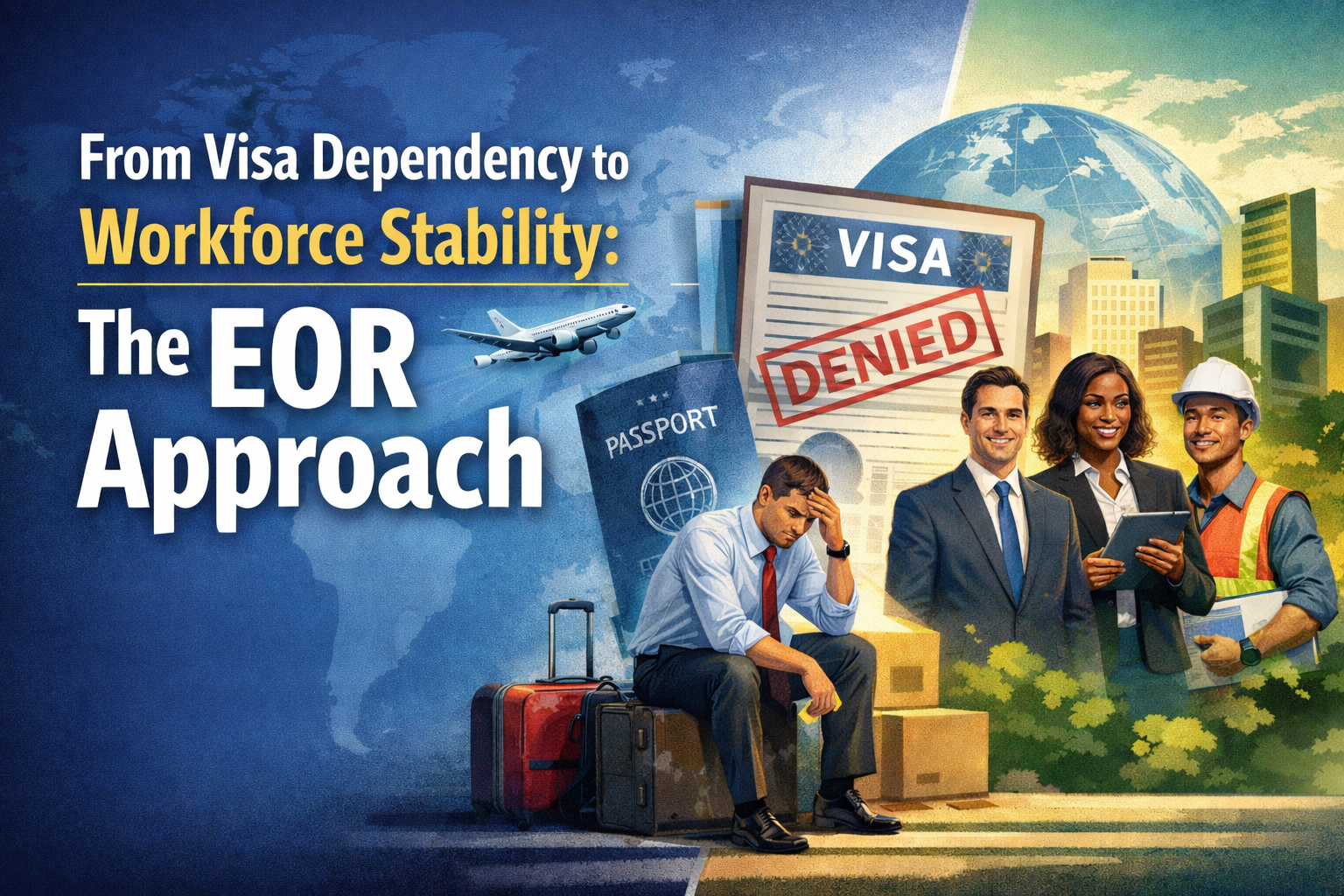
From Visa Dependency to Workforce Stability: How an EOR Helps Companies
Introduction:
Global talent has become critical for business success. Yet, visa dependency continues to create uncertainty that affects project timelines, employee morale, and regulatory compliance. Work authorization delays, policy changes, and cross-border relocation challenges are now common hurdles for organizations relying on international talent.
An EOR for workforce stability offers companies a structured and legal way to manage these challenges while keeping teams engaged and productive. By combining compliance, continuity, and flexibility, this model enables businesses to protect operations without unnecessary risk.
The Hidden Costs of Visa Dependency
When employees face delays in visa approvals or work authorization, the impact extends well beyond HR administration. Employers often experience:
Project delays and missed deadlines
Increased pressure on remaining team members
Higher compliance and legal exposure
Risk of losing high-performing talent
Over time, these challenges can significantly affect delivery commitments, client relationships, and operational costs. This is why workforce stability has become a priority for globally operating companies.
Why Traditional Approaches Often Fall Short
To manage visa disruptions, many organizations rely on short-term measures such as unpaid leave, contractor conversions, or rushed relocations.
While these approaches may address immediate issues, they often:
Reduce employee morale and engagement
Increase administrative and legal complexity
Disrupt cross-border workforce coordination
More importantly, they do not offer long-term certainty. A structured solution like an EOR is designed to address compliance and continuity together.
Understanding the Employer of Record Model
An Employer of Record (EOR) is a legal entity that employs staff on behalf of a company in another jurisdiction. While the company retains operational control, the EOR manages employment compliance.
Key EOR responsibilities include:
Payroll and statutory benefits
Employment contracts and local labor law adherence
Tax filings and regulatory reporting
Support for employee relocation due to visa challenges
With this structure, companies can maintain productivity even when visa approvals are delayed. For employers seeking a reliable partner, Team Management Services EOR Solution supports this model by managing local payroll, statutory compliance, and employment obligations—allowing businesses to retain talent without operational disruption.
How an EOR Supports Workforce Stability
An EOR for workforce stability delivers tangible benefits for companies navigating visa uncertainty:
- Employment Continuity: Employees remain legally employed and productive while authorization processes are pending.
- Legal Compliance: Local labor laws are followed, reducing the risk of penalties or regulatory issues.
- Knowledge Retention: Critical expertise and institutional knowledge stay within the organization.
- Smooth Transitions: Employees can relocate temporarily or work remotely in compliance with local regulations, ensuring continuity during visa delays.
Why Companies Choose Global EOR Locations
Countries such as India, the Philippines, and Canada are commonly used for EOR arrangements due to:
Strong talent pools and skilled professionals
Well-defined labor laws and compliance frameworks
Time zone overlap that supports collaboration
Structured payroll and statutory systems
With organizations like Team Management Services (TMS) offering on-ground expertise, companies gain confidence that employment practices remain compliant while teams continue to operate efficiently.
Operational and Cost Advantages
Visa delays often bring hidden costs. Recruiting replacements, onboarding new hires, and managing lost productivity can quickly escalate expenses.
An EOR for workforce stability helps companies:
Avoid rehiring and retraining costs
Reduce legal and compliance overhead
Maintain consistent delivery timelines
Support efficient cross-border workforce management
Over time, this approach proves more cost-effective than repeated temporary fixes.
Employee Experience and Retention
Visa uncertainty can be stressful for employees. Without clarity, engagement may drop and attrition risk increases.
A structured EOR approach demonstrates commitment and support. Employees feel valued, experience smoother transitions, and remain focused on their work. As a result, retention improves and workforce morale remains strong.
Strategic Use of EOR
An EOR for workforce stability is especially valuable when:
Visa processing timelines are unpredictable
Employees require temporary relocation due to authorization issues
Global expansion demands flexible workforce models
Projects must continue without interruption
In these situations, an EOR becomes a strategic tool rather than a contingency plan.
Conclusion
Visa dependency does not have to disrupt productivity or workforce continuity. With the right structure in place, companies can manage visa uncertainty without losing talent or momentum.
An EOR for workforce stability allows employers to remain compliant, retain skilled employees, and keep projects on track during transitions. In a business environment where visa timelines continue to shift, this approach offers clarity, control, and long-term workforce confidence.
FAQs
Yes. Employees can legally work from a compliant jurisdiction while visa approvals are pending.
No. Compensation structures remain unchanged, with the EOR managing local payroll and statutory benefits.
The EOR handles employment contracts, tax filings, and labor law requirements across jurisdictions.
Yes. Once authorization is approved, employees can transition back seamlessly without operational disruption.

Leave a Reply