

As global businesses navigate an increasingly dynamic environment, choosing the right expansion market has become more critical than ever. Companies are no longer just looking for growth – they are looking for stability, scalability, and long-term value. This is where market entry in India stands out.

In today’s rapidly changing global environment, companies are becoming more cautious about where they invest and expand. Market uncertainty, operational disruptions, and evolving economic conditions are pushing organizations to focus on stability, compliance, and long-term growth.

Expanding a business into new markets is exciting. However, it often comes with legal complexities, compliance challenges, and administrative responsibilities. Many companies want to hire talent in India but hesitate because establishing a local entity can be time-consuming and expensive.
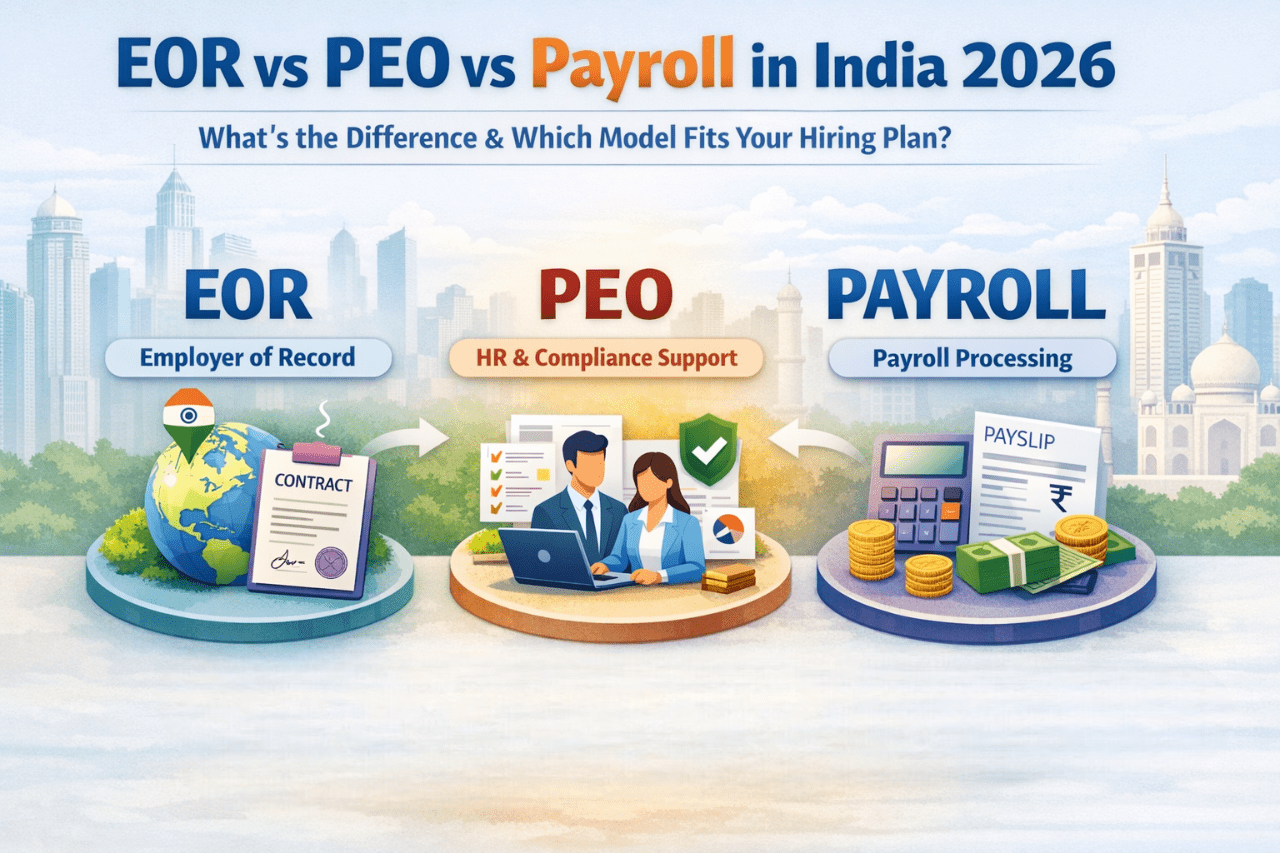
Hiring in India is exciting, but the operating model you choose determines how smoothly payroll and compliance run. Many companies get stuck because EOR, PEO, and payroll outsourcing sound similar, yet they suit different hiring stages.

Highlights why India, as the world’s largest democracy with a rapidly growing economy and consumer base, is a strong next market for businesses after the EU-India FTA, offering significant demand and long-term expansion opportunities.

Indian companies expanding into the EU can benefit from the new India–EU trade deal, which reduces tariffs, simplifies market access, and strengthens cooperation—making it easier and more cost-effective to grow business, export goods, and compete across European markets.
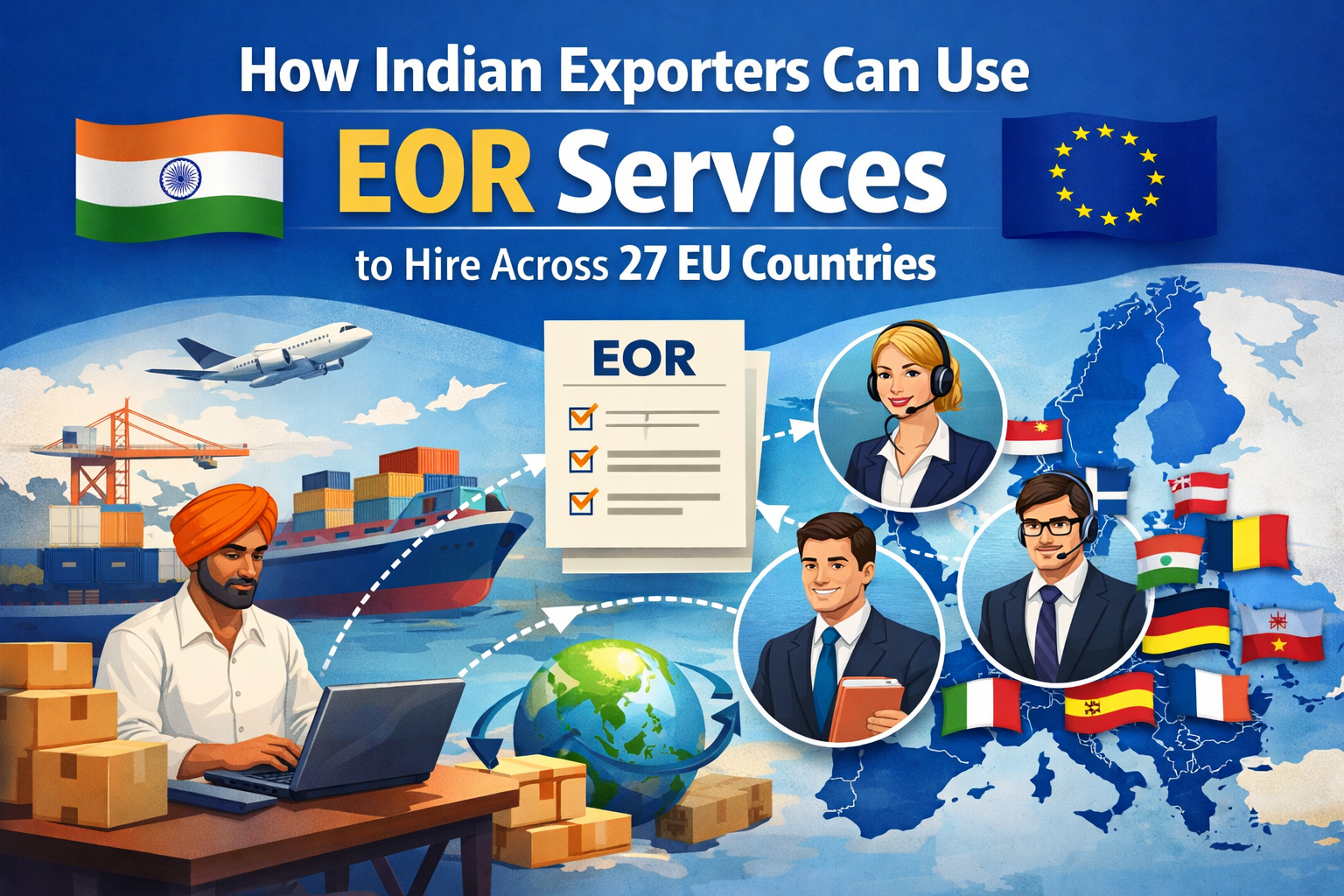
A brief overview of how Indian exporters can use Employer of Record (EOR) services to hire employees across all 27 EU countries without opening local entities, while the EOR handles payroll, compliance, contracts, and local labor laws so businesses can expand faster and with lower risk.
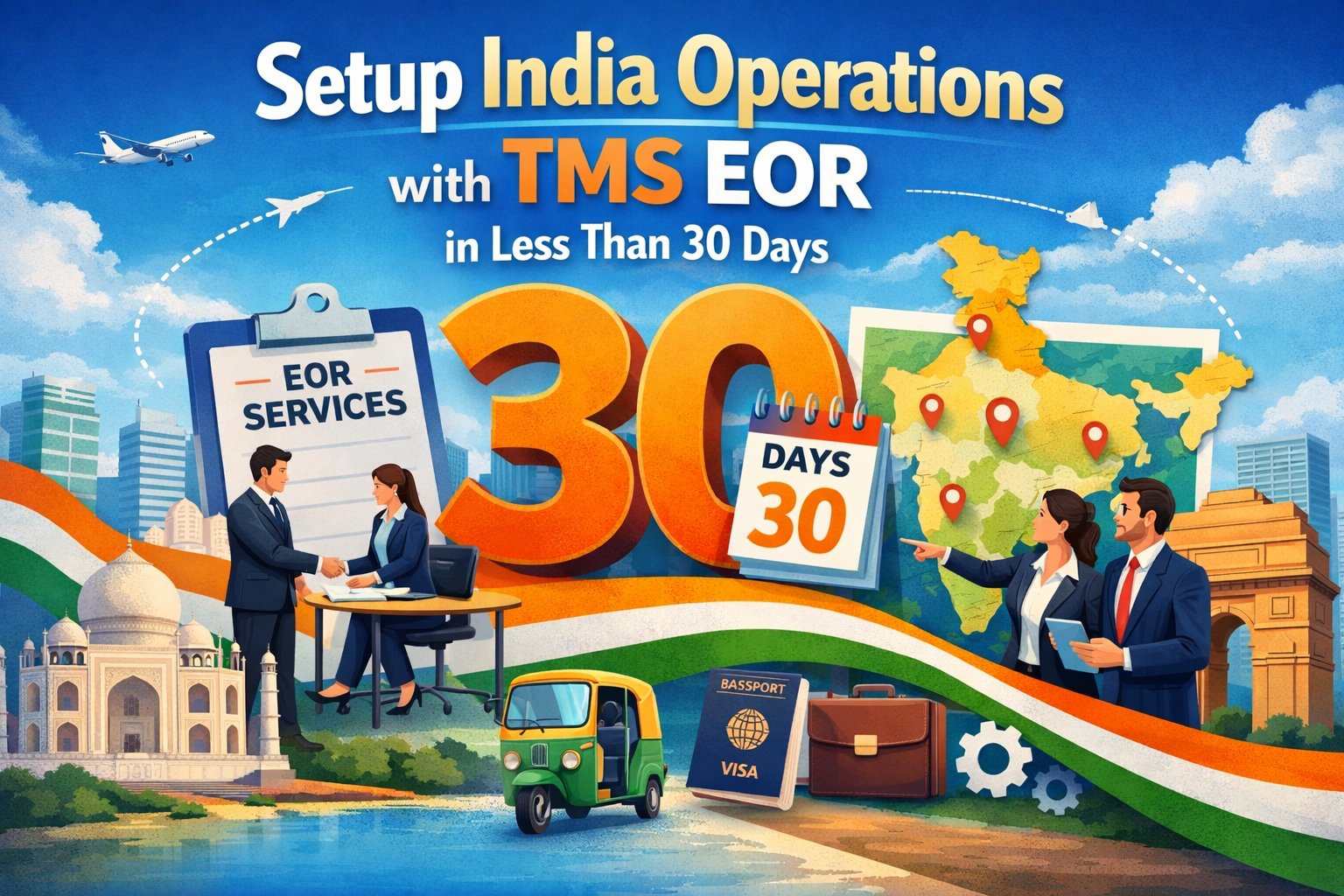
India has moved from a future consideration to a present priority for many European companies. Shifts in global supply chains, combined with renewed momentum around the EU–India Free Trade Agreement...

For many international companies, India is no longer a market of curiosity. It is a market of intent. Demand is visible, customers are receptive, and growth potential is clear.

The relationship between India and the European Union is entering a more pragmatic phase. While discussions around the EU–India Free Trade Agreement continue,
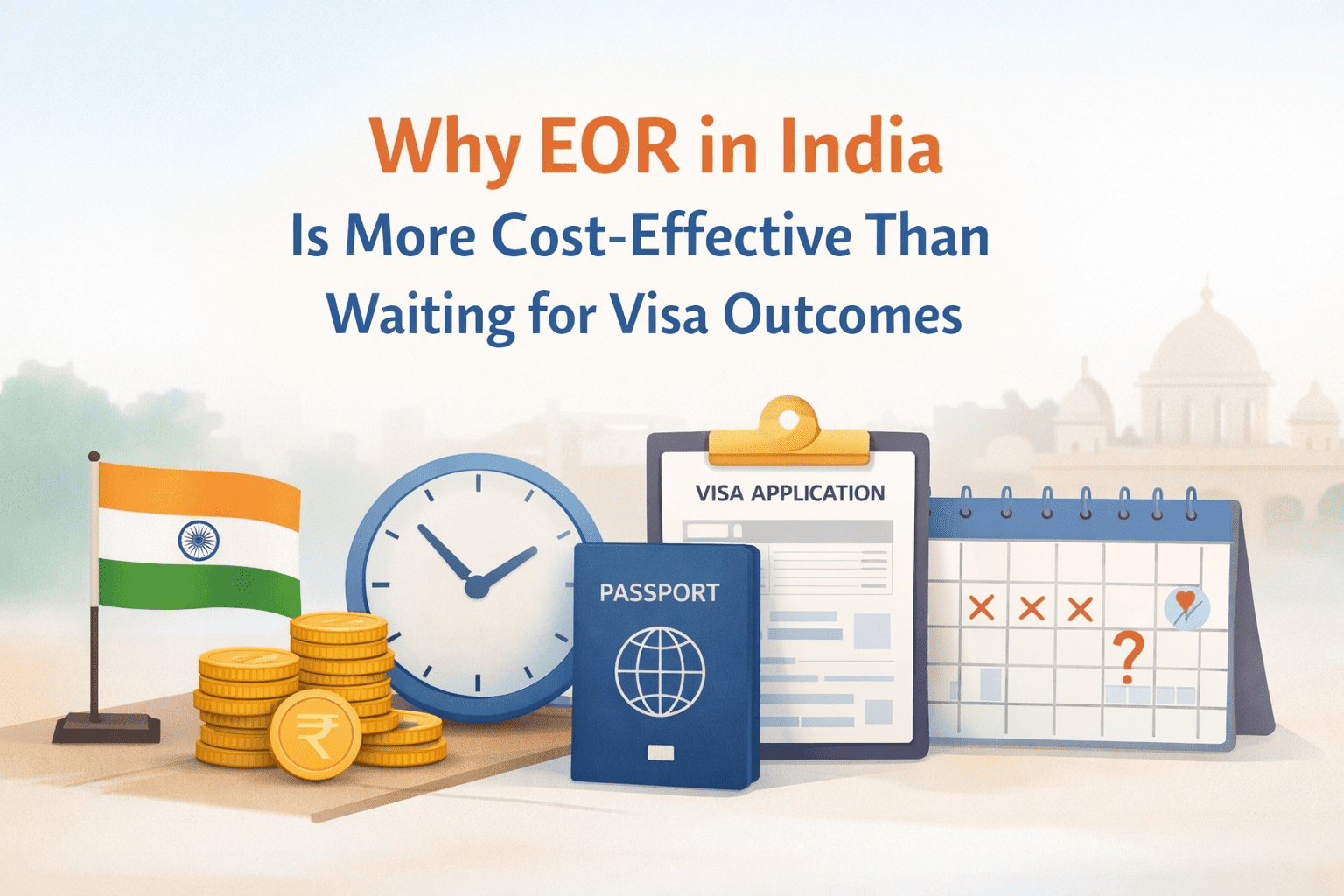
Waiting on visa outcomes often means paying for uncertainty. This blog explains why using an Employer of Record (EOR) in India is a more cost-effective alternative—reducing idle payroll, accelerating deployment, and keeping teams operational while immigration decisions are pending.
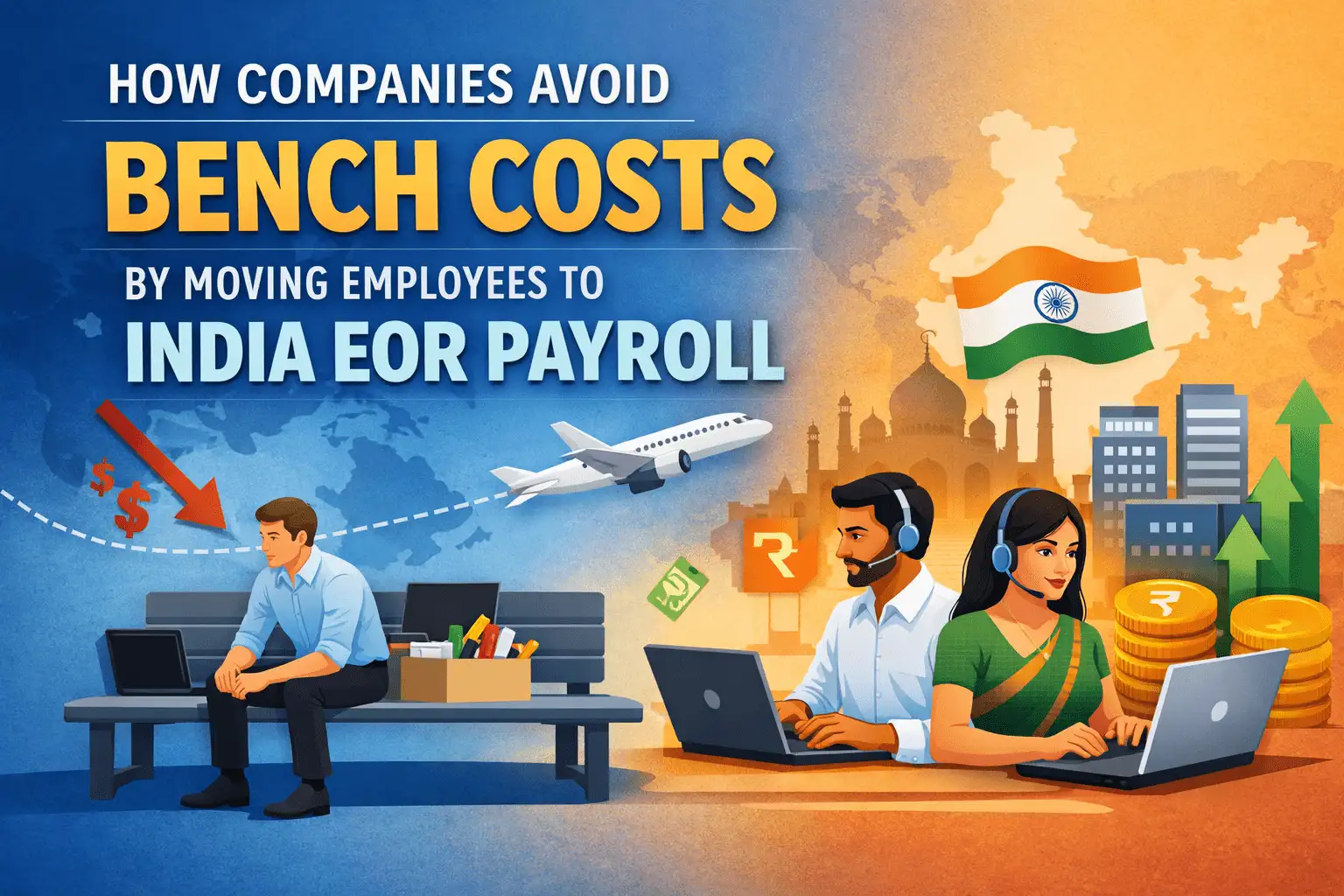
Visa delays have quietly become one of the most disruptive challenges for global employers. While most conversations focus on immigration paperwork, the real disruption happens inside organizations—paused projects, rising bench costs, and growing uncertainty within teams.
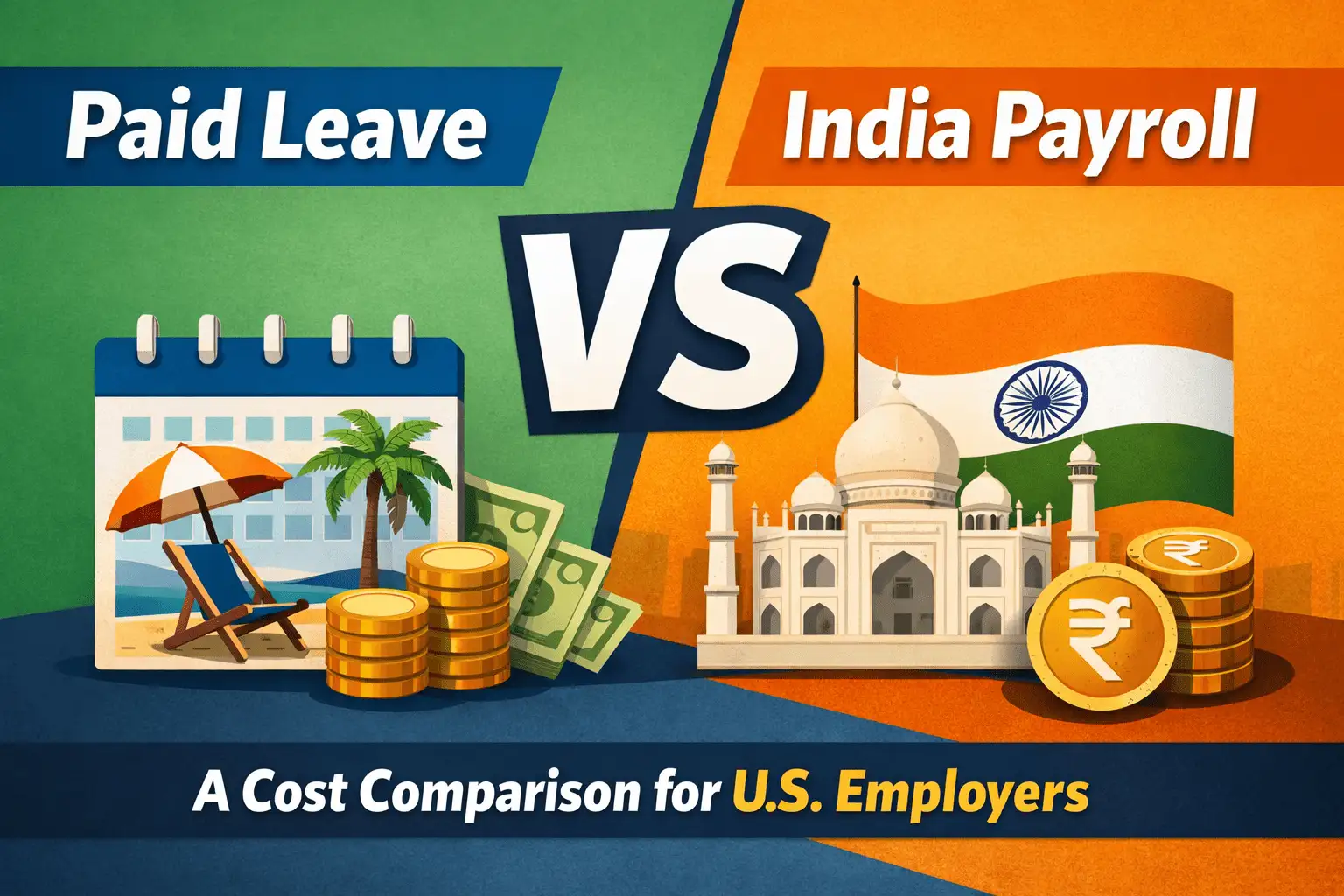
When visas are delayed, U.S. employers often default to paid leave—without fully understanding the cost. This blog compares paid leave versus moving employees to India payroll, breaking down the financial, compliance, and operational trade-offs.
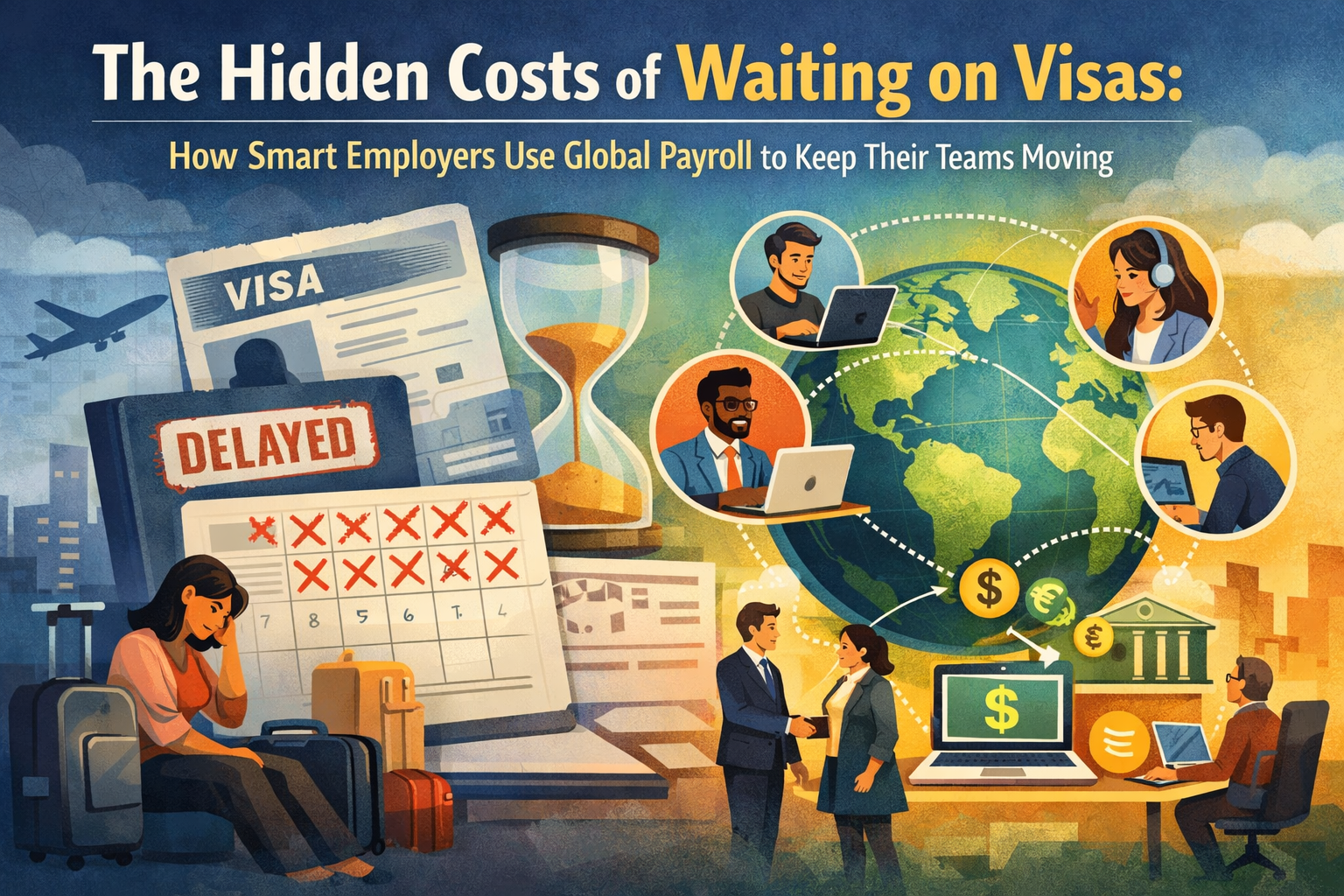
Visa delays don’t just slow hiring—they create hidden costs in productivity, payroll waste, and lost momentum. This blog explores how forward-thinking employers use global payroll solutions to keep teams working, compliant, and moving forward while visas are pending.
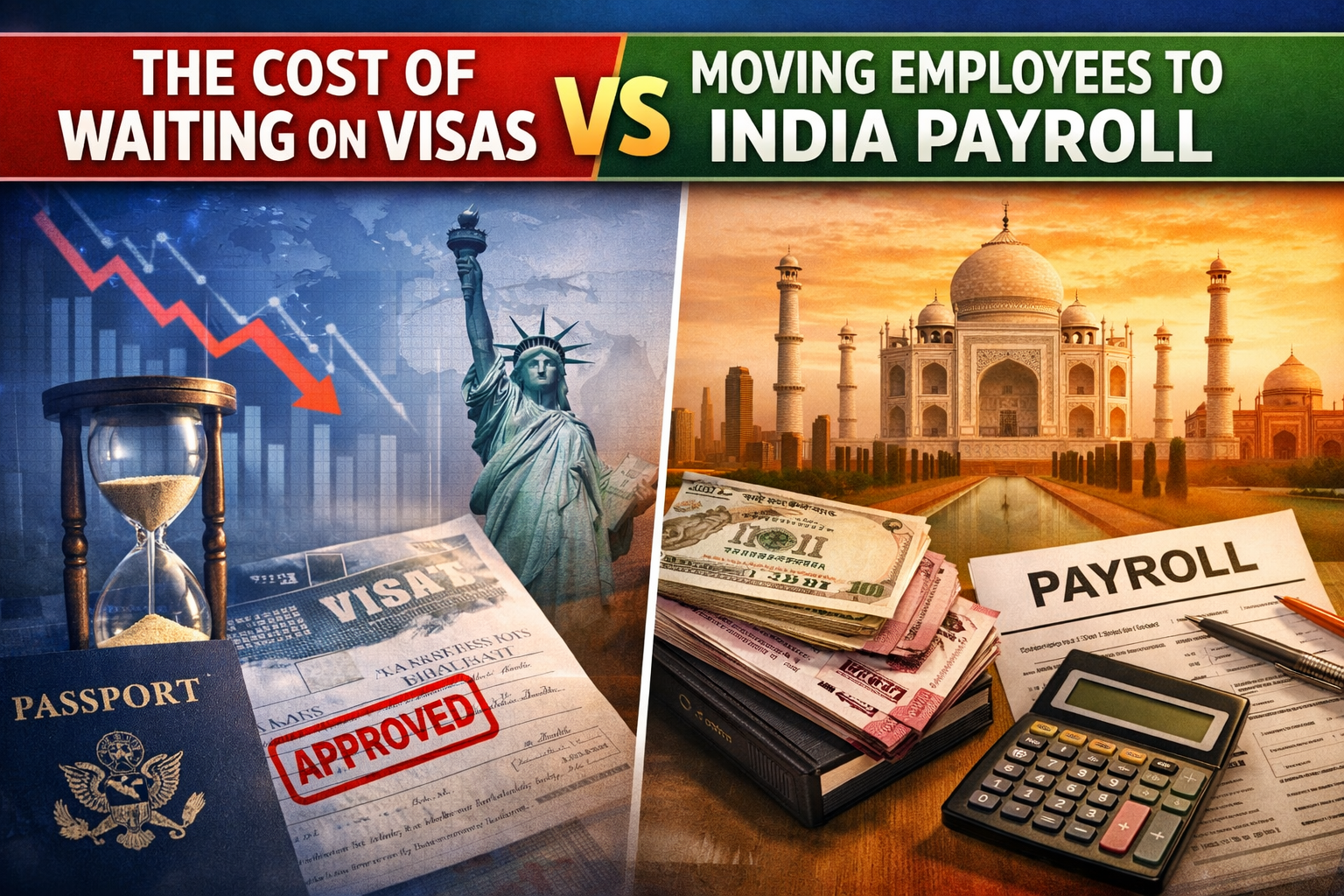
Lengthy visa timelines quietly drain companies through idle salaries, stalled projects, and compliance risk. This blog breaks down the real cost of waiting—and explains why moving employees to India payroll can be a faster, more economical alternative.
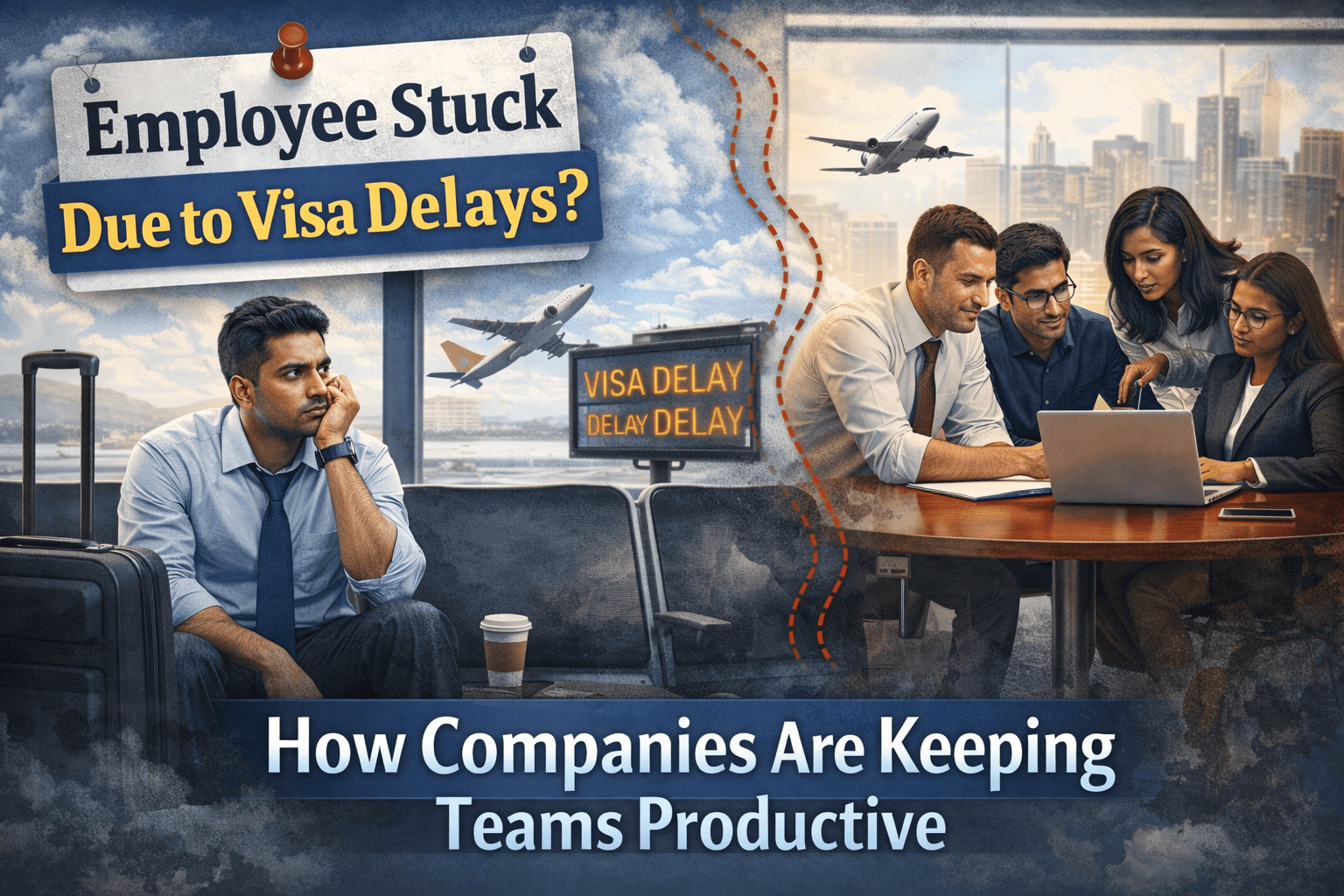
Visa delays have quietly become one of the most disruptive challenges for global employers. While most conversations focus on immigration paperwork, the real disruption happens inside organizations—paused projects, rising bench costs, and growing uncertainty within teams.

Visa uncertainty has become one of the most difficult workforce challenges for U.S. companies employing global talent. While policy updates and processing delays make headlines, the real impact is felt quietly—inside teams, projects, and delivery timelines. For employers, the question is no longer whethe
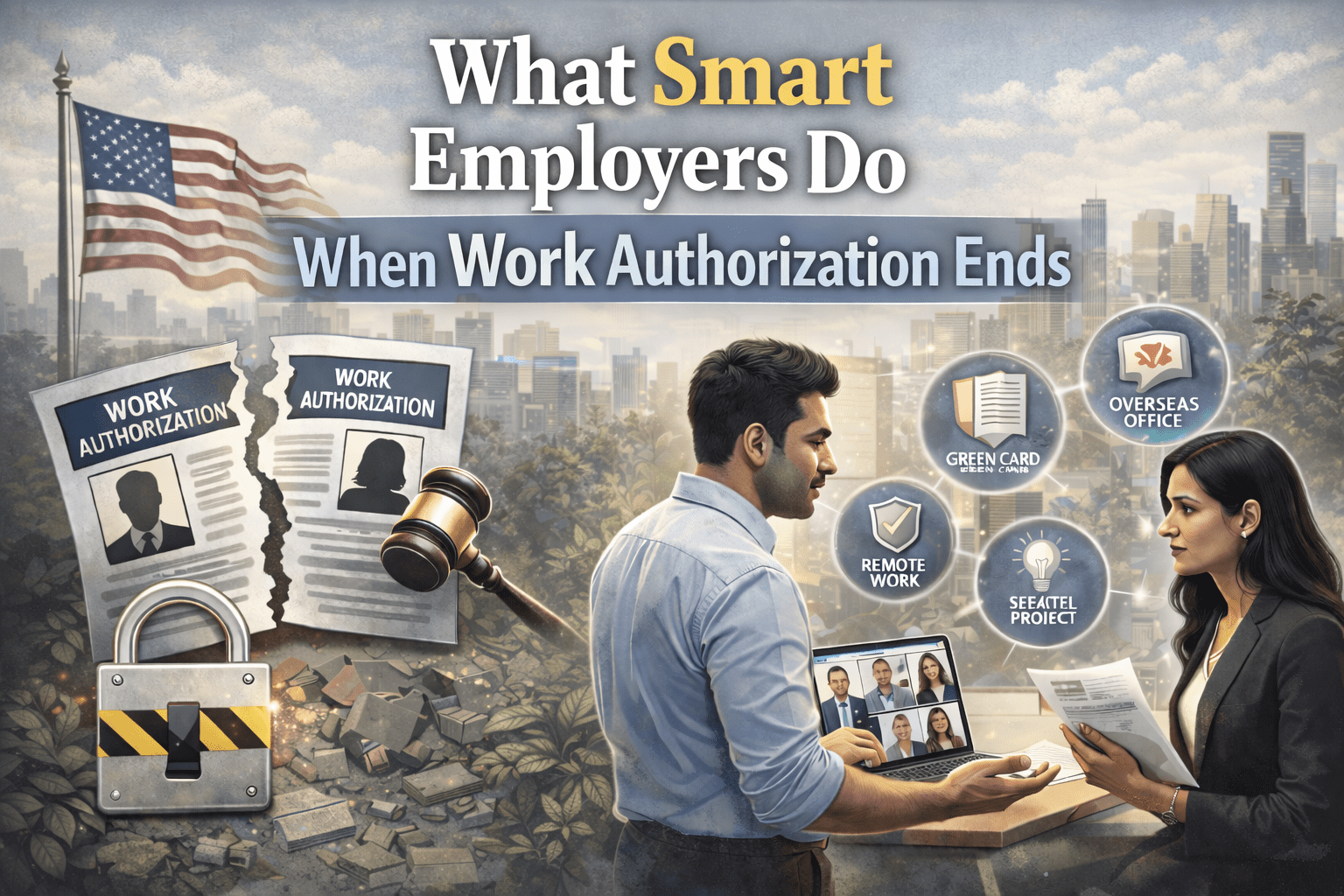
Work authorization issues rarely come with advance notice. One day, teams are running smoothly. The next, an employer is informed that an employee can no longer legally continue working due to visa or authorization expiry. When an employee work authorization expired, the impact goes far beyond compliance. Projects stall, costs rise, and difficult decisions must be made quickly.
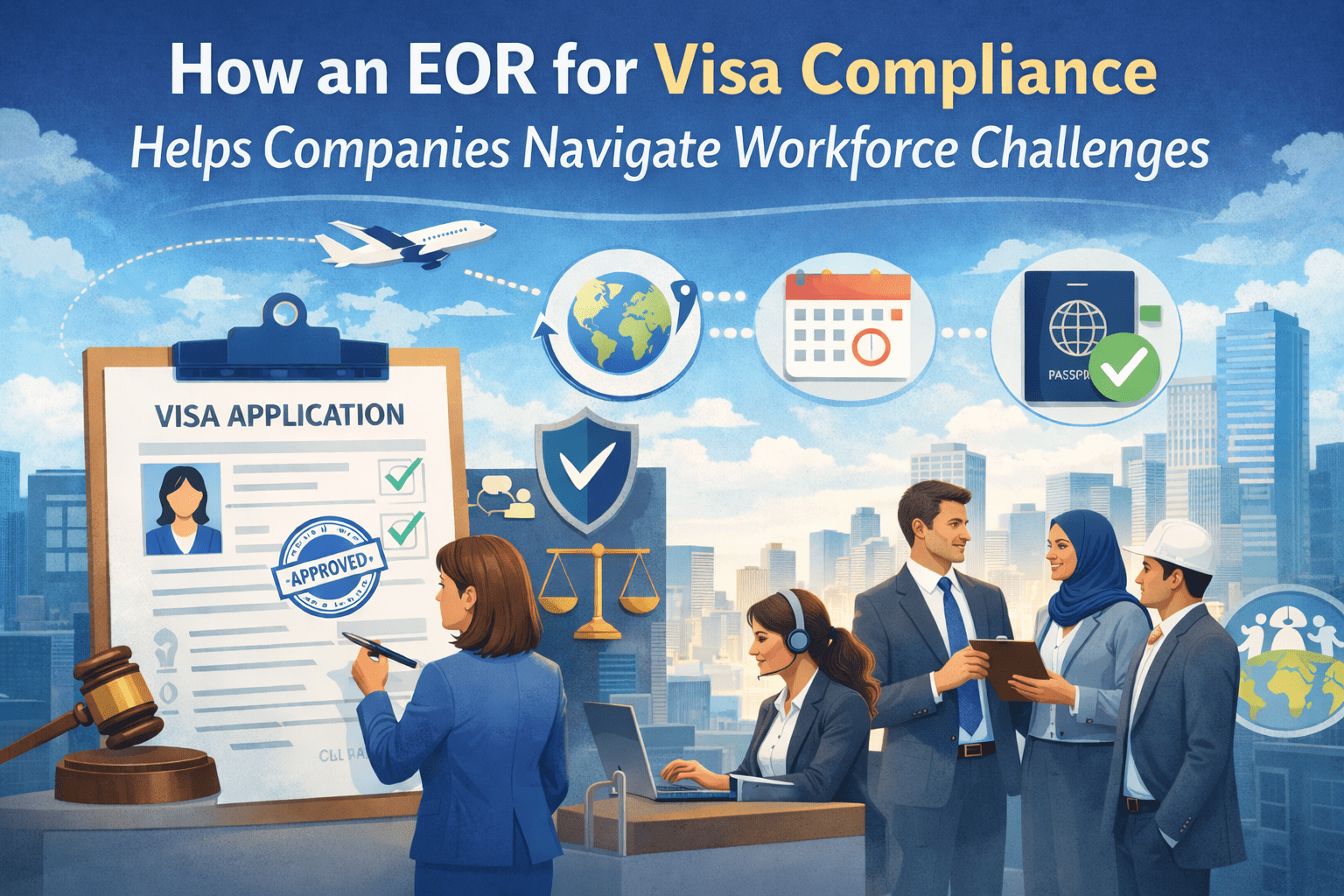
Global talent fuels innovation and growth. However, visa delays and work authorization uncertainty continue to create real challenges for employers. When key employees face prolonged processing timelines, U.S. companies risk stalled projects, disrupted workflows, and increased legal exposure.
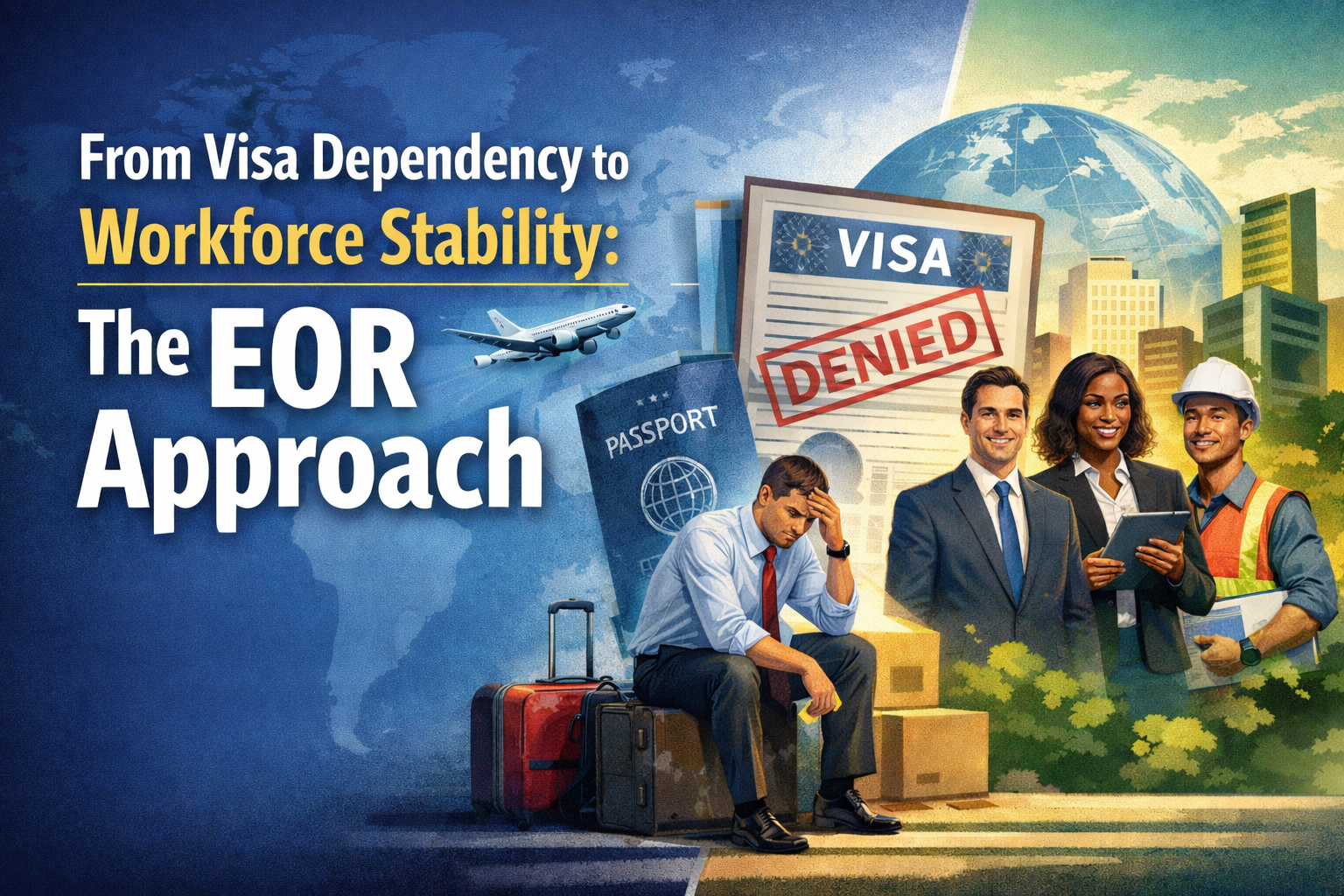
Global talent has become critical for business success. Yet, visa dependency continues to create uncertainty that affects project timelines, employee morale, and regulatory compliance. Work authorization delays, policy changes, and cross-border relocation challenges are now common hurdles for organizations relying on international talent.
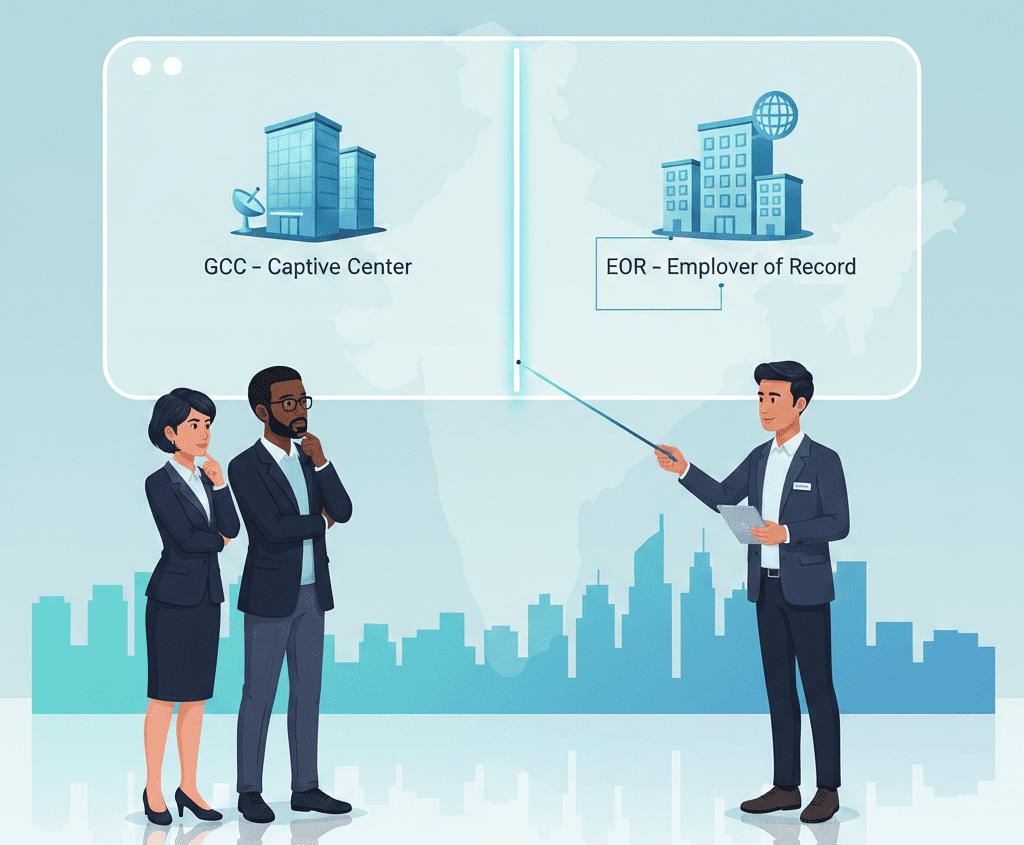
Your leadership team has agreed on one thing: India (and similar talent hubs) must be part of your growth story. However, as you explore options, you keep hearing two terms – Global Capability Centre (GCC) and Employer of Record (EOR) – and the debate of gcc vs eor quickly lands on the board agenda.
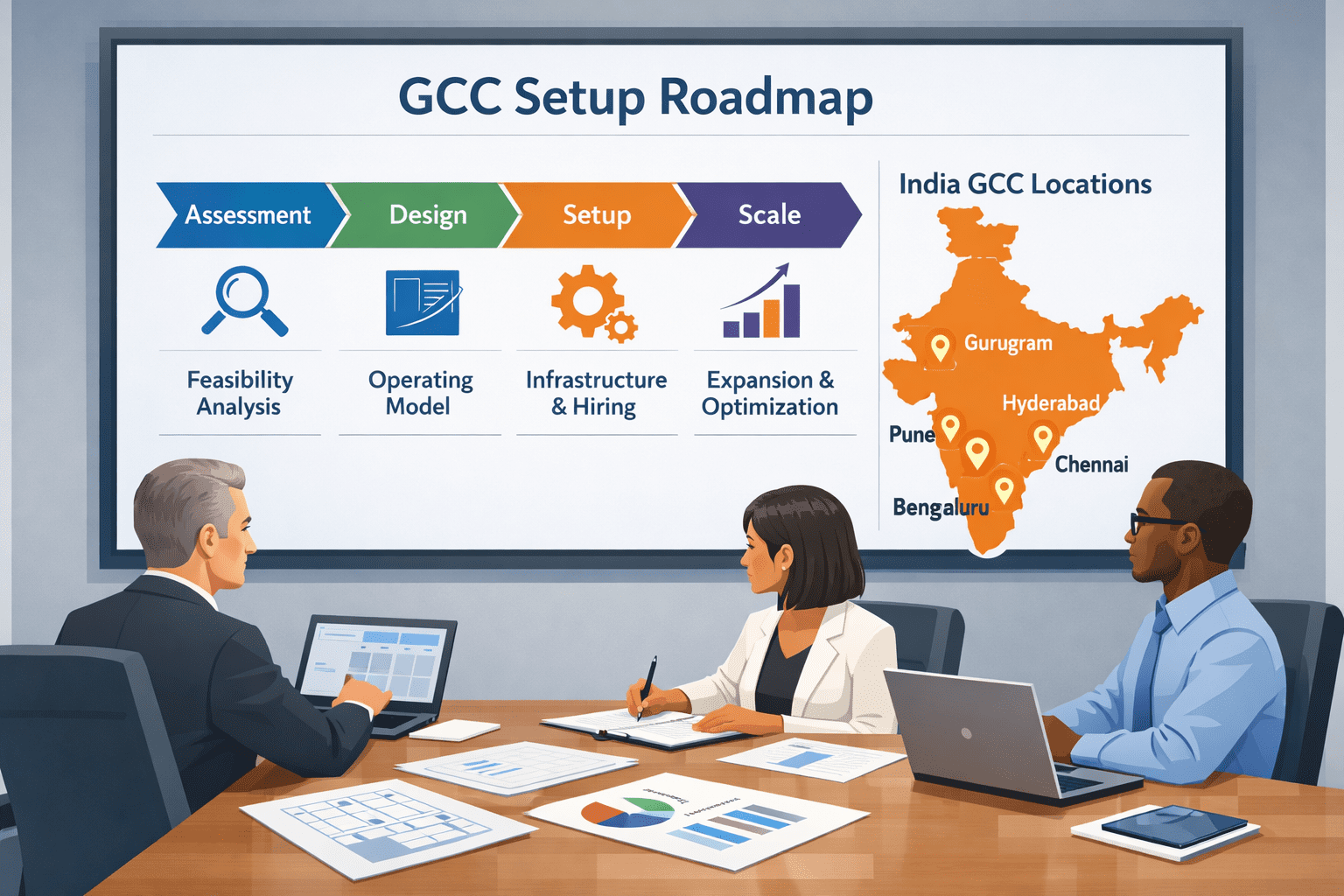
Your leadership team has decided: India needs to be more than just a sales market. You want access to deep talent, sharper costs and true 24×7 capability. Everyone talks about Global Capability Centres in India, but the big question remains: where do we start and what do we do first?

Global leaders know India is a powerhouse for technology, analytics, finance and shared services. However, many CXOs are unsure how to structure, design and launch a Global Capability Centre that goes beyond cost arbitrage and truly creates strategic value.

Expanding your business into a new market is an exciting yet challenging journey. Whether you’re eyeing a new region or seeking to diversify your customer base, entering an international market requires a strategic approach.

Expanding into India is an exciting move for global companies. The country offers a massive talent pool, competitive costs, and a fast-growing digital economy. However, hiring employees in India also brings unique regulatory

India's business expansion and economic landscape is transforming at a breakneck pace, making it one of the most promising markets for global business expansion.

Expanding your business operations to India? Great choice! The country’s booming economy and diverse market present plenty of opportunities. But let’s face it, recruiting foreign workers in India can be a bit tricky.

India, a land brimming with opportunities, cultural diversity, and one of the world’s fastest-growing economies, has become a magnet for businesses aiming to expand globally. However, diving into the Indian market comes with its fair share of challenges.

India, with its booming economy and diverse market, has become a hotspot for businesses eyeing global expansion. However, its regulatory framework, while robust, can be intricate and challenging for foreign companies.

Expanding into India can be a game-changer for businesses looking to tap into one of the world’s fastest-growing economies. The country’s diverse culture, booming workforce, and emerging markets make it an attractive destination.

Managing a global workforce can be a rewarding experience, but it also comes with its own set of challenges. One of the biggest hurdles for companies operating across multiple countries is ensuring compliance with local payroll laws and tax regulations.

In today’s globalized world, businesses are increasingly looking to tap into international talent. Expanding into new markets offers exciting opportunities, but it also brings challenges—especially when it comes to compliance and payroll.

In today’s interconnected world, the idea of expanding a business across borders is no longer just a dream—it’s a feasible reality. The traditional barriers of hiring and managing talent globally, such as different legal systems, payroll complexities, and tax laws, can be overwhelming.

When companies plan to hire globally, they often dive in headfirst—chasing international growth but underestimating the operational weight that comes with it. The assumption? Hiring abroad is just like hiring locally, only with different resumes.

When businesses think of global expansion, the first challenge that often arises is legal infrastructure. Setting up a local entity in every new country requires time, money, and deep legal understanding. But what if you could skip that part and still build your global team?

Businesses with global ambitions often face one big roadblock: setting up a legal entity in every new country. While the desire to expand internationally is strong, the admin load that comes with legal registration, banking, compliance, and hiring can slow down.

India is a top destination for Chinese companies seeking global growth. The country offers skilled professionals, cost advantages, and a strong economic outlook.With support from RIC cooperation, Chinese firms can scale confidently.

India is one of the fastest-growing economies, and Chinese companies are increasingly looking to expand here. The challenge is handling compliance, payroll, and hiring without facing delays. An Employer of Record (EOR) solves this by offering fast entry into India.

For Chinese businesses, India presents a fast-growing market with a wealth of skilled talent. However, entering a new country often involves lengthy legal processes and high setup costs. An Employer of Record (EOR) makes expansion simple.

For Chinese companies, India is becoming one of the most attractive destinations for growth. But establishing a local entity takes time and resources. An Employer of Record (EOR) provides a faster, smarter solution. With EOR services, Chinese firms can expand in India .

In 2025, Russian companies are looking at India as a key growth market. The challenge lies in navigating local labor laws, payroll, and compliance. An Employer of Record (EOR) makes this transition simple. By choosing EOR services, Russian firms can hire in India quickly.

Expanding into India is a smart move for Russian businesses. The country offers skilled talent, cost advantages, and strong trade ties. However, setting up a local entity can be time-consuming and costly. That’s where an Employer of Record (EOR) comes in.

Expanding a business into India can be a game-changer for Russian companies. Yet, managing compliance, payroll, and HR requirements often creates barriers. An Employer of Record (EOR) solves these challenges

Expanding your company abroad is exciting but comes with challenges. For Russian firms eyeing India, an Employer of Record (EOR) offers a faster, safer, and smarter path. With EOR services, you can hire employees, manage compliance, and reduce risks without creating a local entity.

Expanding your company abroad is exciting but comes with challenges. For Russian firms eyeing India, an Employer of Record (EOR) offers a faster, safer, and smarter path. With EOR services, you can hire employees, manage compliance, and reduce risks without creating a local entity.

India has rapidly become one of the most attractive destinations for global expansion. With its large talent pool, cost efficiency, and rising market demand, it offers excellent opportunities for international businesses.

India has emerged as one of the most attractive destinations for global expansion. For Japanese companies, the opportunities are vast—thanks to a large talent pool, cost efficiency, and a rapidly expanding consumer market.

The year 2025 marks a new chapter in India–Japan economic relations. With fresh trade agreements, joint investments, and collaborations in sectors like clean energy, technology, and supply chains, the partnership has never been stronger.
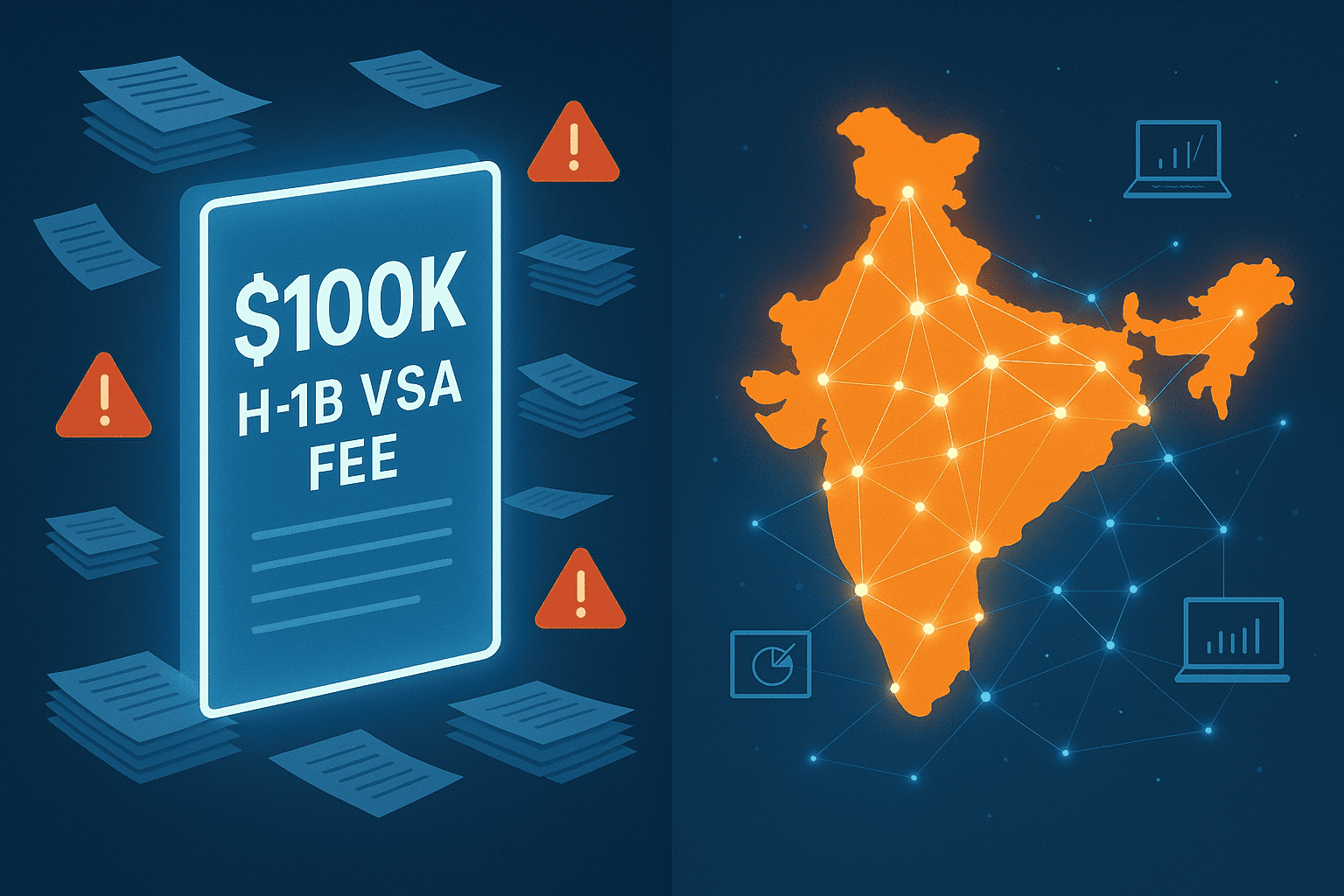
Explore how U.S. companies can bypass the hefty $100K visa costs by leveraging India's vast talent pool. This strategic guide delves into the advantages of hiring in India, offering cost-effective solutions without the need for traditional work visas.
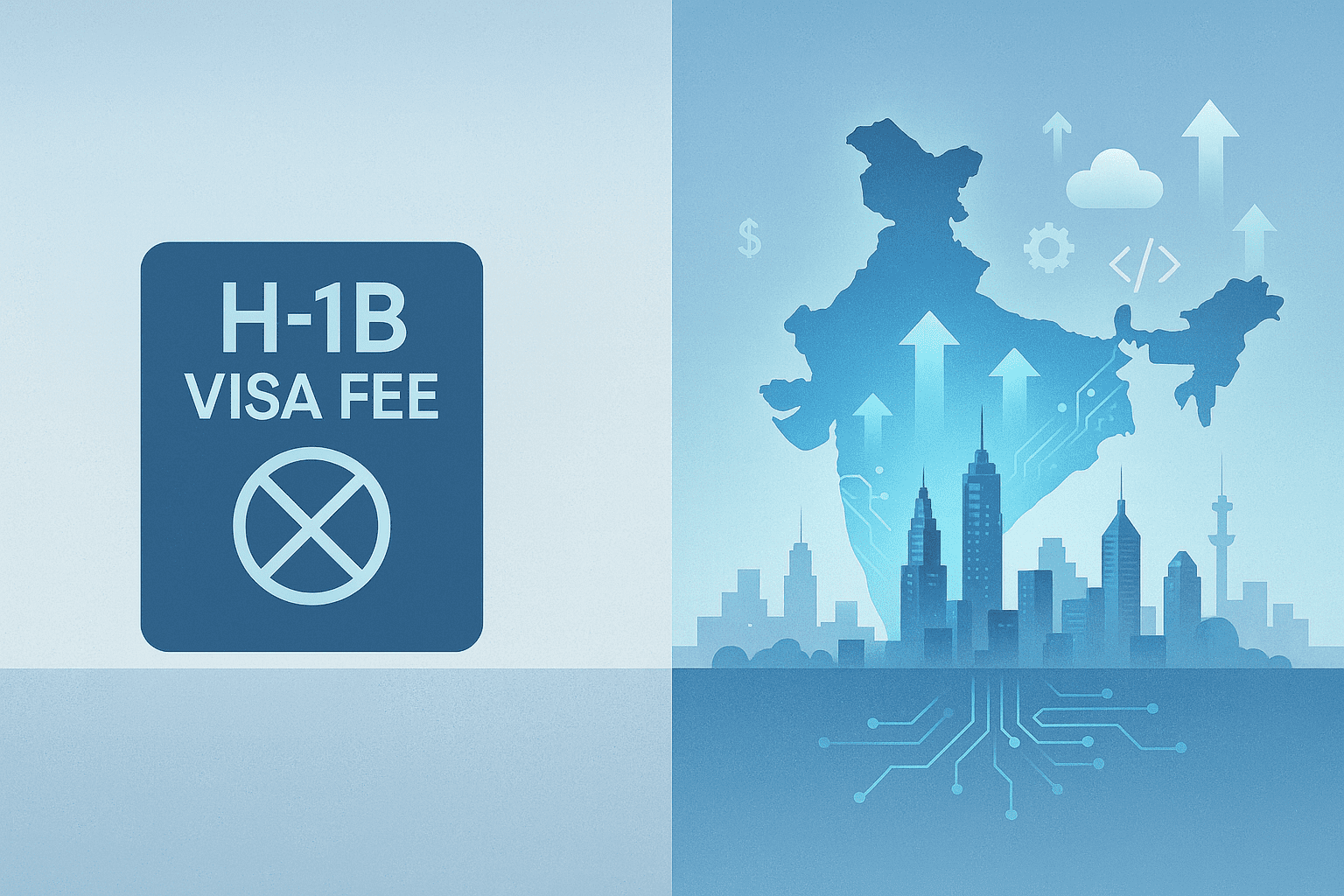
The recent $100,000 annual fee on H-1B visas is prompting U.S. companies to reconsider their hiring strategies. This blog explores how the new fee is accelerating India's role in global tech talent acquisition, offering insights into cost-effective alternatives.
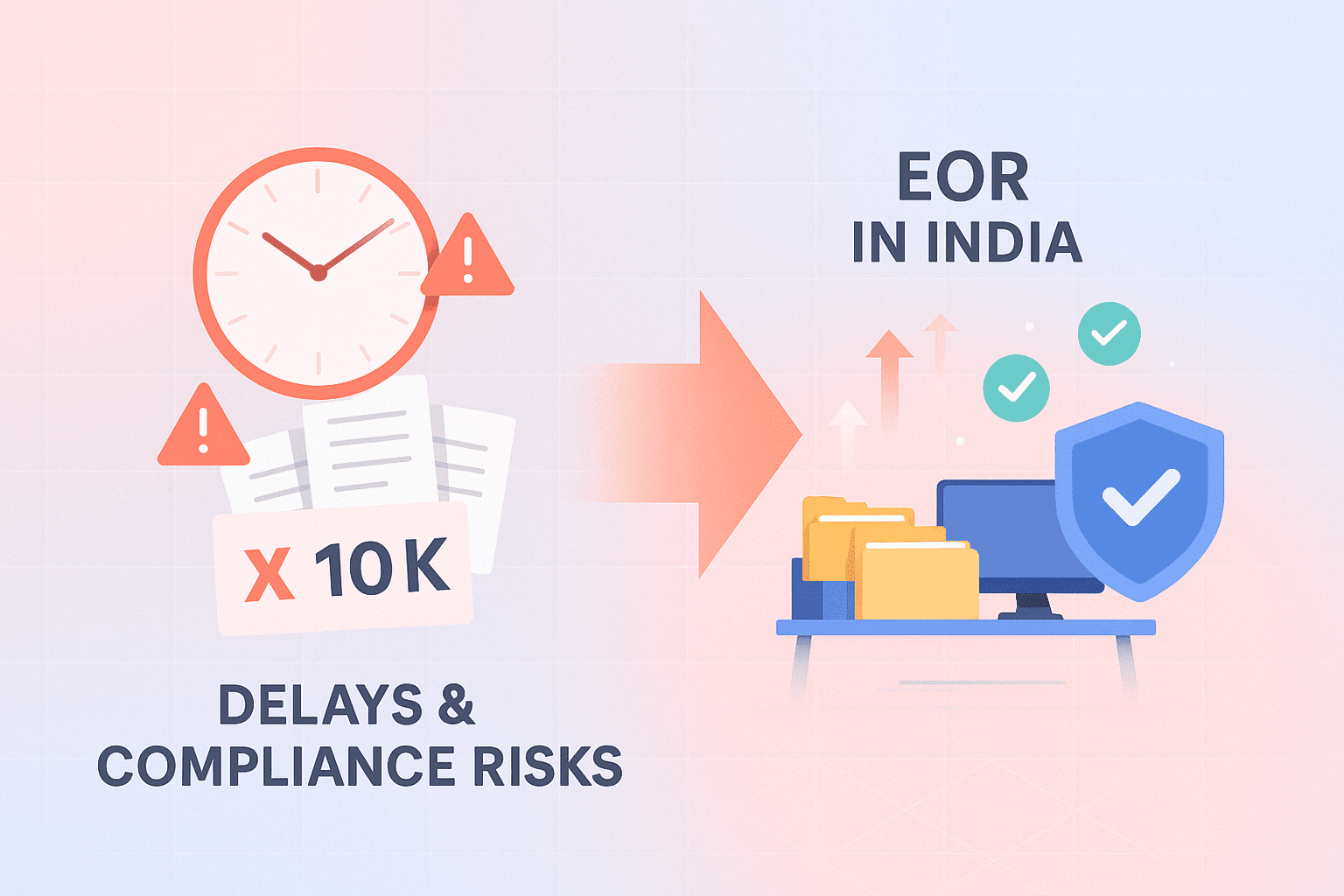
Discover how leveraging an Employer of Record (EOR) in India can swiftly address visa delays and mitigate compliance risks. This guide outlines the strategic advantages of using an EOR to navigate India's complex labor laws.
Hire in India without setting up a local entity. This guide explains how an Employer of Record (EOR) handles compliance, payroll, and legal requirements, letting you focus on scaling your business efficiently.

As India emerges as a strategic hub for global expansion in 2025, this blog highlights key factors that executives must monitor closely, including regulatory changes, market dynamics, and emerging opportunities.

Discover why U.S. companies are building Global Capability Centers in India, leveraging cost savings, skilled talent, and innovation to strengthen their global operations.

Navigating the evolving landscape of doing business in India, this blog delves into the implications of recent tariffs, visa policy changes, and market access challenges. Gain insights into how these factors are reshaping the business environment.

As global talent strategies evolve in 2025, India is emerging as a preferred destination for companies seeking skilled professionals. This blog explores the factors driving this shift, including India's robust talent pool, cost advantages etc.

Discover why U.S. companies are building Global Capability Centers in India, leveraging cost savings, skilled talent, and innovation to strengthen their global operations.
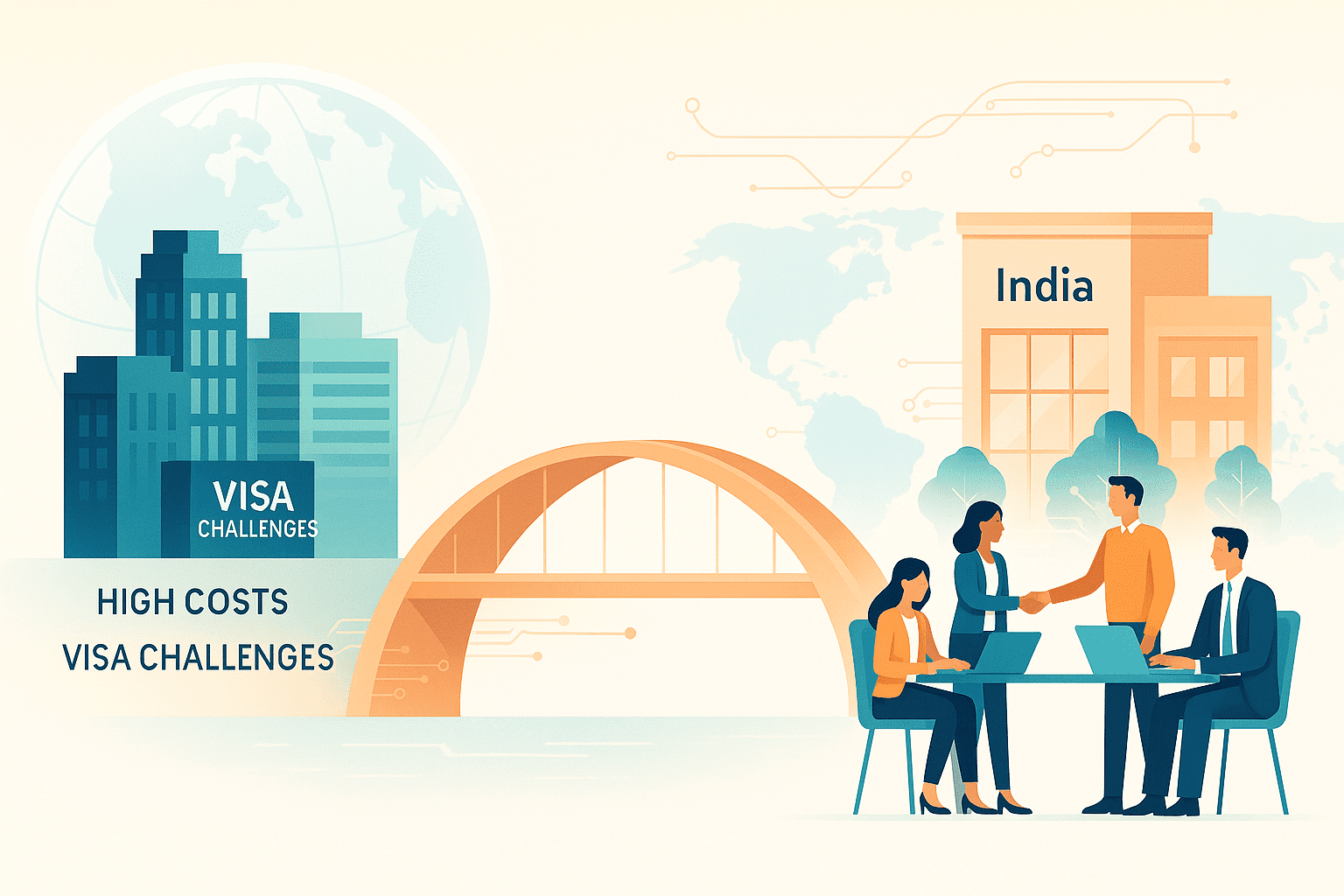
U.S. companies are facing mounting pressure—rising taxes, stricter visa regulations, and growing operational costs caused by recent policy changes.

For years, the H-1B visa was the default route for U.S. companies to access top Indian talent.
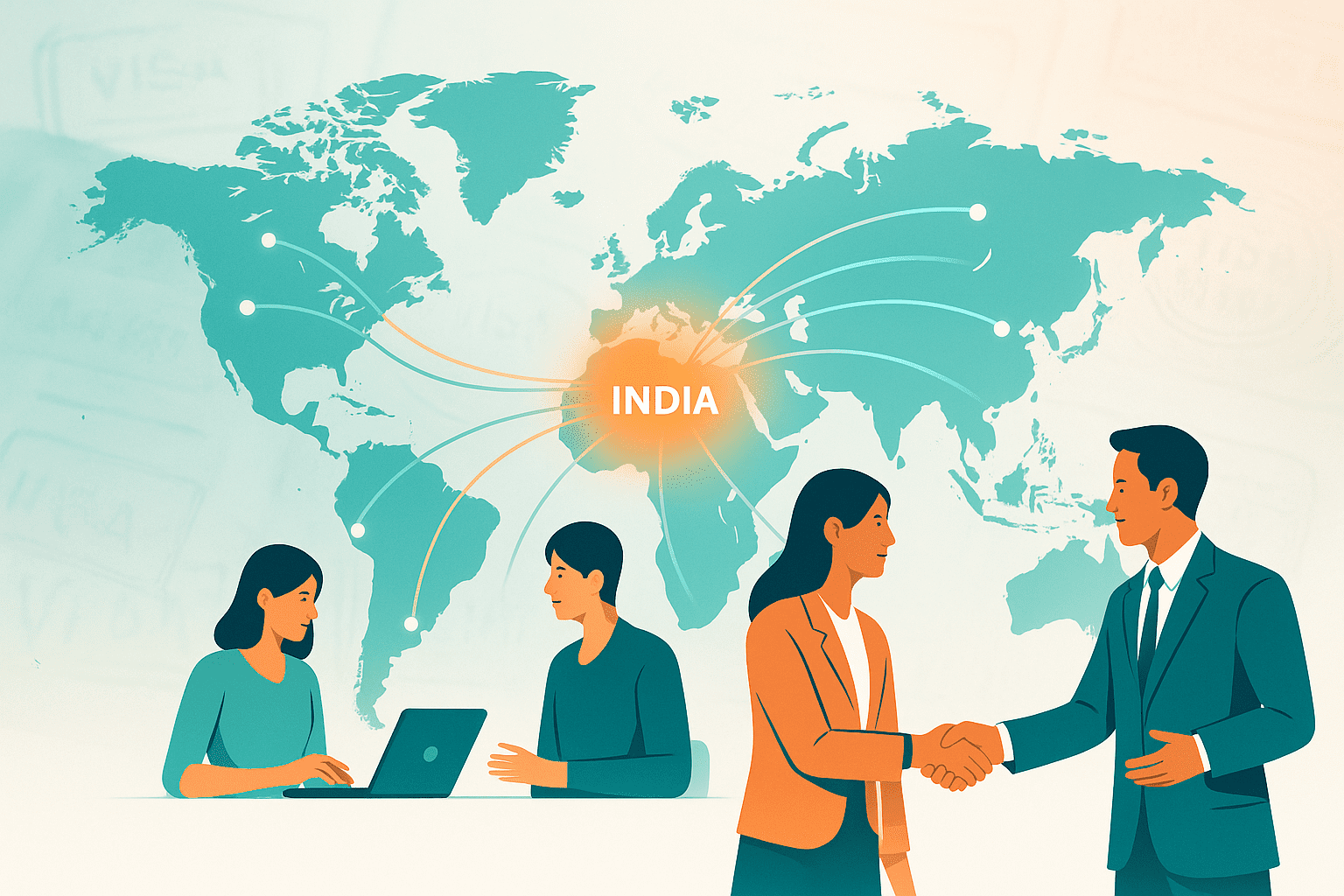
In today’s global business environment, speed and agility define success. But for many international companies, immigration barriers, visa delays

This blog breaks down how different PEO models operate, compares shared-employment vs. administrative structures, explains pricing methods, and highlights where businesses gain efficiency—or take on risk—when outsourcing HR, payroll, and compliance.

This blog explains what an International Employer of Record (EOR) handles—such as local hiring, payroll, taxes, and compliance—what remains the company’s responsibility, and the key criteria businesses should use to choose the right EOR for global expansion.

This blog examines the rapid growth of EOR services in 2026, highlights major providers shaping the market, and explains why companies expanding into India are increasingly relying on EORs to manage hiring, compliance, and operational risk.

This blog compares the best EOR companies for 2026, breaking down core features, pricing structures, and critical red flags businesses should watch for before choosing a provider. It’s a practical guide for avoiding costly mistakes in global hiring.

This blog outlines a practical global EOR compliance checklist, covering employment laws, payroll, taxes, data protection, and ongoing obligations companies must get right when expanding internationally. It focuses on what commonly goes wrong—and how to avoid it.

This blog breaks down EOR contracts, detailing what’s typically included, what falls outside the provider’s scope, and the key terms businesses must negotiate to protect themselves when expanding globally.

This blog directly compares EOR-managed payroll with in-house payroll for global teams, highlighting differences in cost, compliance, efficiency, and risk—helping companies decide the best approach for international operations.

This blog explores how using EOR payroll affects compliance in high-risk countries, examining potential legal pitfalls, tax obligations, and best practices to minimize risk when managing international teams.

This blog explains why India is emerging as the top destination for global EOR services from 2025 to 2030, highlighting market growth, cost advantages, talent availability, and regulatory factors driving international expansion.
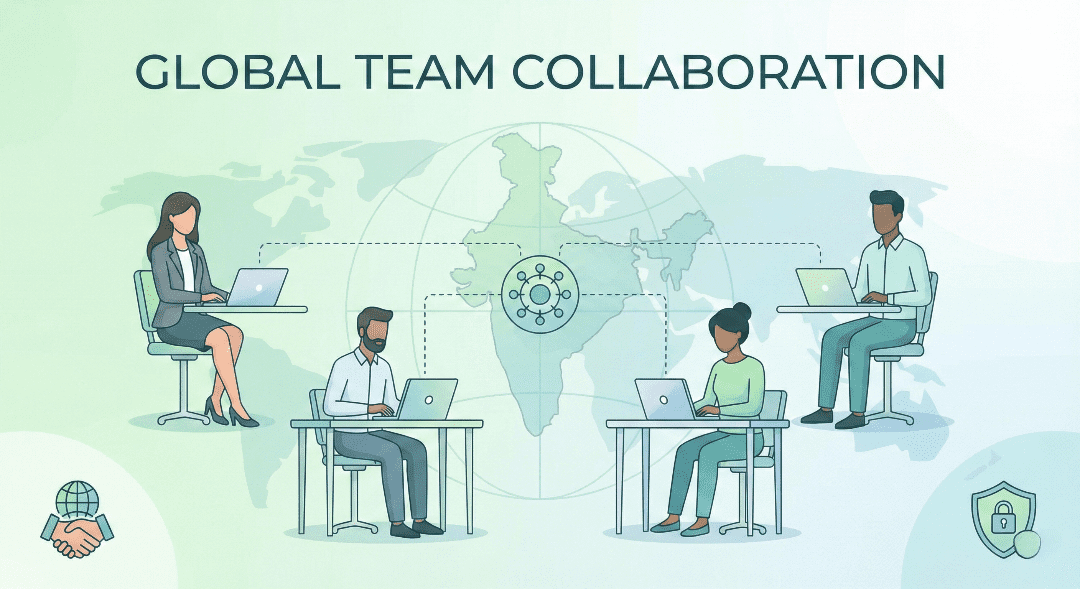
India has become one of the most strategic destinations for global companies expanding their distributed teams. With strong English proficiency, diverse skill sets, and a rapidly growing remote work culture, India offers businesses a unique blend of quality and cost efficiency.
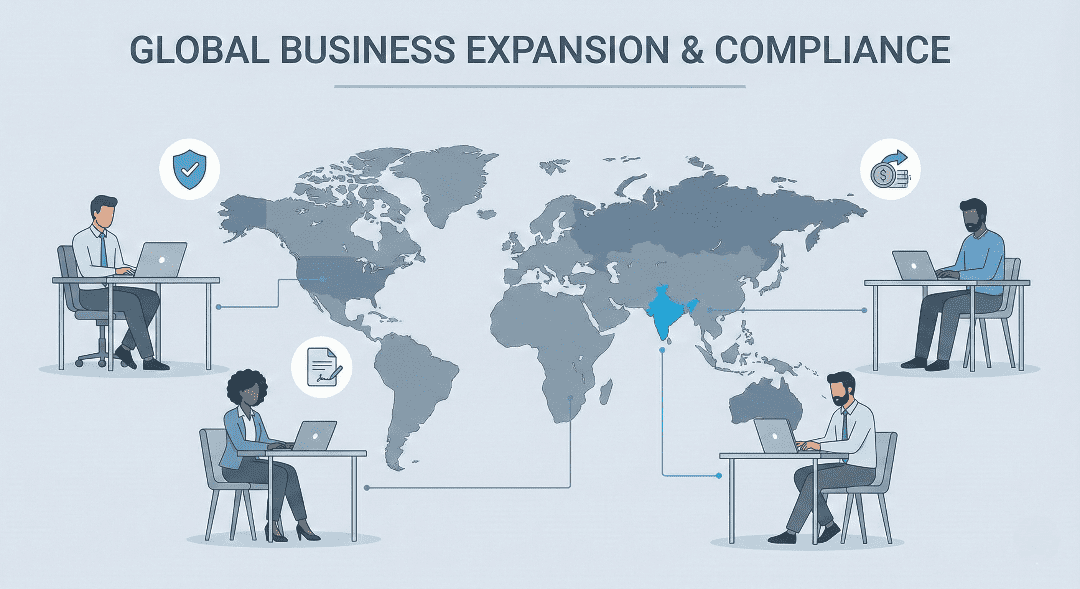
Expanding into India has become a strategic decision for companies across the world. With its deep talent pool, competitive costs, and highly skilled workforce, India is one of the top destinations for global hiring.
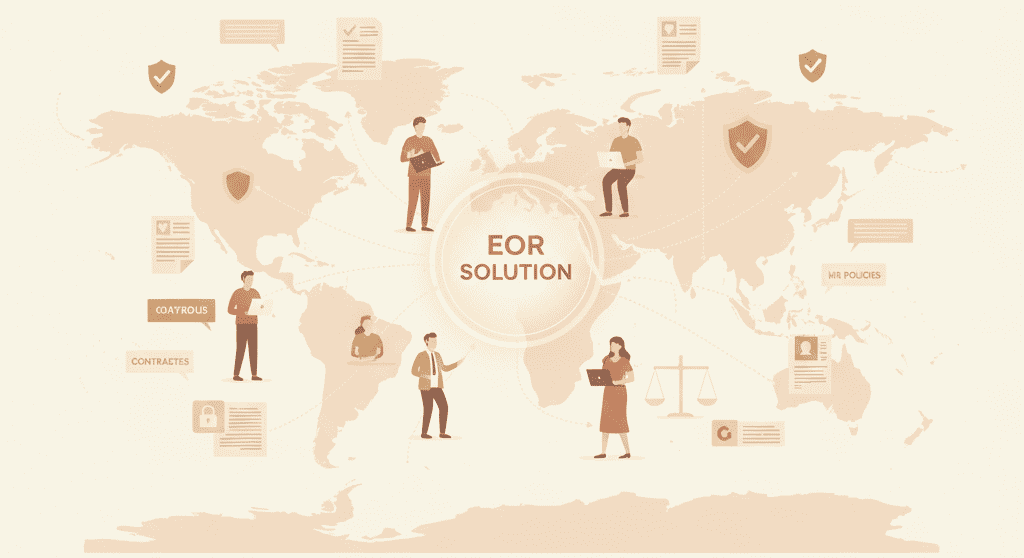
Managing a remote workforce sounds modern and flexible—but behind the scenes, employers often face a maze of rules, scattered obligations, and shifting legal risks.

Expanding into emerging markets is one of the most exciting growth strategies for global companies. These markets offer untapped talent, cost efficiencies, and growing consumer bases.

India has become a global hotspot for skilled talent across technology, engineering, finance, customer service, marketing, operations, and more. As global companies expand into India, one reality becomes clear very quickly

Employer of Record (EOR) services have changed significantly over the last few years. What once served as a temporary workaround for international hiring has evolved into a strategic operating model for global workforce management.

Global expansion often begins with confidence. The business model works, demand exists, and leadership is ready to move. The first hires in a new country usually feel like a small step—until employment rules, payroll requirements, and compliance obligations turn that step into a complex decision.

Expanding into a new country usually begins with confidence. The opportunity looks promising, demand seems clear, and leadership is eager to move quickly. Early actions often feel straightforward. A few hires are planned, vendors are identified, and operations begin to take shape.

When companies move into new countries, the focus often stays on growth—new customers, new teams, and faster market access. Early operations may even appear smooth. Salaries are paid, contracts are signed, and work gets done.
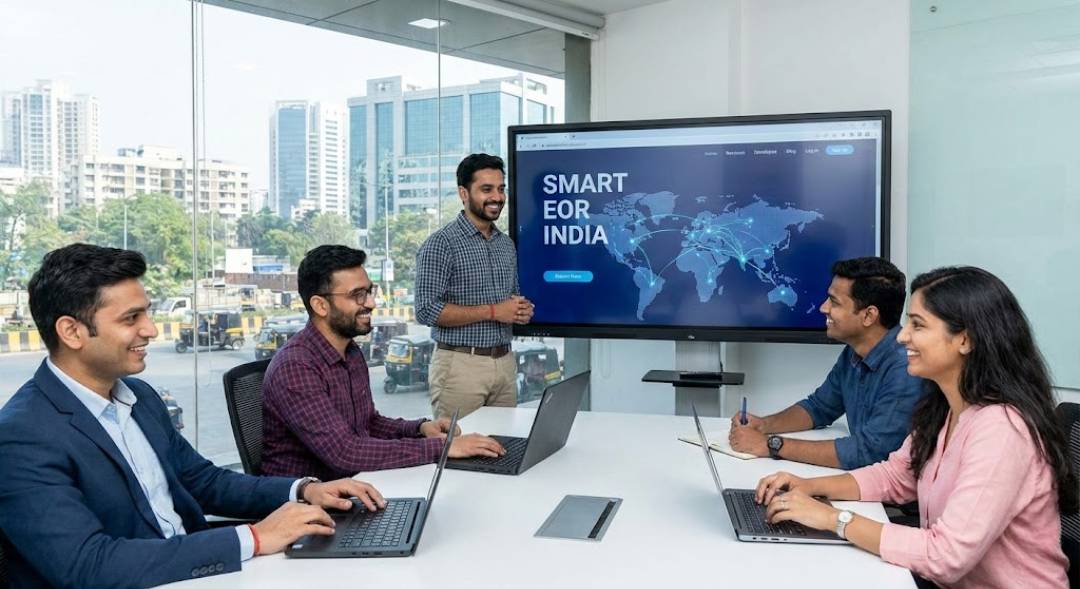
If you’re looking to build a team in India but don’t want the cost, time and complexity of setting up a legal entity, you’re not alone. Many global founders, HR leaders and CFOs are in the same situation – they see the talent opportunity, but not the need for a full subsidiary.

India’s fast-growing economy and skilled workforce make it an ideal market for Chinese companies looking to expand. Yet, setting up a local entity takes time and resources. An Employer of Record (EOR) in India offers a faster route.
20+ years of expertise in Contract Staffing, EOR, Payroll & Compliance
Tell us about your staffing needs