
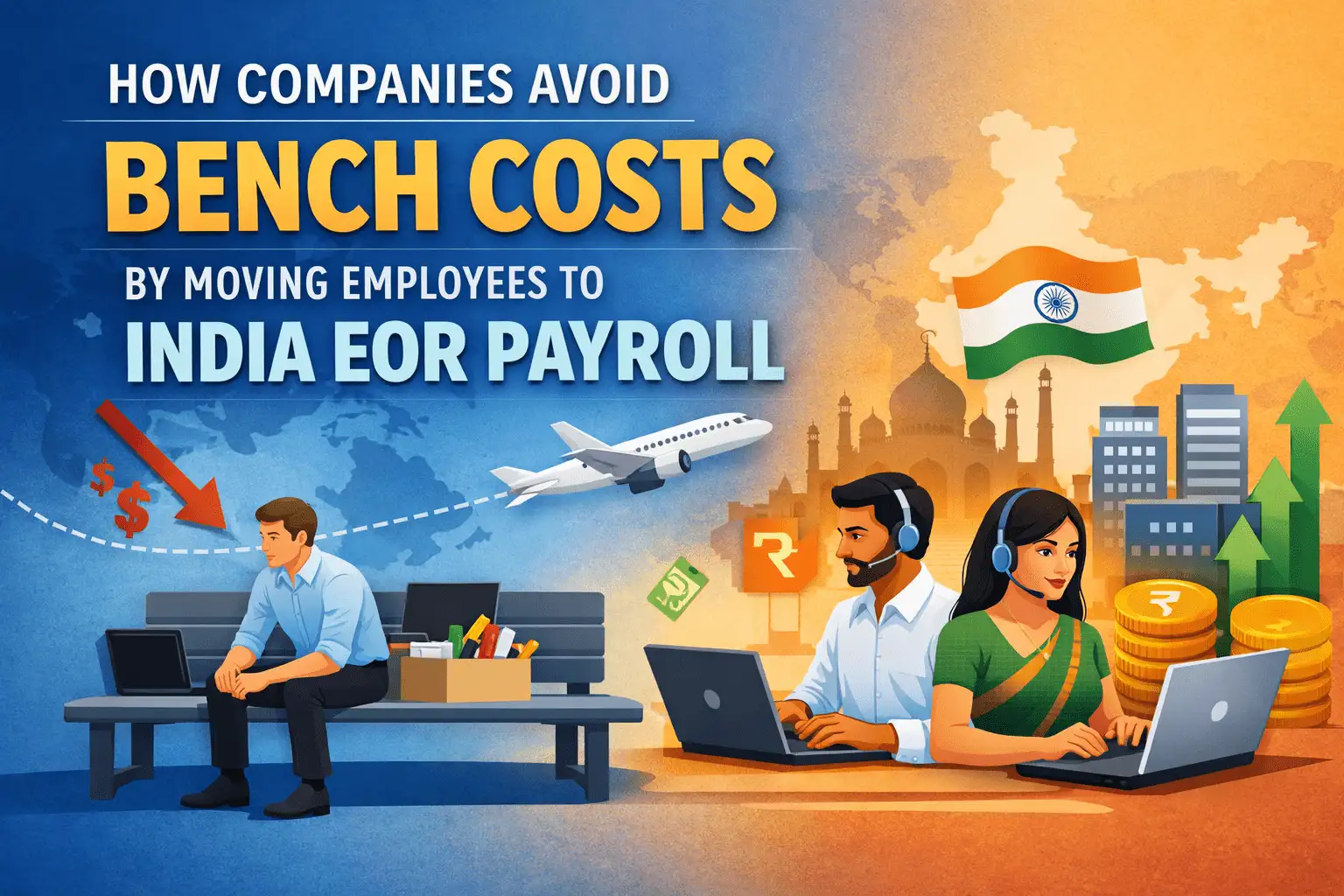
In today’s competitive business environment, bench costs are a hidden expense for many U.S. employers, especially those dependent on global talent. When employees are stuck in the visa process—whether it’s for H1-B or other work-related visas—they often end up on the “bench.” This means they’re being paid without contributing to the company’s productivity, which leads to escalating costs without any return on investment.
The problem becomes even more challenging when companies hire Indian employees who are caught in visa delays. While waiting for their visa approvals, employers are still required to pay them, but they cannot use their skills for company projects. This situation can create a significant financial strain.
However, there’s a solution that can help U.S. employers reduce these costs and keep their employees engaged—India EOR payroll.
In simple terms, bench costs occur when employees are on the payroll but are not actively contributing to the organization’s output. Whether due to visa delays or being between assignments, bench time results in:
For companies relying on foreign talent, especially Indian employees who often face visa delays, these bench costs can stretch into months, further complicating the situation.
India EOR payroll offers a cost-effective solution to manage employees stuck in visa delays. By utilizing Employer of Record (EOR) services, U.S. employers can shift payroll to India, continue paying employees in compliance with local laws, and keep them engaged without the financial burden of bench time.
Here’s how it works:
Let’s compare the costs of paid leave versus shifting to India EOR payroll.
In this scenario, shifting payroll to India through EOR services allows companies to reduce labor costs while still keeping their workforce engaged and compliant.
Access to a Highly Skilled Workforce
India is home to one of the world’s largest and most educated talent pools. Whether your company needs software developers, IT professionals, or customer support agents, India EOR payroll opens the door to highly skilled professionals who can contribute to your business at a fraction of U.S. labor costs.
By utilizing India EOR payroll, U.S. employers can:
Compliance with Local Labor Laws
Employing workers in India without a local entity can create compliance headaches for U.S. employers. However, India EOR payroll services handle all aspects of legal compliance, ensuring that the employment terms, taxes, and benefits adhere to Indian labor regulations. This removes the burden of managing compliance across borders and mitigates the risk of legal issues.
Financial Strain Over Time
Continuing to rely on paid leave for employees stuck in the visa process can create a growing financial burden. The longer the delay, the higher the costs, and the greater the chance that productivity will be impacted. For companies with several employees stuck in visa delays, the long-term cost of bench time can result in significant losses.
Talent Loss and Employee Disengagement
When employees are stuck in visa delays without contributing to the company’s work, disengagement is inevitable. Employees may lose motivation and start seeking opportunities elsewhere, leading to increased turnover and the loss of valuable talent. By shifting payroll to India EOR payroll, employees remain employed, motivated, and productive, which reduces the risk of turnover.
Visa delays for Indian employees can create a significant bench cost for U.S. employers. However, by shifting payroll to India EOR payroll, you can drastically reduce those costs, maintain employee engagement, and ensure business continuity.
At Team Management Services (TMS), we provide expert Employer of Record (EOR) services that allow U.S. companies to seamlessly shift payroll to India, avoiding bench costs and ensuring compliance with local labor laws. Our India EOR payroll solutions help you keep employees engaged and productive during visa delays, saving on payroll costs and reducing administrative overhead.
For more information on how India EOR payroll can benefit your company, check out our blog on Entity Setup in India: The Quick, Compliant Alternative to U.S. Visa Dependence
EOR services manage compliance with both Indian and U.S. labor laws, reducing legal risks for companies.
Roles in IT, customer service, marketing, software development, and finance can be moved to India payroll via EOR.
The employee transitions back to U.S. payroll once their visa is approved.
It typically takes a few weeks to set up India payroll via EOR, depending on the company’s needs.
About the Author
Abhijit Divekar is the Managing Partner of Team Management Services (TMS), with 19+ years of experience in HR outsourcing, contract staffing, and statutory compliance across India. He has helped 450+ companies build compliant, scalable workforces.
1003-04, 10th floor G-Square Business Park, Jawahar Road, Opposite Railway Station, above Kalyan Jewellers, Ghatkopar East, Mumbai – 400077
601 to 603 Aries Galleria, Vasana Road, Vadodara – 390015 Gujarat, India
Contact TMS:
+91-224-149-8942
+91-224-896-7640
For General Queries:
[email protected]
For Sales:
For Jobs:
[email protected]
Team Management Services. All Rights Reserved | Privacy Policy | Terms & Conditions
20+ years of expertise in Contract Staffing, EOR, Payroll & Compliance
Tell us about your staffing needs