

years Experience

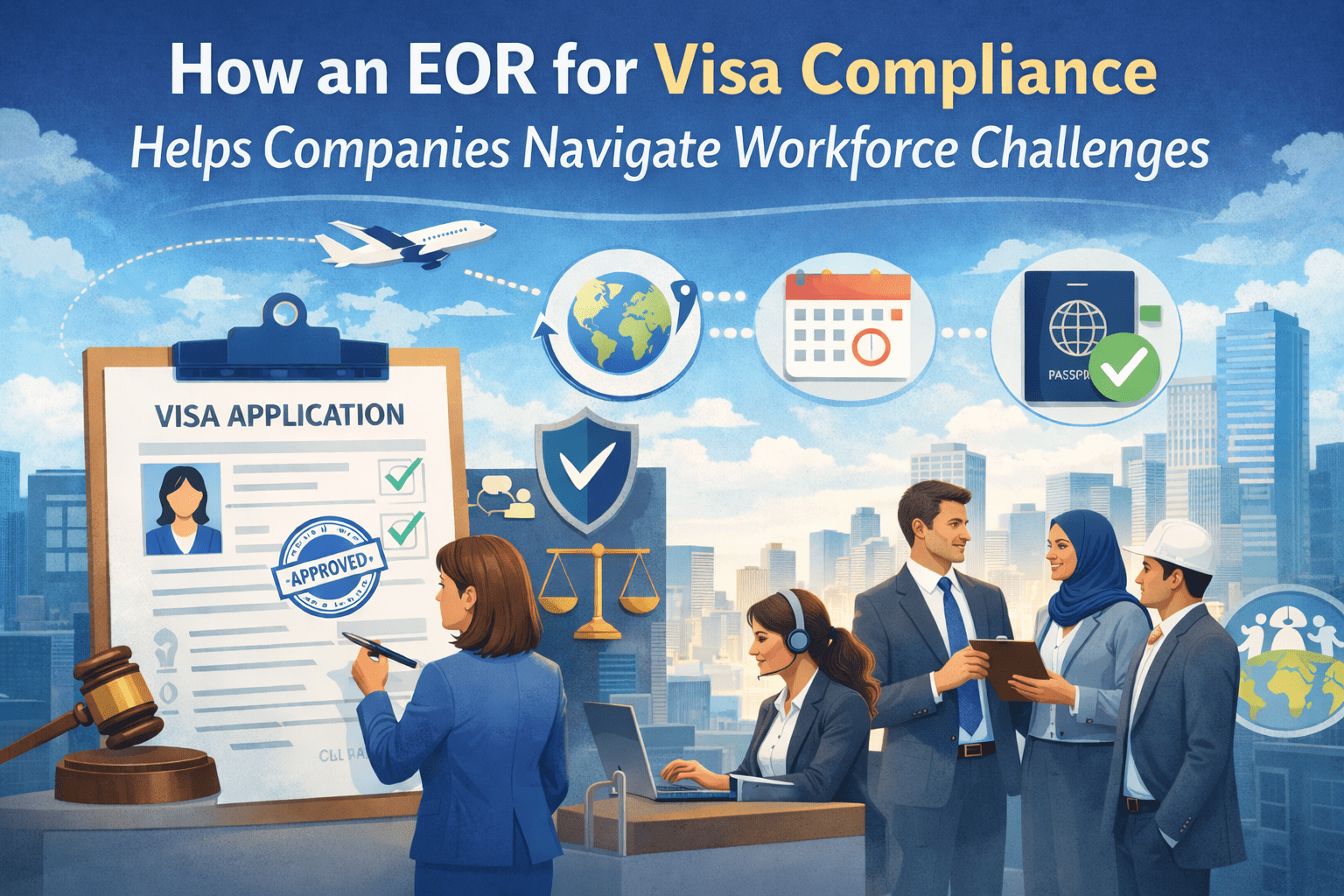
How an EOR for Visa Compliance Helps Companies Navigate Workforce Challenges

EOR for visa compliance

Introduction:

Global talent fuels innovation and growth. However, visa delays and work authorization uncertainty continue to create real challenges for employers. When key employees face prolonged processing timelines, U.S. companies risk stalled projects, disrupted workflows, and increased legal exposure.


An EOR for visa compliance offers a structured and compliant way to manage these situations. By ensuring employees remain legally employed while continuing their work, businesses can protect productivity without compromising regulatory obligations.

The Real Impact of Visa Uncertainty on Employers

Visa-related challenges rarely arrive with advance warning. Sudden delays, expirations, or policy changes can disrupt payroll operations, workforce planning, and delivery timelines.


Beyond operational issues, there is also a human impact. Employees may experience stress, uncertainty, or disengagement. From an employer’s perspective, this creates risks around knowledge retention, team stability, and client commitments. For this reason, proactive planning for visa compliance for employers has become essential rather than optional.

Why Temporary Solutions Often Fall Short

When visas are delayed, many companies attempt short-term fixes. Employees may be placed on unpaid leave, temporarily shifted to contractor arrangements, or reassigned without clear structure.


While these measures may seem practical at first, they often introduce new risks. Productivity tends to decline, morale is affected, and compliance exposure increases. More importantly, employees may begin to question their long-term future with the organization.


As a result, temporary workarounds rarely provide the stability businesses actually need.

Understanding the Employer of Record Model

An Employer of Record (EOR) legally employs workers on behalf of a company in another jurisdiction. While the employer continues to manage daily responsibilities and performance, the EOR takes care of employment compliance.

Typically, EOR responsibilities include:

  • Payroll and statutory benefits

  • Employment contracts and local labor law compliance

  • Tax filings and regulatory reporting

  • Support for employee relocation during visa transitions

With this model in place, workforce continuity is preserved, and legal risks are reduced. Employees can continue contributing even when work authorization timelines are uncertain.

For companies navigating these challenges, solutions such as Team Mangement Services EOR Solution provide structured support by managing payroll, compliance, and local employment obligations—allowing employers to retain talent without administrative complexity.

How an EOR Supports Visa-Related Transitions

When work authorization becomes uncertain, employers must respond quickly and carefully. An EOR for visa compliance enables companies to manage these transitions without disrupting operations. Employees can remain legally employed while continuing to work remotely or from a compliant jurisdiction. This approach helps protect business knowledge, maintain team cohesion, and reduce compliance risks.


In addition, structured support for employee relocation due to visa issues helps HR teams manage transitions smoothly, while employees experience less disruption during an already stressful period.

Global Locations as Strategic EOR Hubs

Many U.S. companies leverage EOR services in global markets such as India. These regions offer a strong talent pool, well-defined labor laws, and structured payroll systems.


With providers like Team Management Services (TMS) employers gain access to local compliance expertise and operational support. This makes it possible to retain experienced employees, maintain collaboration across time zones, and scale international teams without setting up local entities.

Cost and Operational Advantages for Employers

Visa delays often lead to unexpected expenses. Recruitment costs, onboarding efforts, and lost productivity can quickly add up.

By implementing an EOR for visa compliance, companies can avoid repeated hiring cycles and reduce legal and administrative costs. Keeping employees on payroll preserves continuity and ensures projects move forward without interruption. Over time, this model proves far more cost-effective than reactive staffing decisions.

Supporting Long-Term Workforce Planning

Visa-related disruptions are rarely isolated events. Renewals, extensions, and regulatory changes can affect multiple employees over time.

An EOR model allows companies to adopt flexible workforce strategies. Businesses can respond quickly to regulatory shifts, maintain global workforce compliance, and plan ahead with confidence. This proactive approach supports growth while minimizing risk exposure.

Employee Experience Still Matters

Compliance alone is not enough. Employee confidence plays a major role in retention and performance.

Visa uncertainty can cause anxiety and disengagement. When employers provide a clear, legal path forward, trust is strengthened. Employees feel supported, remain productive, and are more likely to stay with the organization long-term—especially during periods of relocation or remote work.
When an EOR Makes the Most Sense

An EOR approach is particularly valuable when:

  • Visa timelines are unpredictable

  • Employees must temporarily relocate due to work authorization issues

  • Permanent residency or work permit processes are delayed

  • Business operations must continue without disruption

In these scenarios, an EOR for visa compliance becomes more than a backup plan. It becomes a strategic workforce solution.

Final Thoughts

Visa delays do not need to disrupt business operations or lead to difficult employment decisions. With the right workforce structure and a compliant global employment framework, companies can maintain momentum, retain critical talent, and continue meeting client and operational commitments without interruption.


An EOR model offers the clarity, control, and continuity organizations need during periods of immigration uncertainty. By enabling compliant employment, payroll, and workforce management across borders, the EOR approach allows employers to support skilled professionals, reduce risk, and adapt quickly to changing circumstances. This flexibility empowers businesses to navigate workforce challenges with confidence while building a resilient, globally distributed team for the long term.

FAQs

Yes. An EOR can legally onboard employees in another jurisdiction while visa approvals are pending, ensuring operations continue without delay.

No. Employees continue to receive agreed compensation and benefits, with the EOR managing local statutory requirements.

The EOR manages payroll records, tax filings, and labor law adherence, reducing administrative burden and audit complexity.

Yes. Once work authorization is approved, employees can transition back to direct employment without disruption.

HEAD OFFICE


1003-04, 10th floor G-Square Business Park, Jawahar Road, Opposite Railway Station, above Kalyan Jewellers, Ghatkopar East, Mumbai – 400077

BRANCH OFFICE

601 to 603 Aries Galleria, Vasana Road, Vadodara – 390015 Gujarat, India

Team Management Services. All Rights Reserved | Privacy Policy | Terms & Conditions