Most companies don’t wake up planning to outsource. The decision usually comes after repeated frustration. Payroll becomes stressful. Compliance questions don’t have clear answers. HR teams feel buried in operational work. These moments are signals. They indicate that managing contract employees internally is no longer working as it should. Knowing when to act prevents small issues from turning into business risks.
Payroll should be consistent and predictable. When corrections become frequent or timelines slip, it’s a warning sign. As contract employee numbers increase, payroll calculations become more complex. Manual inputs, validations, and approvals multiply. If payroll accuracy depends heavily on specific individuals rather than structured processes, the risk increases. This is often the first point where companies consider outsourcing.
Labour laws change regularly. Contribution structures, wage definitions, and statutory filings evolve over time. When HR teams struggle to keep up with these changes, compliance shifts from proactive to reactive. Missing updates can lead to penalties or audits. Outsourcing becomes relevant when staying compliant internally starts to feel risky.
HR teams are meant to support employees and plan for the future. However, contract employee management often pulls them into paperwork and follow-ups. As administrative work increases, strategic initiatives get delayed. Over time, this affects engagement, retention, and workforce planning. This imbalance signals that internal capacity is being stretched too thin.
Processes that work for small teams break down at scale. Spreadsheets become unreliable. Tracking attendance, payroll inputs, and documentation becomes inconsistent. As volume increases, even small gaps create larger risks. Fixing these gaps internally often requires time and investment. This is where Contract Staffing helps companies maintain structure without rebuilding internal systems.
Different states or regions come with different labour rules. Managing these variations manually increases the chance of mistakes. Companies expanding geographically often underestimate this complexity. What works in one location may not apply elsewhere. Outsourcing workforce administration brings localized compliance under a single framework.
Legal exposure related to contract employees is easy to overlook until something goes wrong. Disputes, audits, or regulatory notices demand immediate attention from senior leadership. These situations are disruptive and stressful. When employment risk starts reaching leadership discussions, it’s a clear sign that internal management needs support.
Contract employees involve more than just salary payouts. Statutory contributions, compliance costs, and penalties add up over time. Without clear tracking, costs become unpredictable. Finance teams struggle to forecast accurately. Outsourcing provides clearer cost structures and reduces surprises.
Audits test documentation, consistency, and compliance history. If preparing for audits requires scrambling for records or fixing inconsistencies, the system isn’t working well enough. Structured workforce administration improves audit readiness and reduces pressure on internal teams.
Contract employees notice backend issues quickly. Delayed payments, unclear deductions, or inconsistent communication affect trust. Employee experience is shaped by accuracy and reliability, even if employees don’t see the process itself. Outsourcing helps ensure consistency across payroll and compliance processes.
When knowledge lives in people instead of systems, continuity is fragile. Absences, exits, or transitions create gaps. Processes slow down. Errors increase. At this point, Contract Staffing becomes a way to build continuity and reduce dependency on individuals.
Outsourcing workforce administration does not change who manages daily work. Teams continue reporting to the same managers. What changes is who handles payroll, compliance filings, statutory obligations, and employment documentation. Understanding this distinction helps companies adopt outsourcing without fear of losing control.
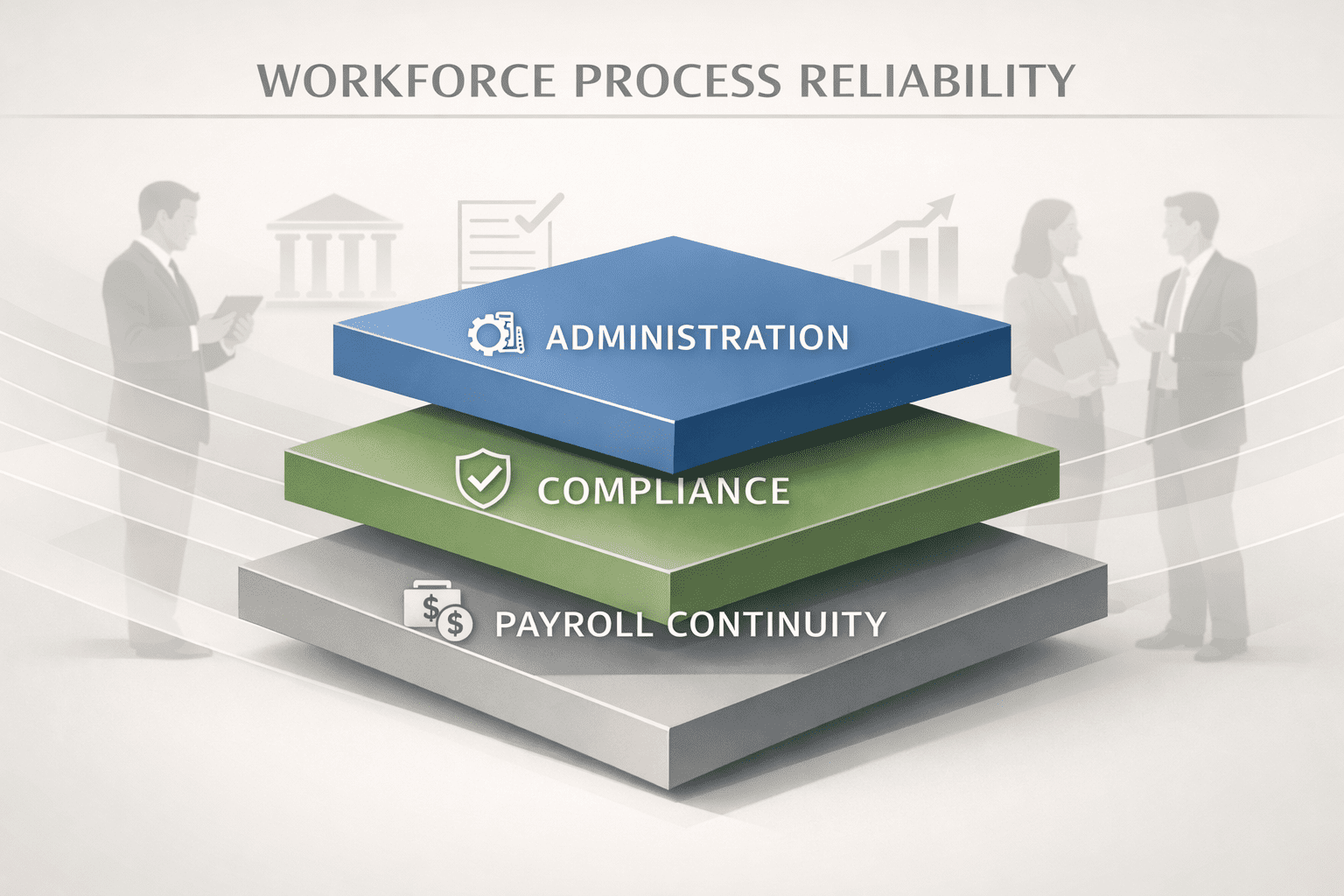
Outsourcing contract employee management is rarely about filling roles. It’s about reducing operational pressure when payroll accuracy, compliance responsibilities, and administrative work begin to stretch internal teams. When these signs appear, outsourcing becomes a practical way to restore stability without disrupting how teams work. Companies retain full control over daily operations while shifting employment administration to a structured framework.
At Team Management Services, the focus is on managing the employment side of contract work—placing employees on a compliant payroll, handling statutory obligations, and ensuring consistency across processes. This allows organizations to scale their workforce with confidence, knowing that payroll, compliance, and documentation are managed reliably in the background. The right time to outsource isn’t after something breaks. It’s when the signs first become impossible to ignore.
It typically covers payroll management, statutory compliance, documentation, and employment administration for contract employees.
Not always. Many companies outsource payroll and compliance management while retaining control over hiring and team management.
Yes, when managed by experienced providers who stay aligned with local labor regulations and statutory requirements.
The company manages daily work and performance, while the staffing partner manages payroll, compliance, and employment administration.
About the Author
Abhijit Divekar is the Managing Partner of Team Management Services (TMS), with 19+ years of experience in HR outsourcing, contract staffing, and statutory compliance across India. He has helped 450+ companies build compliant, scalable workforces.
1003-04, 10th floor G-Square Business Park, Jawahar Road, Opposite Railway Station, above Kalyan Jewellers, Ghatkopar East, Mumbai – 400077
601 to 603 Aries Galleria, Vasana Road, Vadodara – 390015 Gujarat, India
Contact TMS:
+91-224-149-8942
+91-224-896-7640
For General Queries:
[email protected]
For Sales:
For Jobs:
[email protected]
Team Management Services. All Rights Reserved | Privacy Policy | Terms & Conditions
20+ years of expertise in Contract Staffing, EOR, Payroll & Compliance
Tell us about your staffing needs