Managing a remote workforce sounds modern and flexible—but behind the scenes, employers often face a maze of rules, scattered obligations, and shifting legal risks. As global hiring becomes more common, companies are discovering that compliance is no longer a simple checklist. Instead, it’s becoming one of the biggest challenges in remote work.
From worker classification errors to cross-border payroll laws, companies are now dealing with complexities that didn’t exist just a few years ago. A single slip can trigger fines, back payments, investigations, or even hiring restrictions. And when teams are distributed across multiple countries, the risk multiplies.
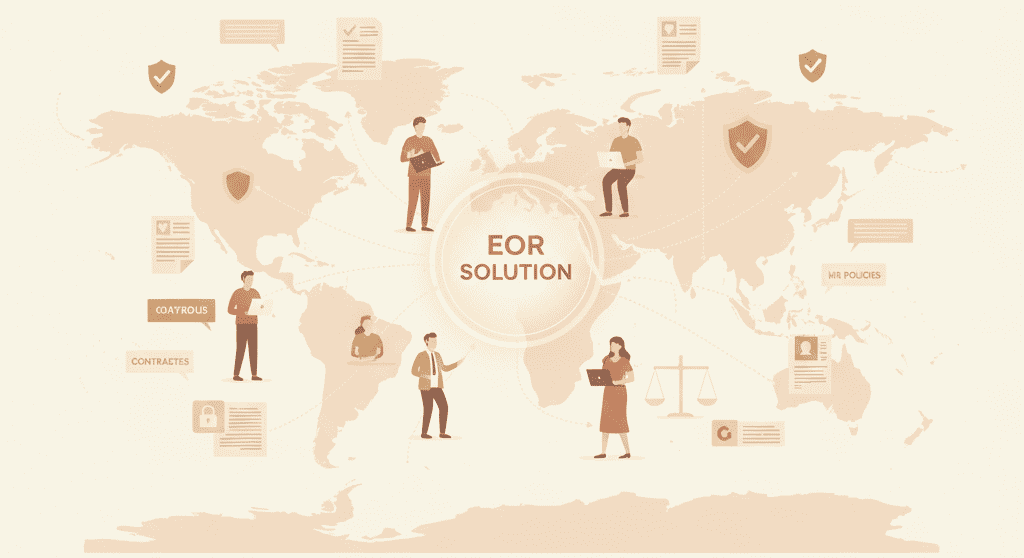
This is where an Employer of Record (EOR) becomes a strategic advantage. Instead of trying to decode each country’s employment laws, companies are choosing EOR partners to handle compliance, payroll, contracts, onboarding, and risk management—allowing them to hire globally with confidence. With rising legal scrutiny and constant regulatory changes, EOR Compliance has become one of the safest ways to employ in remote environments.
Let’s break down why compliance is becoming more complicated and why EOR has emerged as the smartest solution for global teams.
Remote hiring opens access to a global talent pool, but it also exposes companies to unfamiliar legal systems. Each country has its own rules, and employers must comply even if they don’t have a local presence.
Below are the most common compliance issues remote employers face globally:
One of the biggest risks remote companies face is misclassifying employees as independent contractors. Countries like India, Brazil, Canada, the UK, and the EU are tightening their definitions of employment relationships. Even minor mistakes—like setting fixed working hours or providing tools—can legally reclassify a contractor as an employee.
Penalties may include:
Retroactive taxes
Social security back payments
Employee benefits obligations
Penalty fees
Audits or legal claims
An EOR ensures workers are hired under the correct legal classification to avoid these consequences.
Every country has its own rules around:
Minimum wages
Maximum work hours
Paid leave
Overtime
Notice periods
Gratuity or severance
Public holidays
Employment contracts
Remote employers often miss updates, especially when hiring across multiple markets. EORs track all changes in real time and apply them correctly, protecting companies from non-compliance.
Handling payroll for remote teams is never one-size-fits-all. Foreign exchange rules, country-specific payroll taxes, mandatory bonuses, and social security contributions make things complicated.
For example:
India requires PF, ESIC, PT, and gratuity compliance
Brazil mandates 13th-month salary and FGTS contributions
Mexico requires INFONAVIT and IMSS
The UK has auto-enrollment pensions
If payroll is processed incorrectly—even unintentionally—the employer risks audits or financial penalties. EORs manage country-specific payroll rules with precision.
Remote work increases data exchange across borders. Laws like GDPR (Europe), PDPA (Singapore), and DPDP Act (India) regulate how employee data must be stored, processed, and transferred.
Companies unfamiliar with these regulations can unknowingly violate privacy laws.
EORs maintain compliant data processes and secure employee information as per local and international standards.
Remote employees working in another country may trigger:
Permanent establishment (PE) risk
Corporate tax obligations
Individual tax complexities
Double taxation issues
This can happen even with a single employee. EORs shield companies from establishing taxable presence while ensuring employees meet local tax requirements.
EOR services are designed to eliminate the legal and administrative burdens of hiring abroad. Instead of setting up an entity or navigating complex rules independently, companies rely on EORs to employ on their behalf.
Below are the biggest advantages of relying on EOR services.
1. Full Compliance From Day One
An EOR becomes the legal employer and ensures:
Contracts meet local labor laws
Payroll is processed correctly
Taxes are submitted
Benefits are aligned with national standards
Terminations follow legal procedures
This reduces legal exposure significantly while maintaining a compliant workforce.
2. Zero Entity Setup Needed
Setting up a legal entity in another country can take months and require:
Incorporation paperwork
Local director appointments
Tax registration
Banking
Compliance audits
Ongoing reporting
An EOR eliminates all of this, enabling hiring in days, not months.
3. Standardized HR Processes Across All Countries
Instead of juggling different rules and systems, companies gain unified HR operations through:
Consolidated payroll
Centralized reporting
Uniform onboarding
Streamlined communication
This saves time, reduces errors, and improves global team management.
4. Employee Benefits That Match Local Standards
Compliance isn’t only about avoiding penalties—it’s also about offering what local employees expect. An EOR ensures access to compliant benefits such as:
Medical insurance
Retirement schemes
Country-specific allowances
Statutory bonuses
This improves retention and reduces legal risk.
5. Built-In Protection From Misclassification
Since the EOR becomes the legal employer, companies avoid classification errors. This is especially relevant for companies previously hiring contractors in markets where regulations have become stricter.
6. Faster International Expansion
Remote employers often want to scale quickly without dealing with administrative barriers. EORs make this possible by:
Onboarding employees quickly
Handling documentation
Managing local compliance
Ensuring smooth monthly payroll
This simplifies expansion into new markets with minimal disruption.
As global labor laws evolve, governments are becoming stricter about employer obligations. Companies that ignore compliance risks may face:
Costly penalties
Loss of business licenses
Employee lawsuits
Visa or hiring restrictions
Forced shutdowns of foreign operations
This is why EOR Compliance has become a strategic priority rather than a backup option. It’s a way to expand confidently without risking legal complications.
Remote work has created opportunities but also introduced complex responsibilities. Companies now face rules that differ dramatically from country to country, with compliance laws growing more detailed every year. Instead of losing time and resources trying to manage all these obligations internally, partnering with an EOR ensures safe, fast, and compliant hiring.
A reliable EOR partner protects organizations from payroll errors, legal exposure, misclassification, and cross-border risks—while allowing them to focus on growth. For companies expanding into India or other emerging markets, this approach provides confidence, stability, and ease of scaling.
A trusted provider like Team Management Services (TMS) supports organizations with fully compliant hiring, country-specific payroll, and risk-free workforce expansion—making it easier for employers to grow their global teams without fear of compliance issues.
An EOR manages employment contracts, payroll taxes, statutory benefits, labor law requirements, and termination procedures. This ensures all employees are legally hired, paid correctly, and managed according to local regulations.
Yes. An EOR minimizes compliance errors, protects companies from misclassification issues, and ensures payroll accuracy. It also shields organizations from permanent establishment risks while handling every legal obligation locally.
Absolutely. Startups, SMEs, and fast-growing companies benefit from EOR because it eliminates the need for entity setup and reduces operational costs. It allows them to hire globally without long-term commitments or administrative burdens.
A staffing agency assists with recruitment, but an EOR becomes the legal employer. The EOR manages contracts, compliance, payroll, benefits, and regulatory filings, while the company still controls day-to-day work responsibilities.
About the Author
Abhijit Divekar is the Managing Partner of Team Management Services (TMS), with 19+ years of experience in HR outsourcing, contract staffing, and statutory compliance across India. He has helped 450+ companies build compliant, scalable workforces.
1003-04, 10th floor G-Square Business Park, Jawahar Road, Opposite Railway Station, above Kalyan Jewellers, Ghatkopar East, Mumbai – 400077
601 to 603 Aries Galleria, Vasana Road, Vadodara – 390015 Gujarat, India
Contact TMS:
+91-224-149-8942
+91-224-896-7640
For General Queries:
[email protected]
For Sales:
For Jobs:
[email protected]
Team Management Services. All Rights Reserved | Privacy Policy | Terms & Conditions
GST No.: 27AAHFT5379A1Z2
20+ years of expertise in Contract Staffing, EOR, Payroll & Compliance
Tell us about your staffing needs